
Lead
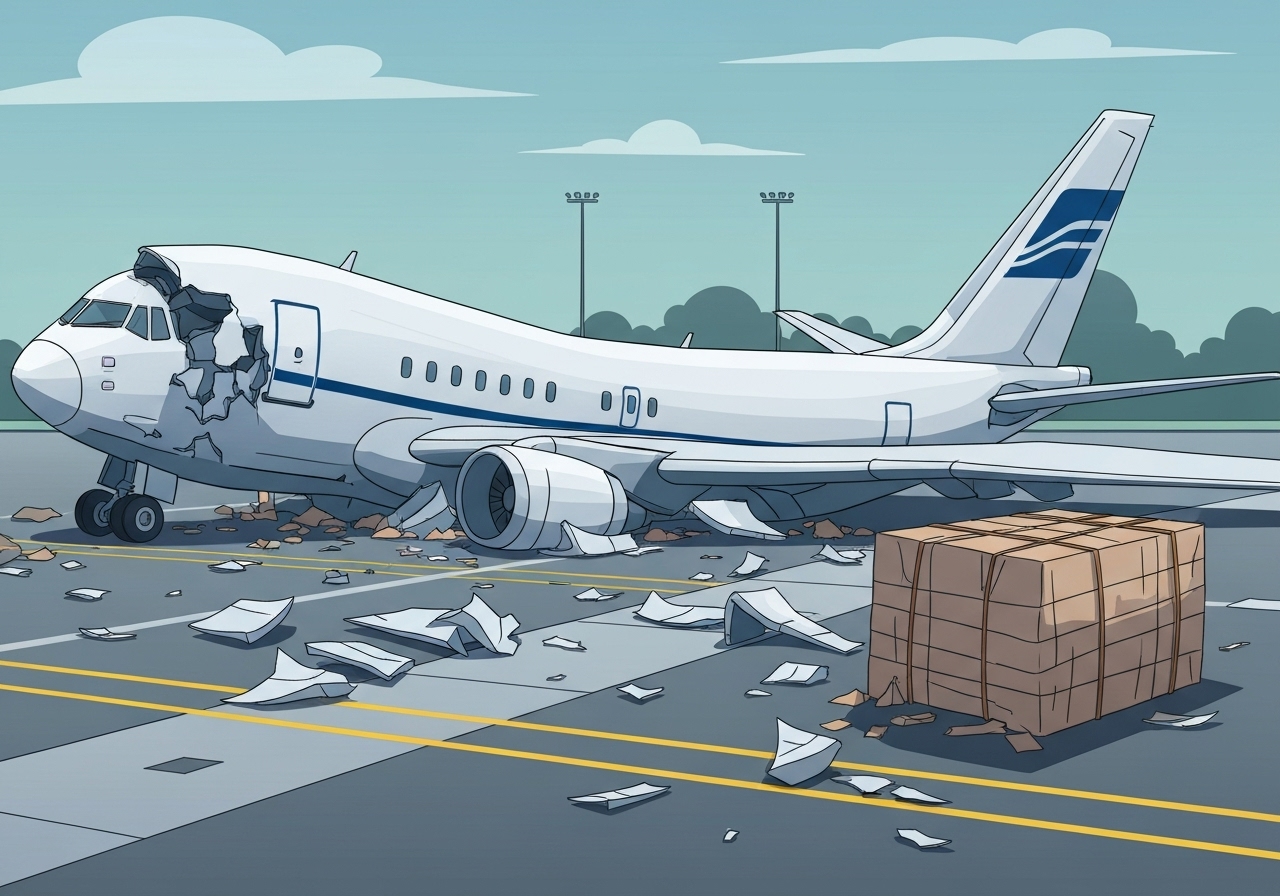
At least four people have died and at least 11 more were injured after a UPS cargo aircraft crashed and caught fire shortly after takeoff from Louisville Muhammad Ali International Airport on Tuesday evening. The McDonnell Douglas MD-11F was departing for Honolulu when it crashed at about 17:15 local time, striking nearby businesses and sending large plumes of smoke over the airport. Local officials say multiple buildings, including a petroleum recycling business and an auto-parts facility, were hit by burning wreckage and remain ablaze. Federal investigators from the National Transportation Safety Board and the Federal Aviation Administration have been dispatched to lead the probe.
Key takeaways
- Four people have been confirmed dead after the crash; local officials expect that number could change as the scene is assessed.
- At least 11 people were taken to hospitals with injuries; some injuries have been described as significant by state officials.
- The aircraft was an MD-11F operated by UPS, loaded with roughly 38,000 gallons (144,000 litres) of jet fuel—about 220,000 pounds (100,000 kg) in weight—when it crashed.
- The crash occurred at approximately 17:15 local time at Louisville Muhammad Ali International Airport, with a shelter-in-place order later reduced to a one-mile radius.
- One runway at the airport has since reopened for limited operations, but departing flights were cancelled and the airfield had been closed temporarily.
- The NTSB announced a go-team will be sent to Louisville and plans a public briefing on Wednesday; the FAA will assist with the investigation.
- Boeing said it is following the incident and has offered technical assistance to the NTSB; the MD-11F is a design originally produced by McDonnell Douglas.
Background
Louisville is home to UPS Worldport, the company’s largest global air-sorting hub, and the city’s economy and many households have deep ties to air cargo operations. That connection helps explain why local officials and residents reacted quickly and why the crash has immediate community implications: many people know UPS employees or see flights passing through regularly. The airport, officially Louisville Muhammad Ali International Airport (SDF), is a critical node for nationwide and international cargo flows, particularly for overnight and express freight.
Cargo aircraft like the MD-11F routinely carry large quantities of fuel for transcontinental legs; on this flight the plane was bound for Honolulu, a long-haul sector requiring substantial uplift. Previous commercial aviation accidents involving large fuel loads have produced conflagrations that complicate rescue and investigation efforts, and the presence of nearby industrial businesses—here including a petroleum recycling site and auto-parts yard—heightened the hazard profile for first responders. The NTSB and FAA customarily lead technical inquiries into major U.S. aviation accidents; local agencies secure scenes and manage emergency rescue and recovery.
Main event
According to multiple local briefings, the UPS MD-11F began its takeoff roll and crashed shortly after becoming airborne at about 17:15 local time. Eyewitness and social-media footage showed a large plume of black smoke and visible flames as wreckage struck ground-side buildings adjacent to the airfield. Fire crews and first responders arrived quickly and focused on extinguishing the blaze and searching for survivors amid unstable debris and ongoing fires.
Kentucky Governor Andy Beshear described the incident as a “catastrophic crash” and urged residents not to approach the site, warning that there could still be people needing rescue and that flammable and potentially explosive materials were present. Louisville Metro Emergency Services initially issued a broader shelter-in-place covering roughly five miles, later narrowing it to a one-mile radius around the airport as conditions evolved. Local officials confirmed the crash site included a petroleum recycling business and said the plane was not carrying specially listed hazardous cargo.
Airport and public-information officials reported at least 11 people were transported to area hospitals with injuries, and early tallies of fatalities rose during the night as crews worked the scene. One runway was later reported reopened for limited use, though numerous departures were cancelled and inbound traffic had been suspended during firefighting and rescue operations. Chief Brian O’Neill of the Louisville Fire Department said he was not aware of anyone trapped at the time of the briefing; officials emphasized that making the scene safe for a formal investigation would take time.
Analysis & implications
The immediate human toll—four confirmed dead and more injured—dwarfs the logistical and economic effects but also sets in motion a complex recovery and investigative process. For Louisville, which hosts UPS Worldport, the crash has operational and psychological consequences: delays cascade through time-sensitive cargo networks, and the local workforce and families face acute anxiety and loss. Short-term disruption to freight throughput is likely as investigators secure the field and recovery operations continue.
From an investigative standpoint, the MD-11F’s fuel load and impact with ground-side businesses will complicate both wreckage preservation and fire-damage assessment. The NTSB’s go-team customarily collects flight data recorders, examines maintenance and crewing records, and analyzes recorded ATC communications and radar; those steps require the site to be stabilized and evidence to be recovered intact. The FAA’s concurrent role will include regulatory oversight and coordination with the operator, while UPS and Boeing have offered cooperation and technical assistance.
Public-safety lessons may emerge about airport perimeter risk zones and adjacent land use when heavy-fuel aircraft operate near industrial sites. If investigations find a mechanical problem, maintenance and fleet inspections could be ordered; if human factors are implicated, procedural and training reviews may follow. Either way, findings from the NTSB can take months to years to finalize, and early interim reports will be scrutinized by regulators, industry stakeholders and the community.
Comparison & data
| Item | Reported figure |
|---|---|
| Fatalities (confirmed) | 4 |
| Injured (transported to hospitals) | At least 11 |
| Aircraft type | MD-11F (UPS) |
| Fuel onboard | Approx. 38,000 gallons / 144,000 litres (~220,000 lb) |
| Destination | Honolulu |
The table summarizes the concrete figures released by local and federal authorities in initial briefings. These numbers reflect confirmed tallies at the time of reporting; investigators will refine casualty and material counts as the response continues. The aircraft’s large fuel load helps explain the intensity of the fire and the scale of damage to nearby structures.
Reactions & quotes
Officials at federal and local levels offered brief public reactions while the emergency response was active.
“The images coming out of Kentucky are heartbreaking. Please join me in prayer for the Louisville community and flight crew impacted by this horrific crash.”
Sean Duffy, U.S. Secretary of Transportation (social post)
Transportation leadership expressed sympathy and confirmed that the NTSB and FAA will lead the technical investigation. Local political leaders repeatedly urged residents to keep away from the area to avoid hampering rescue efforts.
“There may be people that still need to be rescued. Do not be the reason that the first responders cannot get to them.”
Kentucky Governor Andy Beshear (press briefing)
The governor framed the incident as an ongoing rescue and public-safety operation and warned of secondary hazards from flammable materials onsite. Boeing issued a concise corporate statement offering technical support to investigators and expressing concern for those affected.
Unconfirmed
- The final count of people on the ground affected by the crash and whether all victims have been accounted for remain unclear pending scene access and verification.
- The specific status of the three crew members reported onboard at departure had been uncertain in early briefings; later tallies have adjusted casualty figures as rescue teams completed initial searches.
- The exact mechanical or human factors that led to the crash have not been determined; the NTSB and FAA investigation is ongoing.
- Reports that listed special hazardous cargo aboard the aircraft were contradicted by officials who said no specifically declared hazardous cargo was onboard; final manifest verification is pending.
Bottom line
This crash is a high-consequence event for Louisville’s community and for the air-cargo industry: lives were lost, local businesses were damaged, and a major cargo hub will face short-term operational fallout. The presence of large quantities of fuel and nearby industrial sites amplified fire risks and complicated early rescue operations. Authorities have mobilized federal investigative resources, but early statements stressed caution: definitive causes will not be released until investigators complete on-scene work and data analysis.
For residents and shippers, expect continued disruption to flights and freight movement through SDF while the scene is secured and investigators recover evidence. The NTSB’s initial on-site work and any preliminary findings will be the best early indicators of likely causal pathways; full determinations could take many months. Meanwhile, community support networks and employer assistance for affected families will be an immediate priority.
Sources
- BBC (live reporting) — media live feed summarizing official briefings and local reporting
- National Transportation Safety Board (NTSB) — official investigator (agency homepage)
- Federal Aviation Administration (FAA) — regulatory agency (official)
- Louisville Muhammad Ali International Airport (SDF) — airport authority (official)
- UPS (operator) — corporate statements and operator information (official)
- Boeing (manufacturer) — corporate statement offering technical assistance (official)