
Lead
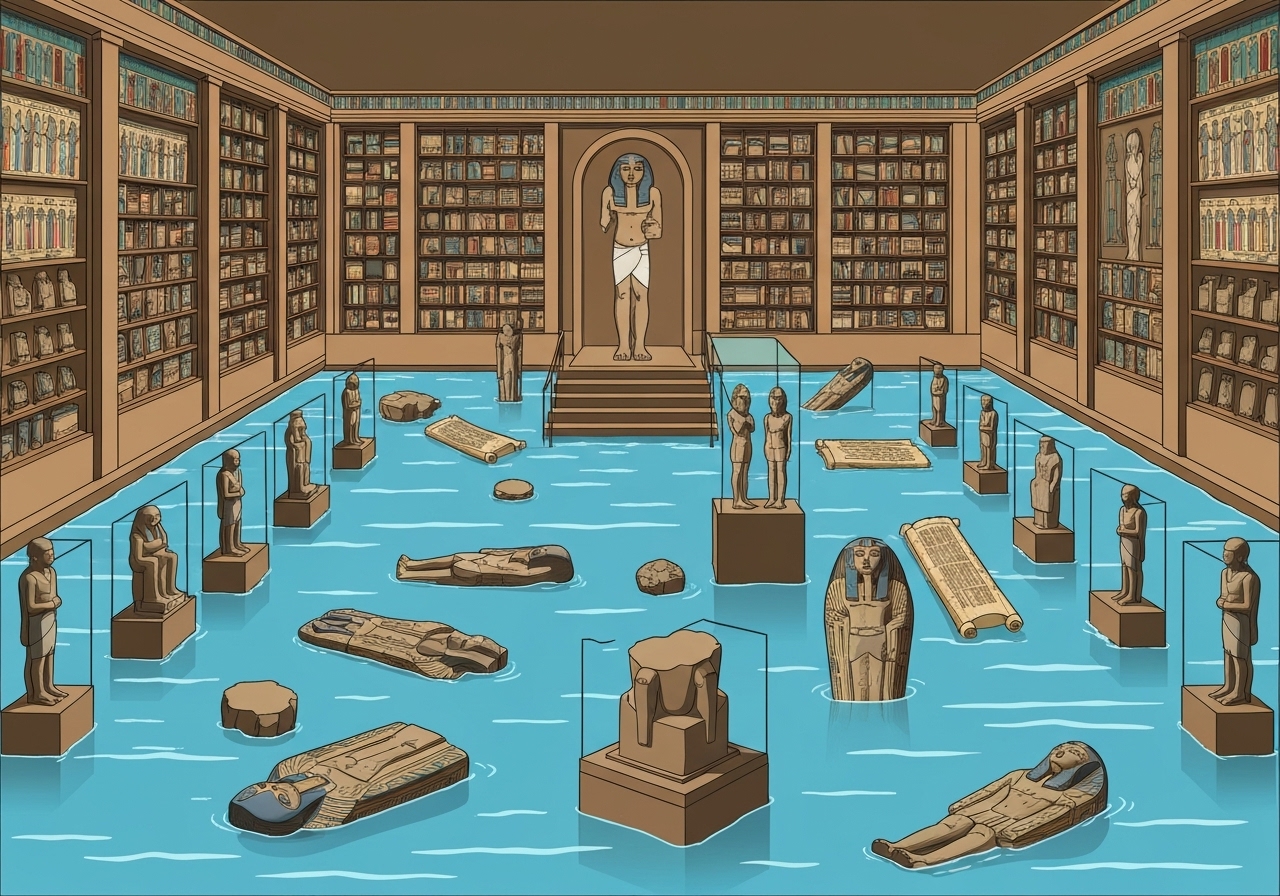
Last week a pipe burst inside the Louvre in Paris after flooding, damaging at least 300 to 400 items in one of the Egyptian antiquities library rooms, the museum’s deputy general administrator said. The affected material includes books and periodicals used by researchers and Egyptologists, some dating to the late 19th century. Museum staff have begun page-by-page drying and dehumidification using Buffard paper and adjustments to building plant systems. The incident comes as the museum prepares a major ventilation and heating renovation and follows a high-profile jewelry theft at the same site in October.
Key Takeaways
- The Louvre reported that between 300 and 400 works were damaged in a single room of its Egyptian antiquities library after flooding and a subsequent burst pipe.
- The affected collection includes books — some several hundred years old and dating to the late 19th century — and specialist archaeology journals consulted by Egyptologists and researchers.
- Conservation teams are carrying out page-by-page drying and dehumidification with Buffard paper and adjustments to plant systems to stabilize wet materials.
- Only one of three library rooms in the Egyptian antiquities department was impacted; a complete inventory of damaged items is underway.
- The damaged gallery is within museum spaces scheduled for a major ventilation and heating renovation beginning in September, according to museum officials.
- The flooding is the latest operational setback for the institution after an October 19 robbery in which eight crown jewels worth an estimated 88 million euros were stolen.
- Paris prosecutors say four men tied to the October robbery have been arrested and preliminarily charged with organized gang robbery and criminal conspiracy; DNA traces were reported in earlier court briefings.
Background
The Louvre in Paris is home to extensive collections and active research libraries that support curators, in-house scholars and external researchers. Among those resources are specialist libraries for departments including the Egyptian antiquities unit, where periodicals and rare books serve as primary research tools for Egyptologists. Museum infrastructure projects — notably upgrades to ventilation and heating systems — were already scheduled for parts of the building with work due to start in September, a fact museum officials say is relevant to the recent incident.
Museum conservation departments maintain established protocols for water damage to paper-based materials, but scale matters: hundreds of wet volumes present a logistical and technical challenge. The incident follows a period of heightened security and operational scrutiny after the Oct. 19 theft of eight crown jewels, an event that prompted investigations and several arrests. Multiple stakeholders—including curators, conservators, researchers and public authorities—are now coordinating to assess damage, prioritize salvage, and communicate findings to the public.
Main Event
Museum deputy general administrator Francis Steinbock told French broadcaster BFM TV that flooding last week caused a pipe to burst and affected one of three rooms in the Egyptian antiquities library. Initial on-site assessments identified between 300 and 400 affected items, a figure the museum described as provisional while it completes a full inventory. The damaged items include bound books, archaeology journals and visual periodicals that researchers regularly consult.
Conservation teams immediately began stabilization steps to prevent mold and further deterioration, starting with surface drying and controlled dehumidification. Staff reported using Buffard paper as part of a page-by-page drying workflow, alongside modifications to building plant systems to accelerate humidity control. Those measures aim to protect fragile paper fibers and inks while minimizing the risk of ink bleeding and board warping.
The Louvre said the affected area is within museum spaces planned for a major overhaul of ventilation and heating, a renovation it views as relevant to managing environmental risks going forward. Museum leadership has mobilized internal conservation units and is consulting external specialists in paper restoration and preventive conservation. A comprehensive cataloging and condition assessment is ongoing to determine which items can be fully restored and which may have sustained irreversible damage.
The incident disrupted research access to the library materials used by staff and visiting scholars, with temporary closures and restricted handling in the affected department. The museum has not published a final loss estimate in monetary terms and emphasized that preserving cultural and scholarly value is the primary focus of recovery efforts.
Analysis & Implications
The immediate conservation challenge is technical: paper-based collections exposed to water require rapid, resource-intensive interventions to avoid mold and structural loss. Page-by-page drying with materials such as Buffard paper is proven for small-scale incidents but becomes slow and costly when hundreds of volumes are involved. The Louvre faces a logistical bottleneck in space, trained personnel and conservation materials to process a large backlog without risking secondary damage.
Institutionally, the episode underlines the vulnerability of cultural heritage to building-system failures and extreme weather events. Even museums with established risk management procedures must contend with aging infrastructure across historic sites, where retrofitting modern HVAC and drainage can be complicated and disruptive. The fact the affected zone was slated for renovation raises questions about timing, temporary protections during construction planning, and interim risk mitigation.
For scholarship, temporary loss of access to specialized periodicals and archival books may slow ongoing research in Egyptology and related fields. Many journals and visual periodicals in the damaged holdings are not comprehensively digitized, which means physical loss or prolonged inaccessibility has real academic impact. Longer-term, the museum and funding authorities may need to weigh accelerated conservation investment, expanded digitization, and revised disaster-response planning to reduce future research disruption.
Comparison & Data
| Incident | Date | Items affected | Known value |
|---|---|---|---|
| Louvre flood/pipe burst | Last week | 300–400 works (Egyptian antiquities library) | Not yet estimated |
| Louvre jewelry theft | Oct. 19 | 8 crown jewels | Estimated €88 million ($102 million) |
The table highlights the differing natures of recent incidents at the Louvre: one an infrastructure-related damage event affecting scholarly materials, the other a high-value theft of display objects. While the jewelry theft has a clearly stated estimated monetary value, the cultural and research value of damaged library holdings resists simple valuation and may exceed any near-term insurance estimates. The museum’s restoration timeline will depend on the detailed inventory, the condition of each item, and availability of conservation resources.
Reactions & Quotes
Officials and observers have responded with concern for both heritage preservation and operational resilience. Museum leadership has emphasized immediate action to stabilize materials and complete a full inventory.
“At least 300 to 400 works in one of the Egyptian antiquities library rooms were affected after the pipe burst,”
Francis Steinbock, Deputy General Administrator, Louvre (as reported to BFM TV)
Steinbock’s statement to BFM TV framed the incident as localized but significant, and he described ongoing conservation steps such as drying and dehumidification. He also noted the area was scheduled for future HVAC and heating renovations, linking the episode to broader infrastructure work.
“Work to track down the stolen jewels continues,”
Paris prosecutor (public statement regarding Oct. 19 robbery)
That comment, issued in the context of the October robbery probe, underscores concurrent operational and security challenges the museum has faced this season. Prosecutors have said several suspects have been arrested and preliminarily charged in connection with the theft.
“Some of the books were wet and conservation teams are working to dry them page by page,”
Louvre conservation staff (summary of on-site actions)
Conservation staff described the practical actions taken immediately after the flood — prioritizing stabilization, preventing mold development, and cataloging damaged items. The work is described as meticulous and time-consuming, reflecting standard museum conservation practice for water-damaged paper.
Unconfirmed
- The final, itemized count of affected works remains incomplete and may differ from the initial 300–400 estimate until inventory concludes.
- The long-term condition and restorability of damaged volumes are not yet confirmed; some items may suffer irreversible losses despite conservation work.
- The direct monetary value or insurance coverage applicable to the damaged scholarly materials has not been publicly disclosed.
Bottom Line
The Louvre has initiated immediate conservation responses after flooding and a burst pipe damaged hundreds of items in an Egyptian antiquities library room. While short-term stabilization is underway, the full scale of loss and the time required for restoration remain uncertain pending a complete inventory and condition assessments.
Beyond the technical recovery, the incident spotlights the broader need for preventive investments in infrastructure, digitization of unique research collections, and contingency planning for cultural institutions that hold irreplaceable scholarly resources. Public authorities, museum leadership and the academic community will need to collaborate to prioritize salvage, funding and steps to reduce the risk of similar events in the future.