
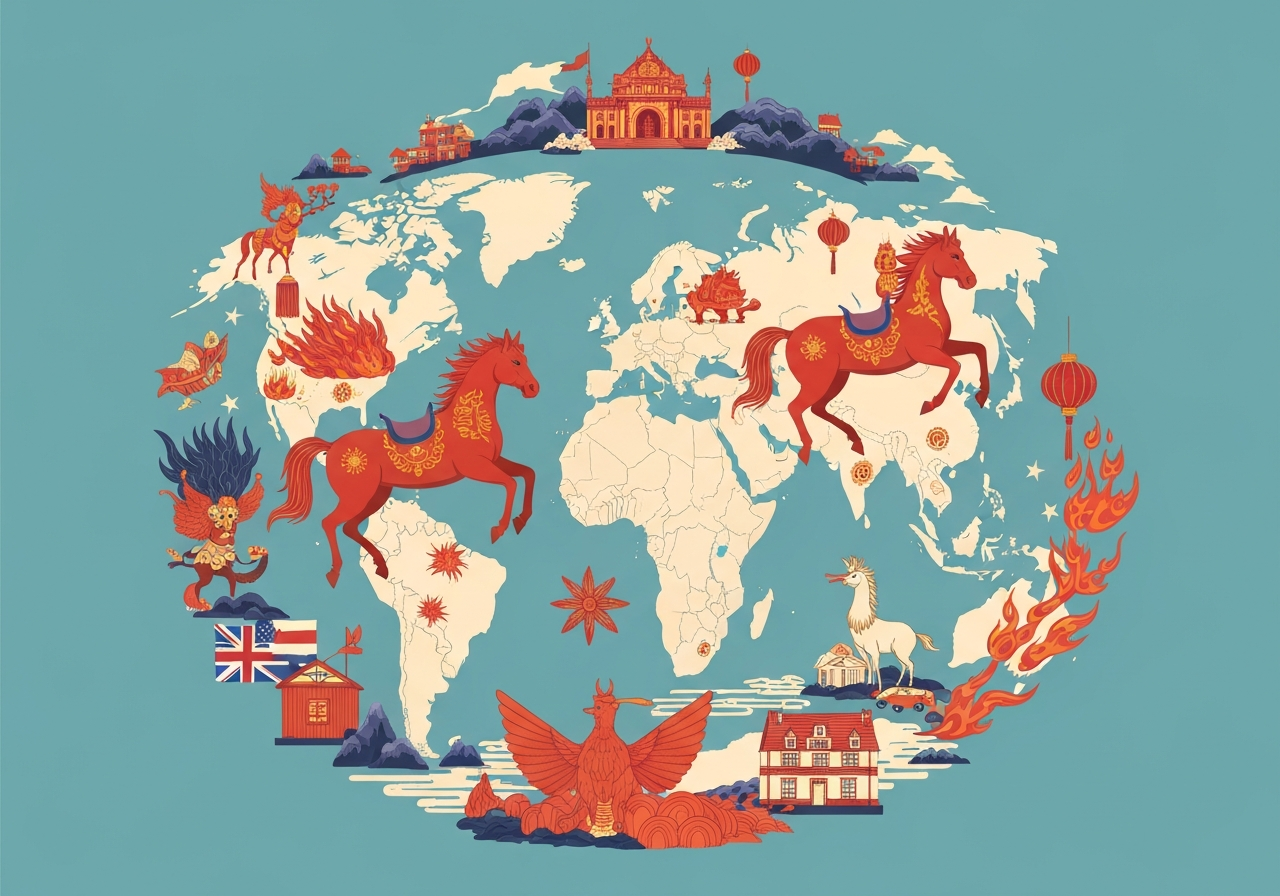
Lead: Communities across Asia and in diaspora cities worldwide marked the Lunar New Year in mid-February 2026, celebrating the Year of the Fire Horse with parades, temple rites and family gatherings. Photographers captured street processions, lion and dragon dances, lanterns and market scenes from Seoul to San Francisco and beyond. The images reflect both centuries-old rituals and contemporary urban life, showing how the holiday remains a focal point for cultural expression and local economies. Public festivities were generally lively and well-attended, illustrating the holiday’s continuing global reach.
Key takeaways
- Year and symbol: 2026 is the Year of the Fire Horse, a combination that returns on the 60-year sexagenary cycle (previously in 1966).
- Global reach: Celebrations were visible across East and Southeast Asia and in major diaspora hubs including North America, Europe and Oceania.
- Common features: Many events included lion and dragon dances, temple visits, street processions, lanterns and night markets captured in photographs.
- Economic impact: Local vendors and cultural venues reported increased foot traffic during the festival period, supporting small businesses and seasonal tourism.
- Public health and safety: Authorities in several cities coordinated crowd management and noise-control measures; no widespread incidents were reported in media coverage.
- Cultural continuity: Photographs show multi-generational participation, from elders performing rituals to children in traditional dress.
- Visual themes: Red decorations, fireworks, food stalls and paper lanterns dominated the imagery, underscoring common symbolic motifs of luck and renewal.
Background
The Lunar New Year is a multi-national cultural observance tied to the lunisolar calendar and marked by a host of rituals, visits and public celebrations across East and Southeast Asia and among diaspora communities worldwide. Each year is identified by one of the twelve zodiac animals and one of five elemental signs; 2026 is both a Horse year and a Fire year, a pairing that recurs every 60 years under the traditional sexagenary cycle. The last Fire Horse year fell in 1966, a fact often referenced in cultural memory and family histories.
Over recent decades the holiday has grown into a major urban spectacle in many cities, blending religious rites, commercial activity and civic celebrations. Municipalities and cultural organisations often stage parades and official events while temples and local associations maintain more intimate community rituals. For diaspora populations, Lunar New Year remains an important moment for cultural transmission, language use and intergenerational bonding.
Main event
Street processions and lion-dance troupes were prominent features in city centres, with performers using drums, cymbals and acrobatic movements to animate long, costumed figures. Market lanes near temples were crowded with shoppers buying fresh produce, specialty foods and red packets for family members. Photographers documented these market scenes from close quarters, showing both the bustle of commerce and quiet domestic preparations.
Temple visits and ritual offerings were captured in images ranging from solitary moments of prayer to large communal ceremonies. Incense, paper-money burnings and ancestor offerings were common practices observed in many locations. In some metropolitan areas, local governments worked with organizers to schedule processions and to provide public-safety briefings to manage the higher footfall.
Overseas, community parades and performances showcased cultural continuity and local adaptation. In neighbourhoods with longstanding Chinese, Vietnamese and other East and Southeast Asian communities, banners, food stalls and public stages framed well-attended local festivals. Photographs emphasize how diaspora celebrations combine transnational traditions with locally specific forms, such as multilingual signage and cross-community collaboration.
Analysis & implications
Culturally, the Year of the Fire Horse carries layered meaning: the horse is associated with movement and independence, while the fire element suggests intensity and transformation. Together, they fuel public interest and conversation about generational fortune, family planning and historical parallels—especially given the 1966 antecedent. The symbolism can influence cultural programming, media narratives and even consumer behaviour during the festival period.
Economically, Lunar New Year stimulates seasonal spending on food, gifts and events. Photographic coverage that highlights crowded markets and busy vendors points to an uptick in micro-economic activity for small businesses and street vendors. Cities that actively promote festival tourism can see short-term gains, though benefits are unevenly distributed and rely on accessible public space and infrastructure.
Politically and diplomatically, Lunar New Year functions as soft power for countries where the holiday has official recognition; cultural diplomacy initiatives, such as exhibitions and state-sponsored performances abroad, often align with the observance. For diaspora communities, the festival can also be a venue for civic engagement and for negotiating identity in multicultural urban contexts.
Comparison & data
| Year | Zodiac | Elementary cycle |
|---|---|---|
| 1966 | Horse | Fire (sexagenary cycle) |
| 2026 | Horse | Fire (sexagenary cycle) |
The 60-year recurrence of the exact animal-element pairing helps explain heightened public and media interest in certain years. Photographic retrospectives frequently compare the visual culture of these milestone years to explore changes in urban life, fashion and public celebration over decades.
Reactions & quotes
“The festival brings families together and keeps cultural teachings alive for younger generations,”
community organiser
Organisers emphasised continuity and education as core goals, noting workshops and youth performances were planned alongside traditional processions.
“Market vendors depend on the surge in visitors during the holiday; it’s a crucial period for small businesses,”
local vendor association representative
Vendors described increased sales in food and decorative items, highlighting the festival’s role in sustaining seasonal livelihoods.
“Public celebrations are a reminder that cultural practices adapt as they travel with people,”
cultural studies academic
Scholars pointed to the visual blending of global influences in street parades and the ways cities negotiate public space for large communal events.
Unconfirmed
- Some social-media posts claimed record-breaking crowd sizes in specific cities; those reports have not been independently verified by official attendance figures.
- Circulating items alleging large-scale cancellations of events in certain regions were inconsistent across local government notices and remain unconfirmed.
Bottom line
The Lunar New Year 2026 observances, captured in images from multiple countries, underline the holiday’s ongoing cultural resonance and its economic role for local vendors and cultural institutions. The Fire Horse motif adds a layer of symbolic interest that draws public commentary and intergenerational reflection, especially against the 60-year historical backdrop.
For policymakers and community leaders, the festival highlights the need to balance public-safety planning with support for cultural expression and small-business activity. For observers and photographers, the images from 2026 offer both a record of tradition and a window into how diasporic and urban communities are reimagining the holiday in contemporary contexts.