
Lead
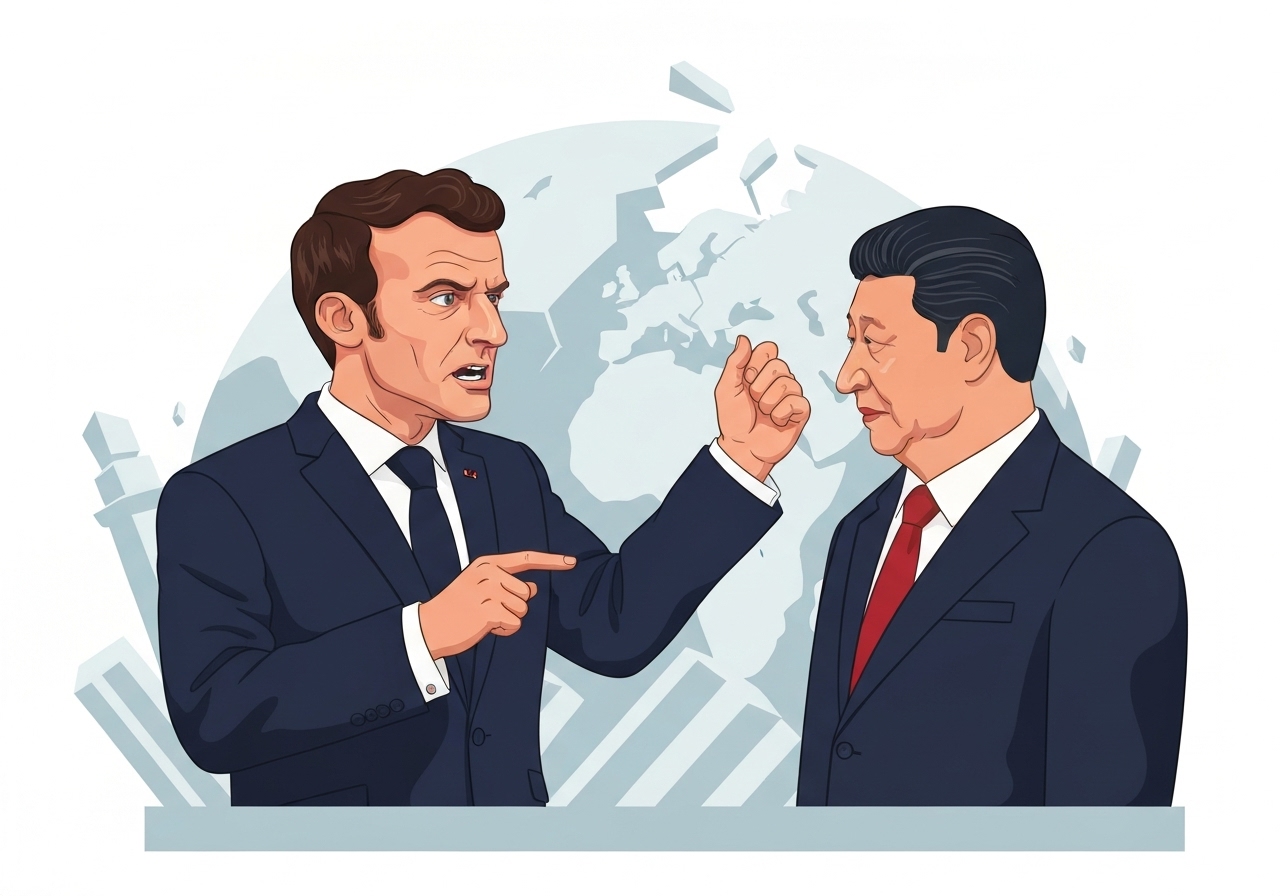
French President Emmanuel Macron warned of a risk of “disintegration” to the global order during talks with Chinese leader Xi Jinping, calling attention to how escalating rivalries among major powers could undermine existing institutions and norms. The exchange took place during a bilateral meeting reported by international media and has been framed by officials as a frank strategic discussion. Macron framed his comments as a call to preserve multilateral frameworks rather than to confront Beijing directly. The immediate result was a public airing of sharp differences over geopolitical responsibility and the future shape of global governance.
Key Takeaways
- President Emmanuel Macron warned of the risk of “disintegration” to the international order during a meeting with Xi Jinping, according to reporting by international outlets.
- The meeting focused on strategic competition, global security risks and the need to uphold international institutions that manage trade, climate and conflict.
- French and Chinese official readouts characterized the talks as intensive but did not announce major new bilateral agreements.
- Macron presented the warning as part of a broader French push for European strategic autonomy and multilateral cooperation.
- Observers note the remarks underscore growing European concern about decoupling and geopolitical fragmentation between China and Western powers.
Background
Tensions between major powers have risen in multiple spheres: military standoffs in the Indo-Pacific, sanctions related to the war in Ukraine, and competitive industrial policies that encourage economic disentanglement. European leaders, including President Macron, have increasingly tried to navigate a path that balances security partnerships with Washington and economic engagement with Beijing. France has promoted the idea of strategic autonomy for Europe—seeking to preserve policy space to act independently on defence, trade and technology while remaining aligned with transatlantic allies.
China under Xi Jinping has pursued assertive regional policies alongside an expanded global economic footprint. Beijing frames its international role in terms of sovereignty and development rather than alignment with existing Western-led institutions. Past high-level visits between French and Chinese officials have combined commercial agreements with candid conversations about differences, making such bilateral meetings a regular forum for airing strategic disagreements without severing diplomatic ties.
Main Event
The bilateral meeting brought Macron and Xi together for what officials described as an intense exchange on global risks and responsibilities. Macron used the encounter to warn that unchecked rivalries and fragmented governance could erode the frameworks that have structured international relations since the mid-20th century. According to reports, the French leader emphasized the need to defend multilateral mechanisms that manage conflict, trade rules and climate cooperation.
Chinese authorities framed the session as constructive, underscoring areas of mutual interest such as economic cooperation and climate commitments, while avoiding public escalation. Official communiques released after the talks focused on continuing dialogue and closer bilateral contacts rather than on detailed concessions. Both sides emphasized the importance of managing competition responsibly, but they did not converge on concrete pathways to reshape contested issues.
The meeting did not produce a headline list of binding agreements; instead, it served as a strategic calibration. Macron sought to signal to European and transatlantic partners that Paris views the current configuration of global institutions as fragile. Beijing used the platform to reiterate its long-standing positions on sovereignty, development priorities and opposition to bloc-based containment strategies.
Analysis & Implications
Macron’s warning about “disintegration” is notable for its rhetorical force: it frames systemic risk in existential terms and signals a sense of urgency among at least some European capitals. If sustained, such language could push the EU to accelerate efforts to shore up multilateral institutions, deepen defence coordination, and develop more resilient economic links. For allies in NATO and across the European Union, the comments underscore the stakes of managing competition with China without precipitating an irreversible split in the global order.
For China, the exchange highlights the diplomatic tightrope Beijing must walk. On one hand, sustaining stable trade and political ties with Europe remains valuable; on the other, Beijing resists pressure to accept security arrangements that it perceives as designed to limit its strategic space. The inability to agree on mechanisms to reduce systemic risk—ranging from arms control dialogues to norms for technology and trade—raises the prospect of more fragmented governance across critical domains.
Economically, fragmentation could accelerate trends toward near-shoring, bifurcated supply chains, and competing standards in technology and finance. That would add costs for multinational firms and complicate policy coordination on global challenges like climate change. Diplomatically, Macron’s intervention may prompt more active engagement by EU institutions to present a unified approach to China that balances deterrence and cooperation.
Reactions & Quotes
“disintegration of the world order”
Emmanuel Macron (as reported)
Financial Times reporting described the exchange as a candid session that exposed strategic differences between Paris and Beijing without producing immediate breakthroughs.
Financial Times (media, subscription)
Unconfirmed
- The precise date and location of the meeting, beyond media reports of a bilateral encounter, have not been independently confirmed in this piece.
- Details on any private understandings or off-the-record commitments made during the talks have not been publicly verified.
- The full text of any direct exchanges between Macron and Xi that go beyond published excerpts remains unavailable for independent confirmation.
Bottom Line
Macron’s public warning is a strategic signal aimed at both domestic and international audiences: it underscores European concern about systemic risks arising from great-power rivalry and asks partners to invest in preserving multilateral mechanisms. Whether the remark catalyses concrete policy shifts in Brussels or Beijing will depend on follow-up diplomacy and the willingness of other actors to join sustained efforts to reduce fragmentation.
In the near term, expect intensified exchanges among European capitals, deeper consultation with transatlantic partners, and public diplomacy aimed at bolstering institutional resilience. The episode is a reminder that high-level meetings between major powers are not only occasions for commerce but also crucial moments for clarifying strategic red lines and testing the willingness of governments to cooperate in the face of systemic risk.
Sources
- Financial Times — media (subscription)