
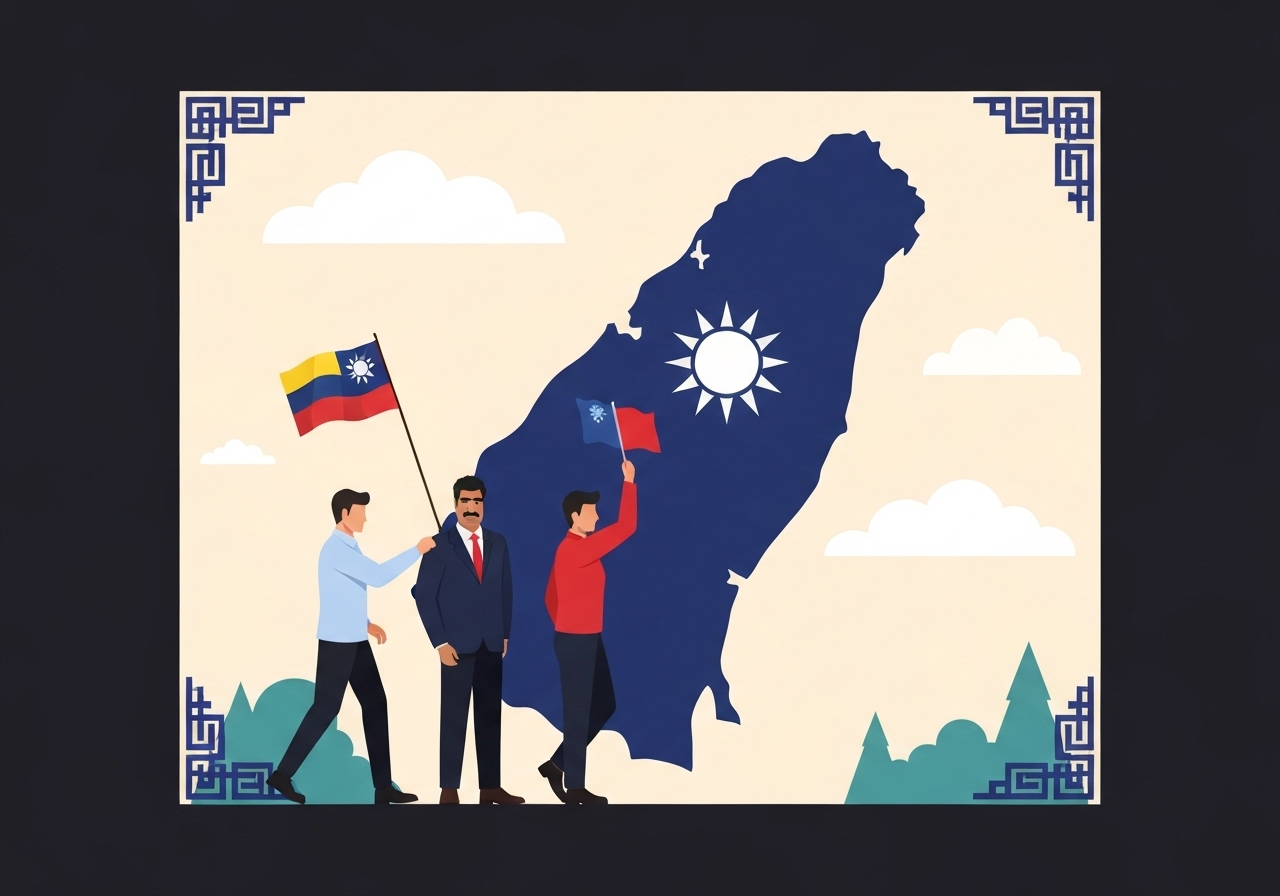
Lead
On the night U.S. special operations forces executed a raid that removed Venezuelan President Nicolás Maduro from his Caracas residence, Maduro had just been publicly praising China’s diplomatic support while meeting China’s envoy. Within hours, elite U.S. Delta Force troops had taken him into custody, delivering a sudden political shock to Beijing’s closest Latin American ally. The incident has strained China–Venezuela ties, put practical questions over China’s energy access on the table, and triggered a wave of debate on Chinese social platforms about whether a similar operation could be applied to Taiwan.
Key Takeaways
- U.S. Delta Force commandos captured President Nicolás Maduro in Caracas during a nighttime raid, removing a leader who had recently reaffirmed close ties with China.
- China and Venezuela formalized an “all‑weather strategic partnership” in 2023, deepening diplomatic and economic links that include large-scale loans and infrastructure deals.
- Chinese imports may have accounted for as much as 80% of Venezuelan crude exports in late 2025, according to a Kpler market update.
- Venezuela’s oil output has fallen roughly two‑thirds from its peak to about 1 million barrels per day, reducing Tehran‑style leverage despite large proven reserves.
- China has lent Venezuela about $62.5 billion since 2007, the largest single‑country recipient of Chinese finance in that period (Stimson Center research).
- State media and military‑linked accounts framed the U.S. raid as hegemonic behavior and used it to argue for stronger Chinese deterrence capabilities.
- On Chinese social platforms, topics tied to the operation drew massive engagement—reportedly more than 650 million impressions on Weibo—sparking speculation that the raid could be a template for tactics against Taiwan.
- Experts caution that strategic, military and political differences make a Taiwan parallel unlikely, though the raid alters perceptions of what great‑power coercion can look like.
Background
China and Venezuela have maintained close relations for decades, built on ideological sympathy and mutual opposition to U.S. influence. Beijing significantly increased its economic presence in Caracas after 2007, supplying loans, infrastructure investment and a steady market for Venezuelan crude. By lending an estimated $62.5 billion to Venezuela over the last decade and more, China became the country’s largest external financier during that period.
Venezuela’s oil sector, once the cornerstone of its economy, has contracted sharply under the Chávez and Maduro administrations. Production has fallen by roughly two‑thirds from its peak to approximately 1 million barrels per day, meaning Venezuela’s actual export volumes are far below the theoretical weight of its proven reserves. In the wake of U.S. sanctions beginning in 2019, China emerged as the region’s primary buyer of Venezuelan crude, sustaining flows even as state buyers declined.
Main Event
U.S. special operations forces, in a late‑night operation planned during a period of heightened secrecy, breached Maduro’s private residence in Caracas and detained him. The raid came after Maduro publicly met China’s top envoy to Latin America, Qiu Xiaoqi, and expressed warm personal gratitude toward President Xi Jinping. That juxtaposition — public diplomacy hours before a covert capture — amplified the geopolitical reverberations.
Beijing responded swiftly with public condemnation, labeling the action an act of “hegemonic” interference and demanding Maduro’s release. State outlets framed the raid as evidence of U.S. double standards regarding international norms, while a PLA‑linked social account highlighted the need for robust military capabilities to prevent similar outcomes.
On Chinese social media, users debated the implications—many drawing an explicit parallel between the U.S. operation and hypothetical Chinese options against Taiwan. Posts and hashtags linked to the raid reportedly accumulated hundreds of millions of impressions on Weibo, reflecting both nationalist sentiment and serious strategic discussion within online communities.
Analysis & Implications
Strategically, Maduro’s removal is a setback for Beijing’s influence in Latin America because it disrupts a high‑level political partnership cultivated over years and backed by substantial financial exposure. The immediate policy challenge for China is protecting its economic interests — notably discounted crude purchases and infrastructure projects — without escalating into direct confrontation with the United States.
On energy, analysts caution that the practical impact on China’s overall oil supply should be limited. Venezuela’s current output is around 1 million barrels per day and much of the trade is handled by non‑state buyers and independent refiners attracted by steep discounts. Even if official state pipelines narrow, China’s diversified global oil imports reduce the likelihood of a severe shortfall.
Politically, the operation reshapes perceptions of coercion. If great powers or their proxies increasingly view targeted raids as a viable tool to remove adversarial leaders, democracies and autocracies alike will reassess defense postures and contingency planning. For Taiwan, the episode intensifies debates about deterrence, asymmetric defenses, and the credibility of external security guarantees from the U.S.
Comparison & Data
| Measure | Value / Note |
|---|---|
| Chinese lending to Venezuela (since 2007) | $62.5 billion (Stimson Center) |
| Venezuela oil output | ~1 million barrels per day (down ~2/3 from peak) |
| Share of Venezuelan exports to China (late 2025) | Up to 80% (Kpler market update) |
| Weibo impressions linked to the raid | ~650 million (reported engagement) |
The table highlights why the incident matters: China’s financial exposure and concentrated import links make Venezuela strategically important, but reduced crude volumes and a fragmented buyer base limit how much leverage Caracas can provide in practice. Policymakers will weigh the monetary losses against reputational and diplomatic fallout.
Reactions & Quotes
Chinese leadership and state media framed the raid as an example of U.S. overreach, while military‑linked voices used the episode to argue for stronger defenses. Below are representative official and expert reactions.
“Unilateral bullying undermines international order; all countries should respect others’ independent development choices.”
Xi Jinping (meeting with Irish prime minister)
This remark was delivered by President Xi in a diplomatic meeting following the raid and was used in state messaging to underscore Beijing’s view that the U.S. action violated norms.
“Without hardened, core capabilities, it is impossible to deter predatory great powers.”
Account linked to the People’s Liberation Army (social media)
A PLA‑linked account emphasized capability shortfalls as a vulnerability. That line of messaging seeks to translate the episode into domestic support for bolstered military preparedness.
“China is not the U.S., and Taiwan is not Venezuela. Comparisons that China can carry out the same thing in Taiwan are wrong and inappropriate.”
Wang Ting‑yu (Taiwan lawmaker)
Taiwanese officials largely dismissed the notion that Beijing would or could replicate the tactic, stressing political, geographic and military differences that make a direct parallel unlikely.
Unconfirmed
- Whether Beijing has operational plans to replicate targeted leader‑capture missions overseas — there is no publicly confirmed evidence of such intent.
- The long‑term change in China’s access to Venezuelan crude volumes following the raid — market reports suggest disruption, but durable effects remain unclear.
- Exact details of who authorized and operationally coordinated the U.S. raid beyond public statements — some operational specifics remain classified.
Bottom Line
Maduro’s capture is both a symbolic and practical blow to Beijing’s Latin American agenda: it interrupts a high‑level partnership that included substantial Chinese investment and preferential oil flows. Yet the material impact on China’s energy security appears limited in the near term because Venezuela’s production is small relative to global needs and buyers are often private refiners.
Strategically, the incident alters international perceptions about the acceptability and effectiveness of bold, targeted action against foreign leaders. For Taiwan, experts say the concrete likelihood of the same tactic being applied is low given geographic, political and military obstacles — but the episode does sharpen Taipei’s urgency to bolster deterrence and readiness. For Beijing, the immediate priority will likely be damage control: protecting economic interests and managing diplomatic fallout without escalating into a broader confrontation with Washington.
Sources
- CNN — international news reporting and field reporting (primary account of the raid and reactions)
- Kpler — market data firm (report on Venezuela export shares, late 2025)
- Stimson Center — research institute (analysis of Chinese loans to Latin America)
- International Crisis Group — think tank (expert analysis on China’s strategic calculations)
- Eurasia Group — political risk consultancy (commentary on regional implications)