
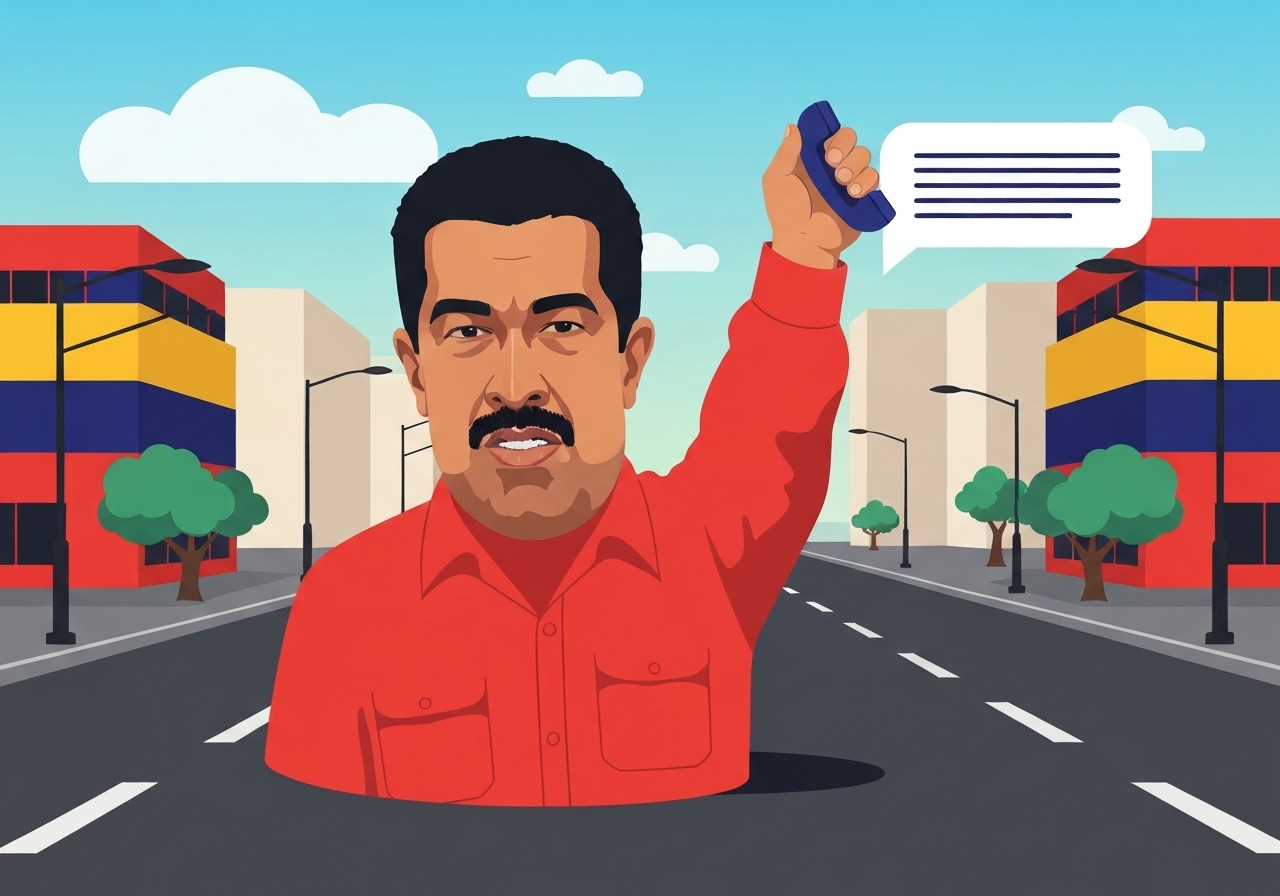
Venezuelan President Nicolás Maduro made a rare public appearance on Sunday, Nov. 30, at a specialty coffee awards event in eastern Caracas, ending days of speculation about his whereabouts. Maduro had not been seen publicly since posting a short video on Wednesday, prompting questions as tensions with the United States intensified. The appearance came minutes after US President Donald Trump acknowledged he had spoken by phone with Maduro, a development both governments have largely kept opaque. Caracas framed the moment as a show of domestic resilience even as diplomatic and military pressure from Washington escalates.
Key takeaways
- Maduro reappeared on Nov. 30 at an annual coffee awards event in eastern Caracas after no public sightings since Wednesday; he handed medals and made brief remarks without directly addressing the crisis.
- US President Donald Trump confirmed a phone call with Maduro when asked on Air Force One, saying only that the call occurred and offering no assessment of its content.
- The US has dispatched more than a dozen warships and roughly 15,000 troops to the region, citing counter‑drug operations; Venezuelan officials view the deployments as pressure to remove Maduro.
- Maduro sent a letter dated Nov. 30 to OPEC Secretary General Haitham Al Ghais accusing the US of threats to Venezuela’s oil reserves and warning of risks to global oil stability.
- Venezuela publicly acknowledged on Nov. 30 that some of its citizens were among those killed in recent US maritime strikes; Venezuelan officials say the strikes have killed more than 80 people since September.
- Jorge Rodríguez, president of Venezuela’s National Assembly, announced plans to open a special parliamentary commission to investigate the strikes and the deaths of Venezuelan citizens.
- Human rights groups report more than 50 political detainees in October; the UN Office of the High Commissioner for Human Rights has previously documented concerns about fair trial guarantees in Venezuela.
Background
The episode unfolds against months of rising friction between Caracas and Washington. The US has framed a stepped‑up maritime and aerial presence in the Caribbean as part of intensified counter‑drug operations that began in September; Venezuelan authorities view those moves as attempts to destabilize the Maduro government. Venezuela holds some of the world’s largest proven oil reserves, a strategic factor that both governments cite in public statements and private analyses.
Maduro normally appears on state television frequently; his absence for several days after posting a driving video on Wednesday generated immediate domestic and international speculation. Past incidents—including targeted strikes in the Caribbean and accusations of extrajudicial actions by Venezuelan security forces—have heightened sensitivities on both sides and raised the political stakes of any high‑profile public reappearance.
Main event
At the coffee awards in eastern Caracas, Maduro sat before producers and distributed medals while sampling coffees and offering brief remarks focused on the economy and national resilience. He did not use the platform to disclose details of any diplomatic contacts or provide a policy response to the US military presence. The tone of his closing remarks — declaring Venezuela “indestructible” and “untouchable” — was framed by aides as a message of national unity amid external pressure.
The timing of the event coincided with President Trump confirming a phone conversation with Maduro. Asked aboard Air Force One whether the call had taken place, Trump replied, “the answer is yes,” and declined to characterize its tenor. US and Venezuelan administrations have largely avoided providing specifics about the exchange, and Maduro’s inner circle has remained publicly circumspect about its substance.
Venezuelan officials, including National Assembly head Jorge Rodríguez, used a separate press briefing to announce a parliamentary inquiry into recent US strikes against alleged drug traffickers that Venezuelan authorities say killed some of their citizens. Rodríguez described the actions as unlawful and signaled a domestic investigation to establish facts and hold actors to account.
Analysis & implications
Maduro’s public return serves multiple domestic and international purposes. Domestically, a visible attendance at an agricultural awards ceremony projects normalcy and continuity to supporters and neutral observers after days of uncertainty. Internationally, the timing — coming alongside acknowledgement of a US‑Maduro phone call — underscores the opaque, transactional nature of high‑level communications between adversaries in moments of crisis.
The OPEC letter dated Nov. 30 escalates the narrative beyond bilateral tensions into the realm of global energy markets. Maduro’s accusation that US threats endanger Venezuelan oil production seeks to rally both domestic constituencies and international actors invested in market stability. While Venezuela’s crude output and production infrastructure have long suffered from underinvestment, allegations of external coercion can influence trading sentiment and diplomatic alignments.
Operationally, the presence of US warships and roughly 15,000 troops in the region raises the risk of miscalculation. Washington frames these assets as focused on counter‑drug interdiction, but sustained military signaling near Venezuelan waters increases the potential for incidents that could trigger broader diplomatic or security responses. For regional neighbors, the episode complicates cooperation on security and migration issues and tests the capacity of multilateral forums to mediate.
Comparison & data
| Date/Period | Reported action | Reported figures |
|---|---|---|
| Since September 2025 | US maritime strikes on alleged drug vessels | Reportedly >80 killed (US & regional reporting) |
| Nov. 2025 | US regional deployments | More than a dozen warships; ~15,000 troops deployed |
| Nov. 30, 2025 | Maduro public appearance / OPEC letter | Public reappearance; letter dated Nov. 30 to OPEC |
The table summarizes reported figures and key dates central to the current escalation. While casualty and deployment numbers are drawn from official statements and press reporting, independent verification in some cases remains limited; investigative work and official inquiries may adjust these totals.
Reactions & quotes
Government and public responses have been sharply divided. Venezuelan officials have framed recent US actions as illegal and lethal; US officials emphasize counter‑drug intent and protecting Americans. Civil society and rights groups continue to warn about due‑process deficits inside Venezuela even as they critique foreign military actions in the Caribbean.
“There’s no declared war… therefore this cannot be classified as anything but murder,”
Jorge Rodríguez, President of Venezuela’s National Assembly (government official)
Rodríguez used a Nov. 30 press conference to highlight Venezuelan casualties from the strikes and announced a planned parliamentary investigation to gather evidence and seek accountability.
“The answer is yes,”
Donald Trump, President of the United States (official remark)
Trump acknowledged a phone conversation with Maduro when asked on Air Force One but declined to describe its substance, telling reporters not to infer further intent from his prior warnings about Venezuelan airspace.
“We will continue to be free and sovereign! Nothing will stop us,”
Yvan Gil Pinto, Venezuelan Foreign Affairs Minister (official statement on Telegram)
Venezuelan foreign ministry posts circulated Maduro’s OPEC letter and emphasized a firm stance on defending national energy resources.
Unconfirmed
- Precise content and outcomes of the phone conversation between Presidents Trump and Maduro remain undisclosed by either side.
- Exact number and nationalities of those killed in specific US strikes are pending official verification and may change as investigations proceed.
- Whether US deployments signal imminent strikes on Venezuelan territory has not been confirmed despite public warnings and statements from US officials.
Bottom line
Maduro’s reappearance on Nov. 30 punctuates a fraught period of heightened rhetoric, military signaling and limited, opaque diplomacy between Caracas and Washington. The simultaneous acknowledgement of a presidential phone call and Venezuela’s public allegations of US culpability in maritime strikes complicate prospects for de‑escalation.
Key near‑term developments to watch include the findings of Venezuela’s planned parliamentary commission, any formal responses from OPEC or other international bodies to Maduro’s Nov. 30 letter, and whether Washington provides additional detail about the nature and objectives of its regional deployments. Absent clearer transparency from either government, the risk of misinterpretation and escalation will remain elevated.
Sources
- CNN (news report on Maduro’s appearance and US‑Maduro phone call)
- OPEC (international organization; referenced for letter to secretary general)
- Office of the UN High Commissioner for Human Rights (international human rights body; prior reporting on Venezuelan trials and rights concerns)