
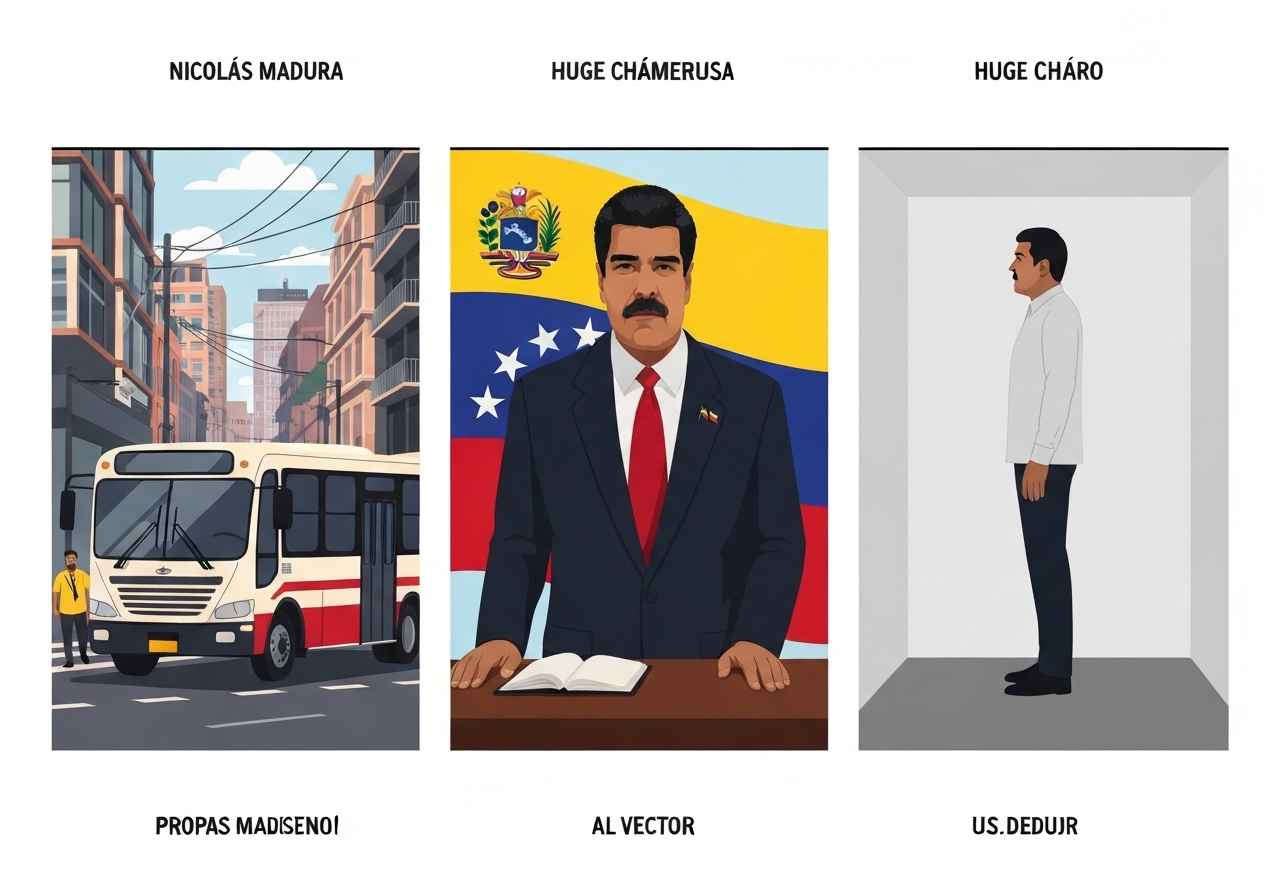
On 3 January 2026, Venezuelan president Nicolás Maduro, 63, was removed from power after a US special forces operation that seized him and transported him out of the country. Maduro, who led Venezuela for 13 years and eight months, now faces indictment in the United States on narcotics-related charges and a likely long prison term. Domestically his record of economic collapse, mass emigration and repeated crackdowns on dissent will shape how Venezuelans judge his removal. Internationally the arrest deepens geopolitical tensions across the Americas and raises immediate legal and diplomatic questions.
Key takeaways
- Maduro governed Venezuela for 13 years and eight months before his capture on 3 January 2026; he is 63 years old.
- He began life in El Valle, Caracas, born 23 November 1962, worked as a Caracas subway bus driver and became a union leader and Chávez loyalist.
- Oil production fell to less than 400,000 barrels per day during his rule, a collapse that underpinned Venezuela’s economic and humanitarian crisis.
- Large-scale protests during his presidency resulted in deadly crackdowns: early post-2013 unrest left 43 dead; later demonstrations prompted an ICC probe after more than 100 deaths and thousands injured.
- Maduro was named Chávez’s successor in 2013 and held successive contested terms, including a disputed third term sworn in January 2025.
- US policy hardened under the Trump administration’s return in 2025, including military operations in the Caribbean and actions against suspected drug shipments that reportedly killed over 100 people.
- US authorities intend to indict Maduro on narcotics charges; legal proceedings in the United States and international investigations (ICC) now run in parallel.
Background
Nicolás Maduro rose from modest origins in El Valle, a working-class Caracas neighborhood. Born on 23 November 1962, he never completed university studies but attended training in Cuba in 1986 before returning to work as a bus driver and union organizer for the Caracas transport system. His union role and allegiance to Hugo Chávez propelled him into politics; he joined Chávez’s movement in the 1990s and served six years in the National Assembly before becoming foreign minister and later vice-president.
When Chávez died in 2013 he named Maduro as his political heir. Maduro narrowly won the subsequent presidential election that year and then consolidated power amid escalating economic and political crises. The ruling United Socialist Party lost the National Assembly in 2015, prompting Maduro to create a pro-government Constituent Assembly in 2017 to sideline the opposition-controlled legislature, a move that triggered new waves of protest and repression.
Main event
On Saturday, 3 January 2026, US special forces captured Maduro and transported him out of Venezuelan territory, according to multiple reports. US officials have placed him in custody to face narcotics charges that, if proven, carry lengthy prison terms in the United States. The operation occurred after months of increased US pressure, including military deployments in the Caribbean and strikes on vessels suspected of trafficking drugs.
The capture instantly created a security and political vacuum in Caracas. Government institutions loyal to Maduro were reported on high alert and public order measures were tightened; the country entered a de facto state of emergency as authorities on both sides of the Atlantic assessed next steps. Maduro’s political machine — a complex mix of military, paramilitary and party networks — remains a central variable in determining whether Venezuela fractures or stabilizes in the wake of his removal.
Authorities in the United States have signalled an intention to bring formal charges. Separately, the International Criminal Court has already opened an investigation into alleged crimes against humanity connected to government crackdowns during Maduro’s tenure. Domestic opposition leaders and many Venezuelan exiles have called the seizure a long-overdue move; others warn that foreign intervention and an abrupt leadership change risk escalating violence and humanitarian suffering.
Analysis & implications
Domestically, Maduro’s removal removes a central pillar of the ruling project but does not automatically dismantle the institutions that sustained it. The Venezuelan state has been shaped over more than two decades by intertwined party, military and irregular security networks; those actors hold local power and resources that can be mobilized independently of a single leader. Elections or negotiated transitions will depend on how quickly moderating forces can consolidate authority and whether security actors accept new arrangements.
Economically, the country faces immediate instability. Venezuela’s oil sector, which once generated foreign exchange on a massive scale, fell to below 400,000 barrels per day under Maduro — a level that curtailed state capacity to import goods and fund services. Restoring production and attracting investment will be essential but will take years and hinges on legal certainty, the lifting of sanctions, and security on the ground.
Regionally, the arrest will reshape diplomatic alignments. Governments that backed Maduro will confront a tested choice between protecting allies and seeking pragmatic engagement to stem refugee flows and economic contagion. Washington’s direct action raises alarm among states wary of extraterritorial operations, even as some regional capitals welcome the removal of a leader blamed for narcotrafficking and repression.
Legally, parallel tracks complicate the picture. US criminal charges focus on narcotics offenses and related conspiracies; the ICC investigation addresses alleged human-rights crimes. The outcomes may diverge in timing and consequence: a US conviction could mean a long prison sentence and removal from Venezuelan politics for good, while ICC findings could guide accountability efforts for abuses that occurred on Venezuelan soil.
Comparison & data
| Indicator | Recent figure |
|---|---|
| Venezuelan oil production (low point) | <400,000 barrels per day |
| Duration of Maduro rule | 13 years, 8 months |
The decline in oil output to under 400,000 barrels per day represents a collapse from previous decades when Venezuela exported in the millions of barrels daily, eroding the fiscal base the state once relied upon. That collapse, combined with sanctions, capital flight and mismanagement, contributed to shortages, hyperinflation and mass emigration over more than a decade.
Reactions & quotes
US officials described the operation as an enforcement action against transnational narcotics facilitation.
US Department of Justice (official statement)
Opposition figures framed the arrest as accountability for years of repression and economic collapse, while urging legal transparency and democratic restoration.
María Corina Machado (opposition leader)
The International Criminal Court noted that its separate investigation into alleged crimes against humanity under Maduro’s government was ongoing and remains an independent process.
International Criminal Court (official)
Unconfirmed
- Reports that Maduro’s wife, Cilia Flores, was also seized have appeared in some outlets but remain unverified by independent sources.
- Precise casualty counts and operational details from the US special forces action have not been publicly confirmed by all parties involved.
- Exact domestic vote tallies from the 2024 election remain contested; opposition-collected tally sheets covering more than 80% of machines showed large defeats for the incumbent but official detailed counts were not released.
Bottom line
Nicolás Maduro’s capture on 3 January 2026 marks a decisive rupture in a fraught chapter of Venezuelan politics. It removes a polarizing figure blamed by many for economic collapse, human-rights violations and mass emigration, but it does not by itself resolve the institutional and social fractures that have deepened over two decades.
The immediate future will hinge on how Venezuelan security actors, political parties and international stakeholders manage the transition: whether through negotiated arrangements, interim governance, or contested power struggles. Simultaneously, legal processes in the United States and at the ICC will shape long-term accountability and the prospects for Venezuela’s reintegration into regional diplomatic and economic systems.
Sources
- The Guardian — news report (detailed account of Maduro’s rise and capture)
- International Criminal Court — official (ongoing investigation information)
- US Department of Justice — official (criminal charges and press statements)
- Reuters — news agency (regional coverage and reporting)
- Associated Press — news agency (reporting on Venezuelan events and regional reactions)