
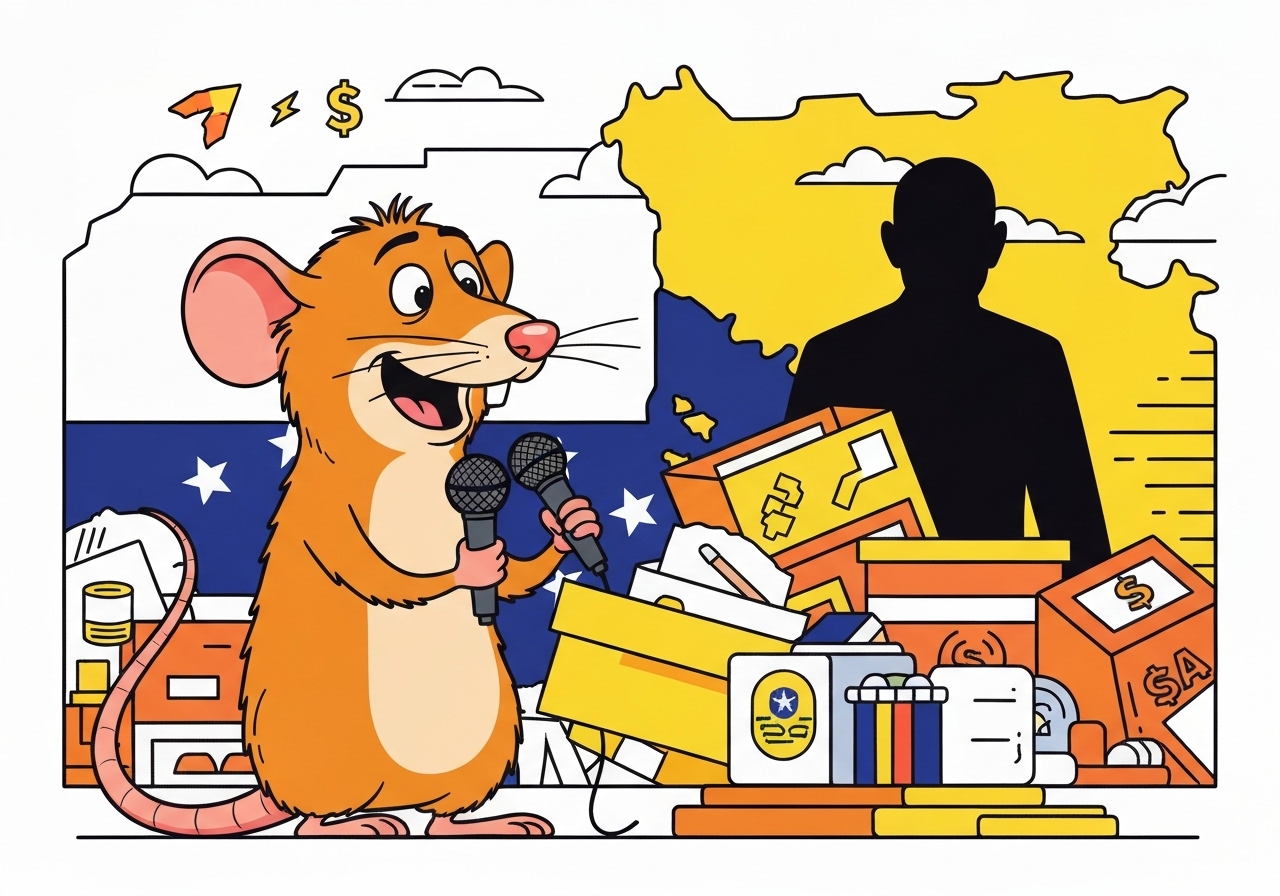
On Jan 2, 2026, Venezuelan President Nicolás Maduro told a prerecorded interview aired on state television that Caracas is willing to negotiate with the United States on combating drug trafficking, while declining to discuss a reported CIA drone strike on Venezuelan soil. The interview, taped on New Year’s Eve, came as the U.S. announced five strikes that day against alleged drug-smuggling boats, part of a wider campaign Washington says has so far hit 35 boats and killed at least 115 people. Maduro framed U.S. pressure since August as an attempt to force regime change and access Venezuela’s oil, but he also said Caracas is prepared to talk seriously about drugs and to welcome U.S. oil investment, citing Chevron as an example. Officials and anonymous sources have given differing accounts of recent operations, leaving some details unresolved.
Key takeaways
- Maduro said Venezuela is willing to negotiate with the U.S. on drug trafficking, declaring Caracas ready to “start talking seriously, with data in hand” about an agreement.
- The interview was prerecorded on New Year’s Eve, the same day the U.S. military reported strikes against five alleged drug-smuggling boats, bringing the reported total to 35 strikes and at least 115 fatalities.
- The U.S. administration described the strikes as necessary to stem drug flows and has characterized its campaign as part of an “armed conflict” with cartels.
- Two people familiar with the operation told reporters that a CIA-led drone strike hit a Venezuelan docking area last week, an allegation Maduro refused to discuss in detail.
- Maduro accused the U.S. of a pressure campaign beginning in August that included a large military deployment to the Caribbean, and reiterated that Venezuela would accept U.S. investment in oil, citing Chevron as an active exporter to the United States.
Background
Since August 2025 the United States stepped up a pressure campaign against Venezuela that, according to Caracas, has included a large U.S. naval deployment in the Caribbean and a sequence of strikes on suspected narcotics conveyances. The White House has framed the actions as part of a broader effort to disrupt transnational drug networks that it says use maritime routes off Venezuela and in the eastern Pacific. Venezuela, which holds the world’s largest proven oil reserves, has repeatedly accused Washington of seeking regime change and of attempting to secure access to its energy resources.
Venezuela and the United States maintain a history of tense relations that mix sanctions, diplomatic expulsions, and mutual accusations. At the same time, energy ties remain practically relevant: Chevron Corp. is identified as the only major oil company currently exporting Venezuelan crude to the United States. The combination of narcotics interdiction, energy interests, and geopolitical rivalry makes any bilateral negotiation politically sensitive on both sides.
Main event
In the televised interview with Spanish journalist Ignacio Ramonet, Maduro reiterated his view that U.S. policy toward Venezuela is aimed at imposing a government change and securing oil. He argued that threats and force have been used as leverage and urged a shift to factual, data-driven discussions. Maduro said Caracas is willing to negotiate on drug trafficking and open to U.S. oil investment on terms similar to current arrangements with Chevron.
The interview was recorded on Dec 31, 2025, the day U.S. forces announced strikes on five alleged drug-smuggling boats. The Trump administration reported that these actions raised the total number of known boat strikes to 35 and the number of people killed to at least 115, figures that include Venezuelan nationals among the victims. U.S. officials have publicly defended the operations as a necessary escalation to disrupt cartels moving illegal narcotics toward the United States.
Separately, two people with knowledge of the matter, speaking anonymously because of the classified nature of the operation, told reporters that the CIA carried out a drone strike last week against a docking area believed to have been used by Venezuelan drug cartels. If confirmed, that operation would mark the first known direct action on Venezuelan soil since the maritime strikes began, representing a significant intensification of clandestine activity linked to the overall campaign.
Analysis & implications
A public offer to negotiate on drug trafficking signals a potential opening for deescalation, but it is constrained by deep mutual distrust. For Washington, any talks would need credible verification mechanisms and assurances that operational activities will not continue to undermine Venezuelan sovereignty. For Caracas, agreeing to discussions risks domestic political backlash if perceived as capitulation to U.S. pressure.
Economically, Maduro’s invitation for U.S. oil investment is notable. Chevron’s ongoing exports to the United States create a pragmatic channel that could be expanded into negotiation leverage. However, reopening broader energy cooperation would require navigating U.S. sanctions, domestic political optics in Venezuela, and legal or contractual complexities tied to state ownership and compensation.
Militarily and legally, the reported CIA action raises questions about escalation and precedent. A foreign clandestine strike on national soil, if verified, could deepen diplomatic rupture and increase the risk of miscalculation. It would also complicate any negotiation track on drugs by undermining trust and provoking nationalist responses that make compromise politically costly.
Comparison & data
| Metric | Reported figure |
|---|---|
| Known maritime strikes | 35 |
| People reported killed | At least 115 |
| Strikes on New Year’s Eve | 5 |
Those figures reflect the totals announced by the U.S. administration as of early January 2026. Counting and attribution of casualties in maritime interdiction campaigns are often contested, with different parties disputing the number of combatants versus civilians affected and the legal basis for the operations. Any negotiation or independent inquiry would need transparent incident-level data to reconcile differing accounts.
Reactions & quotes
Venezuelan state media and officials framed Maduro’s comments as a reasoned offer to shift from confrontation to diplomatic engagement on narcotics, while also reiterating accusations of U.S. interference in domestic affairs. In Washington, the administration defended its interdiction campaign as urgently necessary to disrupt flows of illegal drugs to the United States.
It is time for both nations to start talking seriously, with data in hand
Nicolás Maduro
We consider the campaign an escalation aimed at stopping the flow of illegal narcotics, and we will act to protect U.S. borders
U.S. administration official
Unconfirmed
- The report that the CIA carried out a drone strike at a Venezuelan docking area last week is based on accounts from two anonymous sources and has not been officially acknowledged by the U.S. government.
- Attribution of all maritime strikes to cartel logistics or confirmation that each target was used for drug trafficking has not been independently verified; casualty counts remain disputed by different observers.
Bottom line
Maduro’s public openness to U.S. talks on drug trafficking creates a potential diplomatic doorway, but deep distrust, recent covert and overt operations, and competing political incentives on both sides make meaningful progress uncertain. Any negotiation will require robust verification, safeguards for sovereignty, and clear rules of engagement to prevent further escalation.
In the near term, two trajectories are possible: a calibrated, data-driven dialogue that leads to limited cooperation on interdiction and information-sharing, or a continuation of unilateral operations that harden positions and raise the risk of wider confrontation. Observers should watch for concrete proposals, independent incident verification, and signals from energy and legal channels that would indicate whether this opening can be converted into durable cooperation.
Sources
- PBS NewsHour — news organization reporting on the January 2, 2026 interview and related developments
- The Associated Press — news agency reporting and background used in original coverage