
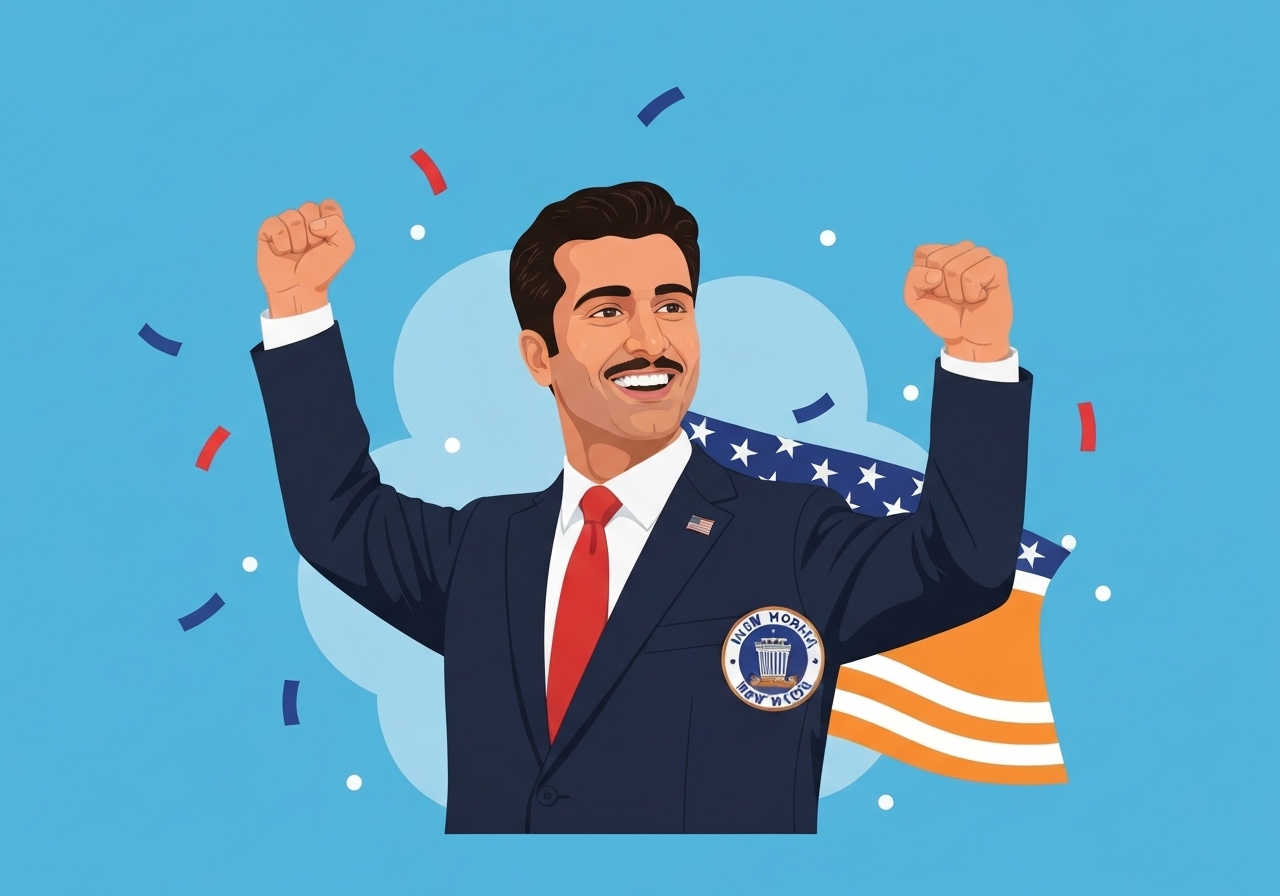
Lead: Zohran Mamdani, a 34-year-old Ugandan-born democratic socialist, won the New York City mayoral contest on Tuesday, according to an Associated Press race call. He becomes the citys first Muslim and first person of South Asian descent to be elected mayor, and the youngest mayor in over a century. Mamdani defeated former governor Andrew Cuomo, who ran as an independent after losing the Democratic primary, and Republican Curtis Sliwa. His victory caps a rapid rise from a Queens state assembly seat to the citys highest office and signals a major win for progressive politics.
Key Takeaways
- Mamdani, 34, was declared the winner by the Associated Press on November 4, 2025, making history as the first Muslim and South Asian New York City mayor and the youngest in more than 100 years.
- He won the June Democratic primary by roughly 12 percentage points, emerging from a crowded field of progressive and establishment contenders.
- Main policy commitments include fare-free buses, a freeze on stabilized rents, universal child care, a higher minimum wage by 2030, and higher taxes on large corporations and the wealthiest 1 percent of residents.
- Mamdani beat former governor Andrew Cuomo, 67, and Republican Curtis Sliwa, 71, in the general election after Cuomo reentered the race as an independent and received Mayor Eric Adams endorsement following Adams withdrawal.
- Early voting surged: the city reported 735,317 early ballots cast, more than five times the early vote in 2021 and a major factor in Mamdanis turnout advantage among younger voters.
- The result elevates progressive policy debates nationally and sets up immediate governance and legislative tests on housing, transit funding, and city-state-federal relationships.
Background
Zohran Mamdani began the 2025 cycle as a relatively low-profile state assemblymember representing parts of Queens. He positioned himself on a distinctly progressive platform and used digital organizing and volunteer mobilization to expand name recognition beyond his district. His June primary victory by about 12 percentage points signaled broad appetite among Democratic voters for a bold agenda focused on affordability and public services.
The general election quickly narrowed to three principal candidates. Andrew Cuomo, the former two-term governor who resigned in 2021 amid allegations of sexual misconduct and controversies over his administrations pandemic-era nursing home policies, staged a comeback as an independent after losing the Democratic primary. Republican Curtis Sliwa, a former mayoral candidate and founder of the Guardian Angels, remained in the race after winning the GOP primary. Incumbent Mayor Eric Adams initially filed for re-election as an independent but later withdrew and endorsed Cuomo.
Main Event
Campaign dynamics in autumn featured sharp debates over experience, public safety, housing, and how to manage New Yorks fiscal and operational challenges. Mamdani repeatedly framed the race around affordability, proposing measures such as fare-free bus service and expanded child care to ease everyday costs for working families. He also pledged to raise revenue through taxes on corporations and the top 1 percent to fund those programs.
Cuomo cast his candidacy as a return to steadier leadership, describing the city as quote in crisis and saying it needed quote effective leadership, language that underscored his pitch to moderate and safety-focused voters. Sliwa sought to position himself as an alternative to both, but polls and turnout patterns suggested he struggled to expand past his base.
On Election Day and in early voting, Mamdani benefited from large turnout among younger and first-time voters, a cohort that had been a focus of his digital outreach and volunteer program. Election authorities reported 735,317 early ballots cast citywide, a fivefold increase over 2021 early voting totals, helping deliver Mamdani his margin of victory when results were called by the Associated Press.
Analysis & Implications
Mamdani’s win represents both a generational and ideological shift in New York City politics. As a democratic socialist with a platform of expansive public programs and tax increases on high earners and corporations, his administration will test the political feasibility of progressive proposals in a city with deep budgetary constraints and competing service demands.
Policy implementation will face immediate hurdles. Many of Mamdanis proposals require cooperation from the City Council, negotiations with the state government in Albany, and, in some cases, legal or administrative changes. The city’s fiscal outlook, influenced by property tax revenue, federal transfers, and long-term liabilities, will shape how many proposals can be funded without service cuts elsewhere.
Federal-state-city relations are likely to be tense. The Trump administration publicly criticized Mamdani during the campaign, at times labeling him a quote communist and threatening to reduce federal funding. If such threats materialize, the city could face short-term budget pressure that would test Mamdanis alternate revenue plans and political capacity to secure state or private support.
Comparison & Data
| Metric | Value |
|---|---|
| Age of mayor-elect | 34 |
| June primary margin | ~12 percentage points |
| Early ballots cast (2025) | 735,317 |
| Notable opponents | Andrew Cuomo (independent), Curtis Sliwa (Republican) |
The table highlights the numerical anchors of this election. High early turnout and a decisive primary margin were central to Mamdanis pathway to victory. The figures also underscore the unusual mix of candidates, including a former governor attempting a political comeback and a repeat Republican contender.
Reactions & Quotes
Public and political reactions were immediate and varied, reflecting the polarized national debate around progressive urban governance.
quote in crisis and needed quote effective leadership
Andrew Cuomo, former New York governor
Cuomos statement framed his campaign rationale and was repeatedly cited by his supporters as the reason for his return to the ballot. It also set up recurring debates over experience versus change during the campaign.
quote communist
Donald Trump, former US president
President Trumps language, used in public comments during the campaign, exemplified the partisan pressure Mamdani faced from the national right and foreshadowed potential federal friction over funding. Progressive groups and many young voters countered with endorsements and mobilization efforts.
Unconfirmed
- The precise margin of the final certified vote count and the timeline for official certification remain subject to board confirmation and are not yet finalized.
- The exact scope and timeline for any federal funding reductions referenced by national officials are unconfirmed and would depend on future executive actions or congressional steps.
- The feasibility and legal pathway for immediate implementation of fare-free buses citywide are unconfirmed, pending budgetary, labor, and regulatory negotiations.
Bottom Line
Mamdani’s victory is a historic political milestone for New York City and for progressive urban politics nationally. It reflects a generational shift in voter energy, especially among younger and first-time voters, and a willingness among many New Yorkers to endorse bold policy experiments aimed at lowering living costs.
Governance now becomes the central test. Delivering on ambitious promises will require coalition building at City Hall, negotiations with Albany, careful fiscal planning, and likely legal and administrative work. Observers should watch early budget proposals, City Council alignments, and any federal responses closely, as these moving parts will determine how much of Mamdanis agenda can be realized in practice.
Sources
- NPR — News report summarizing election result and campaign coverage.
- Associated Press — News organization: race call and aggregated results reporting.
- New York City Board of Elections — Official election administration and turnout data.