
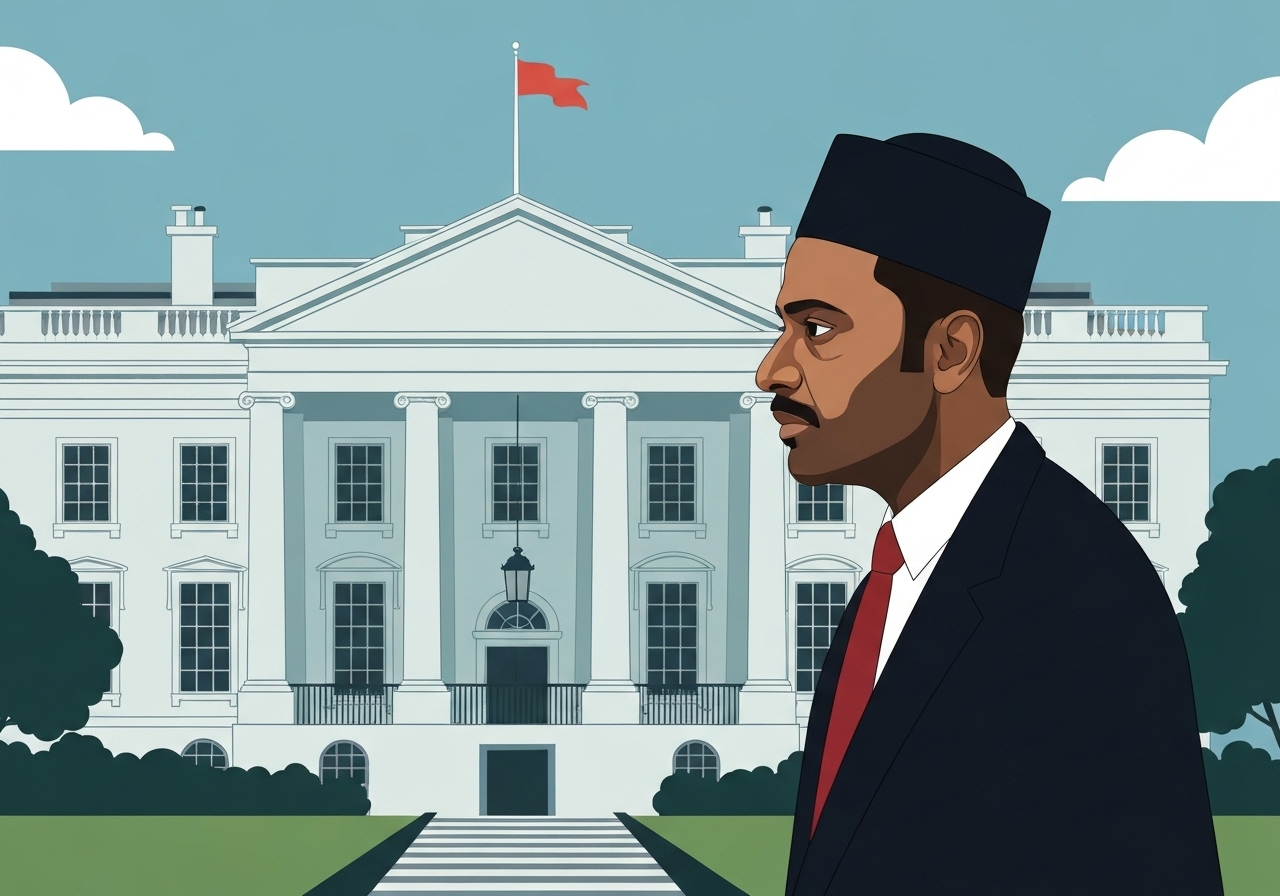
Lead: Zohran Mamdani, the mayor-elect of New York City, is scheduled to visit the White House on Friday, November 21, 2025, for a first meeting with federal leaders amid heightened local and national attention. At the same time, the U.S. Coast Guard has announced a policy change clarifying that displays of swastikas and nooses will no longer be treated as automatic ‘hate incidents’ within certain internal reporting frameworks, a move publicized on November 20, 2025. Both developments intersect with larger debates over political symbolism, race, public safety and federal–local cooperation. Each story has immediate procedural consequences and broader symbolic resonance for governance and civic trust.
Key Takeaways
- Zohran Mamdani, mayor-elect of New York City, is meeting White House officials on November 21, 2025, marking his first trip to the executive residence since his election.
- The U.S. Coast Guard announced on November 20, 2025, that certain displays of swastikas and nooses will not automatically be logged as hate incidents in some of its reporting categories.
- Officials framed Mamdani’s visit as focused on city-federal cooperation on security, disaster response and federal funding rather than policy disputes.
- Critics of the Coast Guard change say it could hinder tracking and prosecution of racially or religiously motivated intimidation; supporters call it a clarification of reporting standards.
- Both stories have drawn fast public reaction: local leaders and civil-rights advocates flagged the Coast Guard policy, while national figures watched Mamdani’s White House meeting for signs of bipartisanship.
- These developments arrive amid elevated attention to symbolism and threats in public spaces and to how federal and municipal authorities coordinate after high-profile crises.
Background
The New York mayoralty of Zohran Mamdani followed an election that spotlighted progressive policy priorities and generated close scrutiny of how a new administration will work with state and federal partners. Mayoral visits to the White House historically serve multiple purposes: ceremonial meetings, discussions about federal support for infrastructure or emergency response, and opportunities to signal cooperation or disagreement with national policy. Mamdani’s November 21, 2025 visit therefore carries heightened attention because of his profile and the timing in a politically charged year.
The U.S. Coast Guard’s internal reporting and classification of incidents have evolved in recent years as agencies nationwide update how they record bias, hate, and intimidation in operational logs. Law-enforcement and military branches use varied definitions and categories for ‘hate incidents’ versus criminal hate crimes; those distinctions affect internal tracking, resource allocation and public transparency. The November 20, 2025 clarification from the Coast Guard reflects that broader effort to standardize terminology, but it also reopened debates about how institutions document acts that carry historically hateful symbolism.
Main Event
Mamdani’s scheduled White House meeting on November 21, 2025, is set to include senior White House staff and advisers rather than a large public event. Organizers described the agenda as centering on urban priorities: disaster and emergency coordination, federal grants for housing and transit, and public-safety partnerships. Local officials in New York emphasized they expect a mostly practical itinerary, though both New York political allies and opponents will interpret any public remarks for political signaling.
Separately, on November 20, 2025, the U.S. Coast Guard issued guidance clarifying that displays of swastikas and nooses would not automatically be categorized as ‘hate incidents’ in specific reporting fields used internally. The agency said the clarification was intended to align internal reporting categories with legal definitions and investigative standards. The statement specified that context and intent will be weighed when determining if an event qualifies for certain internal classifications.
The reaction was immediate. Civil-rights advocates and some members of Congress criticized the Coast Guard’s move, saying it risks undercounting intimidation and racially motivated threats. The Coast Guard and Department of Homeland Security officials defended the change as a technical recalibration of reporting terms, not a reduction in the seriousness with which they investigate potential crimes motivated by bias.
Analysis & Implications
Substantively, Mamdani’s White House visit is important for its potential to shape early relations between a prominent progressive mayor and the federal executive branch. If discussions focus on intergovernmental coordination for emergency response or federal funding, the visit could yield practical benefits for New York City operations. Politically, the optics will matter: any visible warmth or friction will be parsed by national commentators as a sign of how the new mayor may navigate federal relationships in a polarized climate.
The Coast Guard policy clarification has layered implications. On one level it is an administrative update about how incidents are logged; on another it is symbolic because swastikas and nooses are charged symbols with long histories of intimidation. Shifts in classification practices can influence public trust in institutions’ willingness to recognize and track bias-motivated conduct, potentially affecting reporting rates, resource allocation, and community perceptions of safety.
For enforcement and oversight, the distinction between ‘hate incidents’ and crimes matters: criminal prosecution requires evidence of intent and often rises to the level of a hate crime under federal law. Agencies must reconcile operational reporting needs with community expectations for transparency and protection. If stakeholders view the change as narrowing recognition of bias, it could trigger calls for oversight hearings, revised guidance from Congress, or independent audits of how incidents are investigated and recorded.
Comparison & Data
| Aspect | Prior Practice | Clarified Practice (Nov 20, 2025) |
|---|---|---|
| Classification Trigger | Symbol display sometimes logged as ‘hate incident’ based on visible context | Context and intent must be evaluated; symbol display not automatically logged in some fields |
| Investigation | Reported incidents prompted internal tracking and potential referral | Investigation continues, but internal reporting fields used differently to reflect legal thresholds |
The table summarizes the Coast Guard’s stated shift from automatic categorization based on symbol display toward a context- and intent-based approach in specific internal reporting categories. This is a procedural change rather than a criminal-law redefinition; however, it could reduce counts in internal ‘hate incident’ tallies unless accompanied by clear guidance on investigation and public reporting.
Reactions & Quotes
The Coast Guard said the clarification was intended to align reporting categories with legal and investigative standards and was not meant to downplay bias.
U.S. Coast Guard (statement, Nov. 20, 2025)
Officials in New York described Mamdani’s White House visit as pragmatic and focused on cooperation on disaster response and federal grants, while acknowledging the political attention the meeting would attract.
Critics warned that removing automatic categorization risks obscuring the scale of intimidation linked to racially or religiously charged symbols.
Civil-rights advocates (statements summarized)
Unconfirmed
- Whether the Coast Guard clarification will immediately reduce the number of incidents publicly reported as bias-related under its internal tracking; agencies have not yet released comparative tallies.
- Any specific deliverables or funding commitments that might come from Mamdani’s White House meeting beyond general cooperation were not publicly disclosed before the visit.
Bottom Line
Two concurrent stories this week—Zohran Mamdani’s White House visit on November 21, 2025, and the Coast Guard’s November 20, 2025 reporting clarification on swastikas and nooses—reveal how procedural changes and high-profile meetings can shape public understanding of governance. One is a routine, if politically watched, intergovernmental meeting with potential operational upside for a major city; the other is an administrative change that carries outsized symbolic consequences for communities attentive to hate and intimidation.
Watch for follow-up actions: whether the Coast Guard provides additional public data or oversight, and whether Mamdani’s meeting produces specific federal commitments or lasting cooperative frameworks. Both stories will be measured not only by their immediate effects but by how agencies and elected officials communicate and implement next steps.
Sources
- The New York Times — news report summarizing both stories (news)
- U.S. Coast Guard — official agency site (official)
- The White House — official executive branch site (official)