
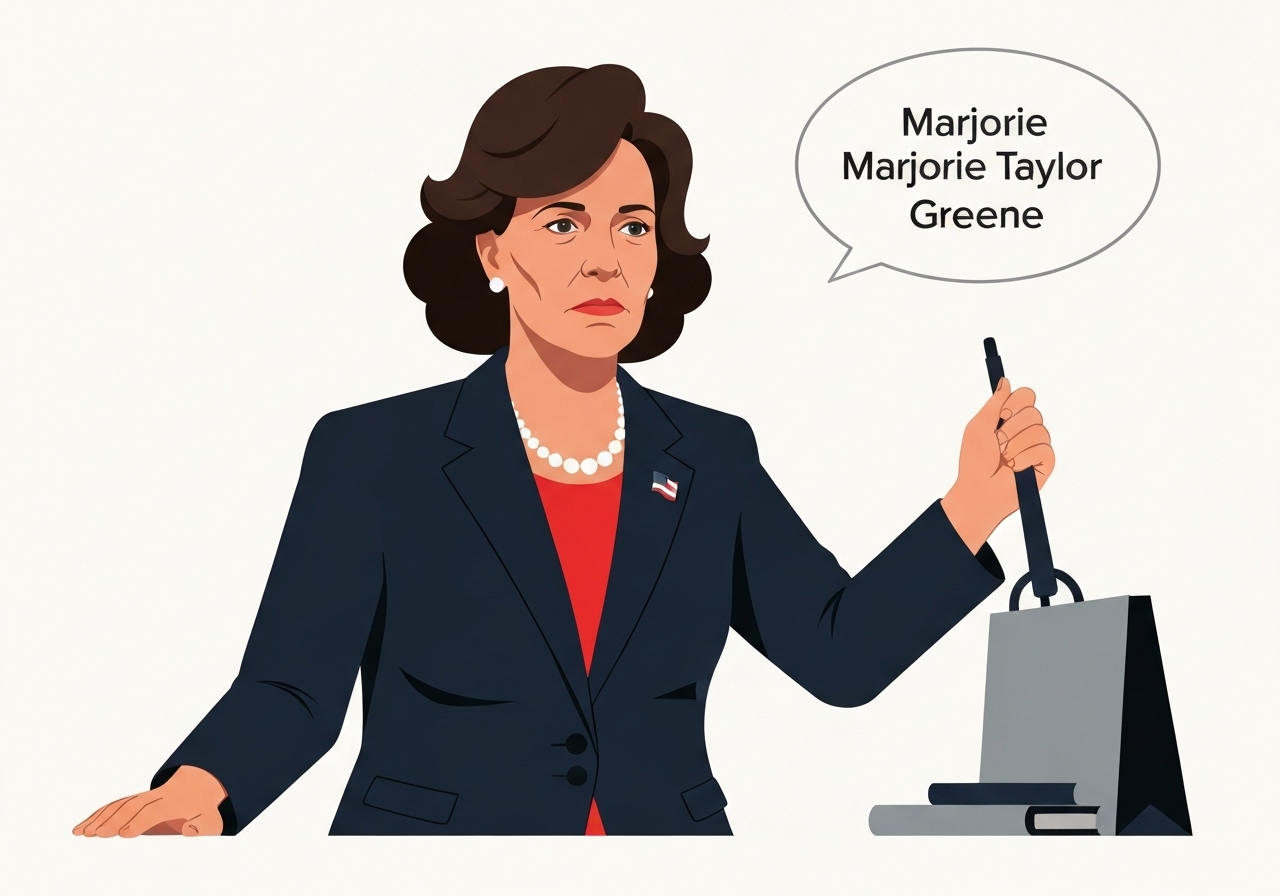
Georgia congresswoman Marjorie Taylor Greene announced she will resign from the US House of Representatives effective 5 January 2026, in a move that follows a public split with former President Donald Trump over the release of Jeffrey Epstein files. Greene posted a short video message on social media saying she looked forward to a “new path ahead” and citing family and personal dignity in her decision. The announcement came days after a high-profile dispute in which Trump publicly criticised her and threatened to back a primary challenger. The resignation removes a conspicuous conservative voice from the current Republican cohort ahead of the 2026 midterm cycle.
Key Takeaways
- Marjorie Taylor Greene will leave Congress on 5 January 2026, according to a social media video she posted.
- The public rupture with Donald Trump followed Greene’s role in pushing for the release of government files linked to Jeffrey Epstein.
- Greene said she did not want her district to endure a Trump-backed primary that could be “hurtful and hateful.”
- Reports in US media indicate Greene has considered running for Georgia governor or for the US Senate, though she has not formally declared either bid.
- Congress passed legislation forcing the Justice Department to release the Epstein files on Tuesday, and the measure was signed into law by Trump on Wednesday.
- Trump called Greene a “traitor” and “wacky” on his platform during the dispute and said he might support a challenger to unseat her.
Background
Marjorie Taylor Greene rose to national attention after her election to the House, becoming a high-profile advocate of the “America First” agenda and a vocal supporter of Donald Trump. Over several years she built a national profile through combative media appearances and promotion of contentious positions, which both energized a segment of the Republican base and drew sustained criticism from Democrats and some Republicans. The immediate catalyst for the falling out with Trump was Greene’s support for a measure to compel release of government records related to Jeffrey Epstein; that posture put her at odds with the former president when he initially opposed — then ultimately signed — the legislation. Political allies and opponents alike have noted the symbolic and tactical implications of a public rift between two once-aligned figures ahead of a consequential midterm cycle.
The Epstein files issue carried unusual cross-partisan attention: some Republicans joined Democrats to advance the release, and the episode tested alliances within the party. Greene publicly pressed for disclosure and repeatedly criticised Trump and other GOP leaders for what she described as insufficient action on cost-of-living and tariff policies, as well as on transparency. Trump’s subsequent social-media attacks and statements that he might back a primary opponent escalated the dispute into an intra-party confrontation. Against that backdrop, Greene framed her resignation as a measure to avoid a divisive primary and to protect her family and district from a bruising contest.
Main Event
The resignation announcement arrived in a brief filmed statement in which Greene reviewed accomplishments from her time in office and said she would step down on 5 January 2026. She said she loved her family and had “too much self respect and dignity” to allow a painful primary fight in her district led by the president’s efforts. The social-media message repeated longstanding themes from her tenure — a focus on conservative policy priorities and skepticism about establishment Republicans — while directly addressing the public clash with Trump. Greene’s statement did not include a detailed policy roadmap for the immediate months ahead but suggested she intends to pursue other political opportunities.
US media outlets have since reported Greene has discussed potential statewide runs — for governor of Georgia or for the US Senate — though she has made no formal filing. The president publicly commented on those ambitions in posts during the dispute, asserting he had advised her against seeking statewide office because of her unfavorable polling. Following Trump’s social-media criticism, he said he might support a primary opponent, an escalation that Greene cited as a factor in her choice to step aside rather than face a potentially bruising intra-party fight.
The legislative development that helped spur the confrontation was a bill requiring the Justice Department to produce Epstein-related files. The measure cleared Congress on a Tuesday vote and was signed into law on the following Wednesday by President Trump. Greene was among a small group of Republicans who joined Democrats to advance the release, an action that marked a departure from prior alignments within Trump’s circle. That procedural and policy turning point clarified the policy dispute and provided the immediate context for the high-profile fallout.
Local and national Republicans reacted quickly to the resignation news. Some party strategists framed Greene’s exit as opening both a risk and an opportunity in a reliably Republican district: without an incumbent, the seat could invite a crowded primary, and Trump’s potential intervention could reshape the contest. For Greene, leaving the House preserves political capital and may clear the way for a different campaign vehicle if she pursues statewide office; for the broader GOP, the episode highlights ongoing factional tensions between Trump-aligned figures and other factions over strategy and messaging.
Analysis & Implications
Greene’s resignation has immediate electoral implications: a vacancy created days before a new Congress convenes typically triggers either a special election or leaves the seat vacant until the next term, depending on state timing and rules. In Georgia’s 14th district — a reliably Republican area — the most consequential question is who will consolidate support from the party base, and whether Trump’s endorsement of a challenger would decisively shape that dynamic. A Trump-backed challenger could split loyalties and resources, forcing national groups to make strategic choices about where to intervene in a primary.
Politically, the episode is symptomatic of deeper strains inside the Republican coalition. Greene’s criticism of Trump on policy grounds — tariffs, cost-of-living measures, and particularly the Epstein documents — underlines tensions between populist insurgents and more traditional GOP operatives. If more officeholders follow Greene’s willingness to break with Trump’s positions publicly, the party could face a prolonged realignment in messaging and candidate selection ahead of 2026. Conversely, if Trump’s influence proves decisive in shaping primary outcomes, his authority within the party may be reinforced.
For governance and transparency debates, the Epstein-files episode matters beyond the personalities involved. The law forcing the Justice Department to release documents addresses long-standing public demand for clarity about high-profile criminal cases and associated investigations. That legislative outcome shows how a relatively narrow procedural measure can have outsized political consequences, especially when a symbolic issue intersects with intra-party rivalry. Going forward, the handling and public reception of the released materials may influence campaign narratives and legal scrutiny in other areas.
Comparison & Data
| Event | Timing |
|---|---|
| Greene’s public feud with Trump | Occurred in recent months |
| Congress passed Epstein-files release measure | Passed on Tuesday |
| President signed the measure into law | Signed on Wednesday |
| Greene’s resignation effective date | 5 January 2026 |
The sequence above shows how a legislative development — passage and signing of a records-release measure — rapidly altered political calculations. While legislatures often produce policy changes with electoral consequences, this case demonstrates how a specific transparency measure triggered realignment among key actors and precipitated an unexpected resignation.
Reactions & Quotes
Greene framed her departure as a choice to avoid a divisive intra-party fight and to protect her family and district from further conflict. She emphasised accomplishments and suggested she will pursue other public roles, while explicitly criticising the president for promoting a primary challenger.
“I look forward to a new path ahead.”
Marjorie Taylor Greene (video statement)
The president responded sharply on his platform, using terse labels and signalling willingness to intervene in the primary if he found a preferable candidate. Trump’s public criticism escalated the dispute and was cited by Greene as a major factor in her decision to step down rather than face a Trump-backed primary.
“Traitor” and “wacky.”
Donald J. Trump (social-media posts)
Outside analysts warned the resignation could intensify factionalism inside the GOP and alter resource flows for competitive races. Political strategists noted that the episode will be watched for signals about Trump’s continuing role in shaping Republican primaries.
Unconfirmed
- Reports that Greene will run for Georgia governor or the US Senate are based on media accounts and conversations; she has not formally declared a campaign.
- Claims that Trump’s threat to back a primary challenger was the sole reason for Greene’s resignation have not been independently corroborated.
- Connections between the substance of the released Epstein files and any new legal actions remain speculative until the documents are reviewed and verified by investigators.
Bottom Line
Marjorie Taylor Greene’s decision to leave Congress effective 5 January 2026 closes a contentious chapter in recent Republican politics and underscores how policy fights over transparency can have immediate personal and electoral consequences. The resignation follows a rare public rupture between Greene and Donald Trump — once allies — over the release of Epstein-related files and broader policy disagreements. For Republicans, the episode raises hard questions about leadership, loyalty and the mechanics of primary power as the party prepares for 2026.
For observers and voters, the most consequential developments will be who competes for Greene’s seat, whether Trump intervenes decisively in that contest, and what emerges from the disclosed files that catalysed the dispute. The story remains dynamic: further reporting and the documents themselves will determine how deep and long-lasting the political consequences will be.
Sources
- BBC — British public broadcaster (news)