
Lead
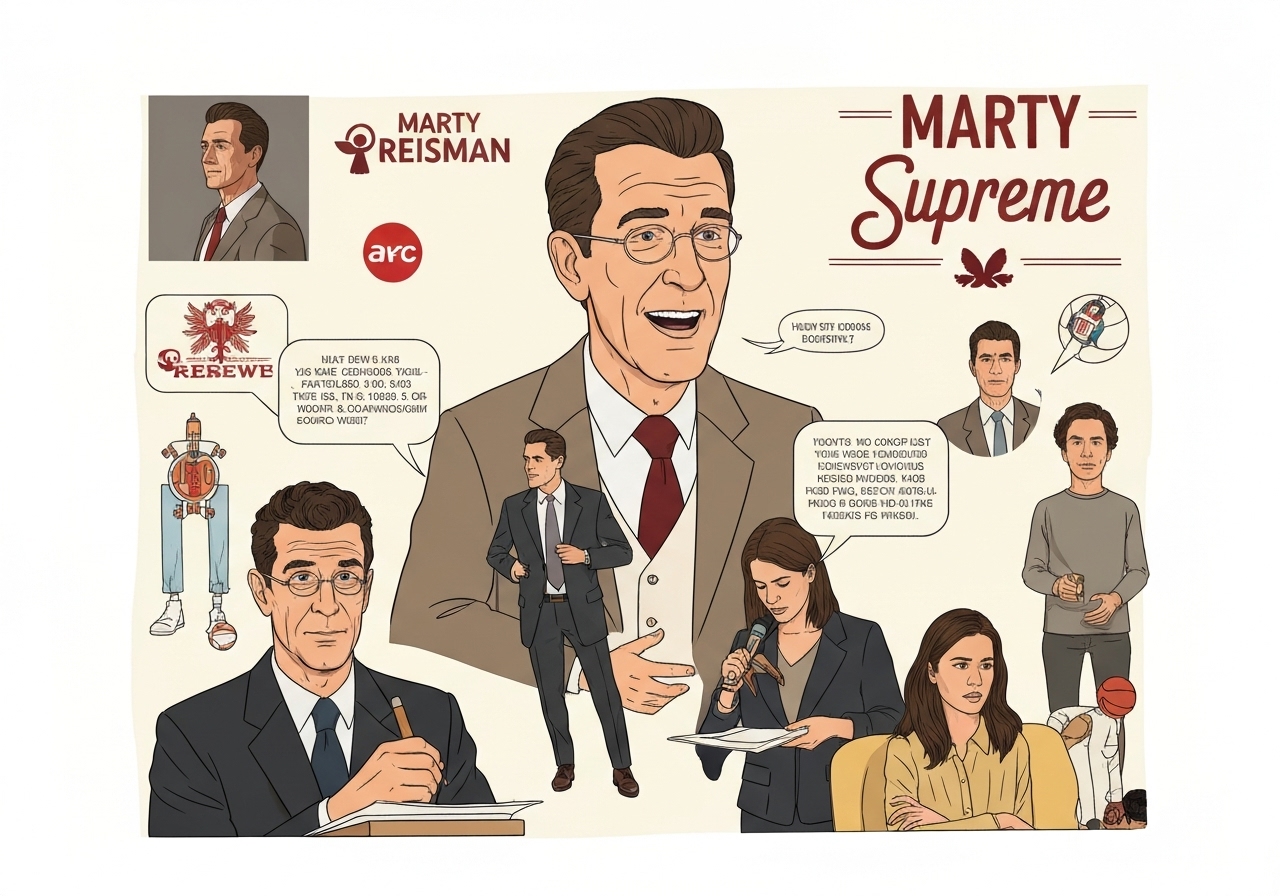
Filmmakers Josh Safdie and Ronald Bronstein drew on Marty Reisman’s 1974 memoir to inspire their new film Marty Supreme, spotlighting a swaggering table-tennis hustler in 1950s New York. Reisman (born 1930, died 2012) rose from a Seward Park ping‑pong table to international exhibitions, World Championship competition and decades of showmanship. The memoir mixes verified competition results — including Reisman’s appearances at the 1948 World Championships in London and the 1952 Worlds in Mumbai — with vivid, often anecdotal episodes that blurred performance, smuggling and gambling. As the film channels Reisman’s ethos, interest in his out-of-print book has surged and renewed scrutiny of where fact ends and legend begins.
Key Takeaways
- Marty Reisman (b. 1930) learned the game on a Seward Park table and began playing money matches by age 12, later becoming a fixture at Lawrence’s Broadway Table Tennis Club.
- Reisman competed at the 1948 World Championships in London and at the 1952 Worlds in Bombay, where Hiroji Satoh’s sponge‑rubber paddle changed the sport and won the title.
- Reisman won multiple national-level events, claimed three World Championship bronze finishes later in his career, and sustained a decades-long professional presence in exhibition play and coaching.
- Between exhibitions Reisman engaged in high‑stakes gambling and smuggling on overseas tours, turning small goods into substantial returns in postwar markets.
- His 1974 memoir, The Money Player, is episodic and partly unverified; copies are now rare and commanding high prices among collectors.
- Safdie and Bronstein used Reisman’s memoir as a creative springboard; they explicitly state Marty Supreme is a fictional work inspired by the memoir, not a strict biopic.
- Reisman’s showmanship — stunts, taunts, and theatrical flair — shaped public perception of table tennis and helped transition the game from parlor pastime to stadium spectacle.
Background
Martin “Marty” Reisman was born in 1930 and grew up on Manhattan’s Lower East Side. His mother, Sarah, emigrated from Russia; his father Morris worked as a cab driver and occasional bookie whose compulsive gambling influenced Marty’s early attitude toward risk and betting. In the 1940s a communal ping‑pong table near Seward Park became Reisman’s training ground; by his early teens he was traveling uptown to Lawrence’s Broadway Table Tennis Club, a hub for serious players and money matches.
Lawrence’s functioned as a crucible: players who honed aggressive styles and hustling tactics there would go on to dominate U.S. competition. Reisman developed an attacking “fast hit” game and a flair for showmanship — returning shots behind his back, using kitchenware as impromptu paddles, and staging crowd-pleasing stunts. Those qualities helped him secure exhibition work, broaden his audience, and, at times, clash with tournament officials.
International play exposed Reisman to both sport and opportunity. Postwar shortages in places like England created a lucrative black market for U.S. goods; Reisman and other touring players supplemented appearance fees by smuggling or trading items such as nylons, pens and perfume. These parallel economies — performance and petty trade — became a practical reality for many professional players traveling the globe in the late 1940s and 1950s.
Main Event
Reisman’s ascent to national prominence accelerated in his teens. By 18 he had amassed dozens of trophies and traveled to London for the 1948 World Championships, where he met and competed against established greats like Richard Bergmann and Victor Barna. The experience shifted his perspective from local hustler to international competitor, even as he continued to center theatrical exhibition play in his career.
The 1952 World Championships in Bombay were pivotal. Hiroji Satoh arrived with a sponge‑rubber paddle that produced unprecedented spin and speed, confounding many established players who used “hardbat” rackets. Satoh won the title; Reisman was upset by the new equipment’s dynamics. Reisman later won the consolation event and mounted an exhibition rematch in Osaka where, adapting his strategy, he prevailed — a demonstration of tactical flexibility outside formal championship conditions.
Away from championships, Reisman spent several years touring as an exhibition artist with Doug Cartland, including work supporting Harlem Globetrotters shows. These tours amplified his profile: stadium crowds replaced the small clubs of Lawrence’s and exhibitions became a primary income source. Alongside performance, Reisman’s memoir recounts episodes of smuggling, narrow escapes, and encounters that range from the extraordinary to the anecdotal, forming much of his public legend.
Across his life Reisman combined competitive play, club ownership, coaching and showmanship. He bought a club that attracted cultural figures, married Yoshiko Reisman and fathered a daughter, Debra. Later in life he sought psychiatric help for anxiety attacks that sometimes manifested as temporary blindness, and continued to play and promote the game until his death in 2012 at age 82.
Analysis & Implications
Reisman exemplifies a mid‑century athlete whose livelihood straddled formal competition and entertainment. His career highlights how niche sports found broader cultural traction through spectacle: taunts, stunts and themselves-inflected persona became marketable assets. That hybrid identity complicates simple categorizations — Reisman was competitor, showman and, by his own account, opportunist in commerce and gambling.
The 1952 Satoh episode illustrates technology’s inflection point in sport. The sponge paddle’s rapid adoption changed elite table‑tennis technique and competitive equilibria, rewarding spin and control over the previous hardbat era’s emphasis on flat power. That equipment shift mirrors other historical moments when gear innovations redefined success parameters and demanded tactical reinvention.
For filmmakers, Reisman’s memoir provides texture rather than a tidy narrative. Safdie and Bronstein’s fictional Marty Mauser translates the memoir’s themes — ambition, marginality, performative identity — into a dramatized arc that probes why players like Reisman resist conventional stability. The film’s cultural effect is twofold: it revives interest in a niche sporting history and invites debate about authenticity, adaptation and the ethics of inspiration versus appropriation.
On a broader level, Reisman’s blend of hustling, smuggling and exhibition work points to the precarious economics of postwar professional sport outside mainstream leagues. Where institutional support was limited, athletes often engineered informal economies; Reisman’s story helps historians and sociologists trace how informal markets fed transnational cultural exchange and the global circulation of goods and talent.
Comparison & Data
| Event | Year | Outcome / Note |
|---|---|---|
| World Championships (London) | 1948 | Participant — early international exposure |
| World Championships (Bombay / Mumbai) | 1952 | Lost notable match to Hiroji Satoh (Satoh won title) |
| World Championship podiums | Post‑1952 (various) | Three bronze finishes (years not specified in memoir) |
The table outlines Reisman’s major championship milestones as reported in his memoir and later recollections. Exact years for the three bronze finishes are not specified in the sourced account; contemporaneous tournament archives would be needed to pinpoint those podiums precisely. The most documented technical turning point is Satoh’s 1952 use of sponge rubber, a measurable equipment innovation that precipitated a shift in elite play.
Reactions & Quotes
“Table tennis is seen by Mauser’s family, his community, and likely most of the audience too, as something frivolous… Meanwhile, [Mauser] experiences it as the total measure of his worth and identity.”
Ronald Bronstein, screenwriter
Bronstein’s line frames the fictional Mauser and helps explain why Reisman’s memoir resonated with the filmmakers: the game is a source of selfhood as much as livelihood.
“Always had a quip.”
Larry Hodges, Table Tennis Hall‑of‑Famer and historian
Hodges’ short recollection emphasizes Reisman’s gift for patter and provocation, traits that both enthralled audiences and antagonized officials.
“I was throwing lethal punches and hitting myself in the face.”
Marty Reisman, The Money Player (memoir)
Reisman’s self‑description candidly acknowledges how equipment changes exposed limits in his attacking style and spurred tactical adjustments.
Unconfirmed
- Many of Reisman’s memoir anecdotes — including an audience with the Pope, narrowly missing flights that crashed, or promises of political titles such as “ping pong minister of the Philippines” — lack independent corroboration in public records cited by the memoir.
- Precise years and contexts for Reisman’s three World Championship bronze medals are not enumerated in the memoir and require verification from tournament archives.
- Claims about the scale and regularity of Reisman’s smuggling operations are described in first person but are not supported by documented customs or legal records presented in the source material.
Bottom Line
Marty Reisman’s life — as told in The Money Player and refracted through Marty Supreme — sits at the intersection of sport, performance and marginal entrepreneurship. The memoir is an essential primary source for understanding mid‑century table‑tennis culture, showmanship and the informal economies that sustained itinerant professionals, but it must be read with caution: first‑person bravado and episodic structure leave many claims anecdotal or unverified.
As a cinematic inspiration, Reisman’s story offers rich thematic material: the allure of autonomy over stability, the theatricality of marginal sports, and the human cost of living as a perpetual performer. Researchers and fans who wish to move beyond legend toward a firmer historical record should consult tournament archives, contemporaneous press coverage and institutional records to corroborate the memoir’s most striking claims.