
Lead
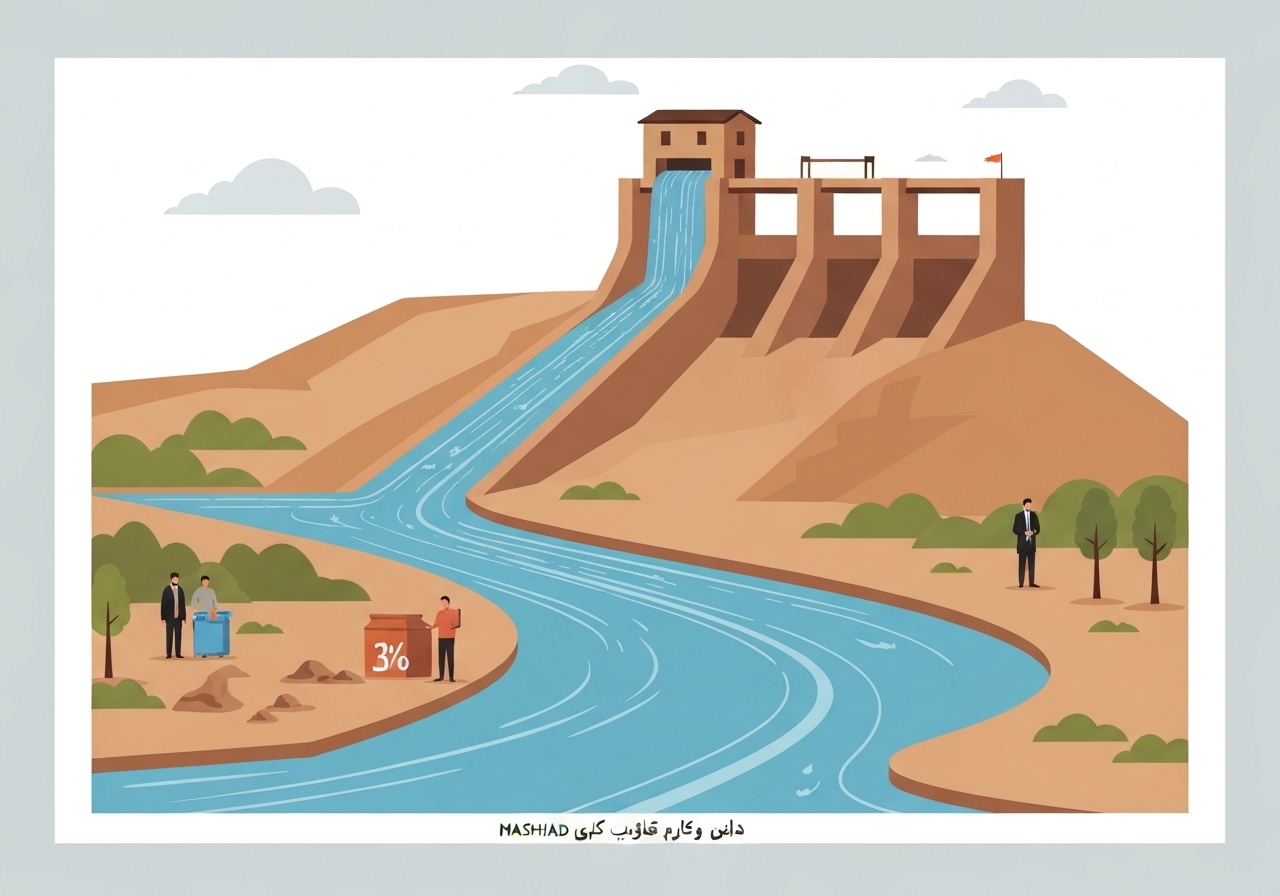
Officials report that water storage in the dams serving Mashhad — Iran’s second-largest city — has dropped below 3%, exposing an acute urban water shortage as the country endures a prolonged drought. The statement came from Hossein Esmaeilian, head of Mashhad’s water company, and follows broader warnings from Tehran about possible rolling cuts. Mashhad, home to roughly 4 million people and a major pilgrimage destination, now depends on severely depleted reservoirs while consumption remains high. Local managers say immediate demand reduction is essential to avoid supply interruptions.
Key Takeaways
- Mashhad’s dam reservoirs are reported at under 3% storage, according to the city’s water company chief.
- The city’s consumption reached about 8,000 litres per second, with only about 1,000–1,500 litres per second currently supplied from dams.
- Tehran officials say five major drinking-water dams are at critical levels; one is empty and another is below 8% capacity.
- Nationwide, 19 major dams — roughly 10% of the country’s key reservoirs — have effectively run dry, per the Iranian Water Resources Management Company.
- Officials warned the president has cautioned that without rainfall before winter, even Tehran could face evacuation risks.
- Authorities suggested a 20% cut in consumption could avert rationing if implemented broadly and quickly.
Background
Iran has experienced months of below-average precipitation, stretching existing water systems and reservoirs. Decades of water-management choices, rising demand from urban growth and frequent heatwaves have all strained supply in major cities. Mashhad relies primarily on four dams for municipal supply; when those reservoirs fall to single-digit percentages, reliance shifts to alternative and often limited sources. In recent summers, extreme heat also stressed electricity grids, prompting officials to declare public holidays in Tehran to curb water and energy use and to reduce simultaneous system loads.
Political and institutional factors have become part of the public debate over the shortages. Local papers and commentators have blamed appointments and decision-making in key environmental and water-management bodies for undermining technical responses. At the same time, managers and central authorities point to climate-driven declines in rainfall and river inflows as primary drivers of the emergency. The combination of human, institutional and climatic drivers complicates short-term mitigation and long-term planning.
Main Event
On the most recent public statements, Hossein Esmaeilian told ISNA that storage in Mashhad’s reservoirs had fallen below 3% and framed water conservation as a necessity rather than guidance. He quantified the city’s flow needs at around 8,000 litres per second and said only 1,000–1,500 litres per second are currently being drawn from the dams. Local operators are prioritising distribution to essential services while asking households and businesses to cut use.
In Tehran, officials over the weekend warned of potential rolling cuts and noted five principal supply dams were at critically low levels; one reservoir was reported empty and another at under 8% capacity. President Masoud Pezeshkian publicly cautioned that, unless significant rainfall arrives before winter, even parts of the capital could face extreme contingency measures. National agencies said 19 major reservoirs — about 10% of nationally monitored dams — have effectively run dry.
Municipal and national authorities have outlined consumption-reduction targets, with managers saying a 20% reduction by the public could make it possible to manage without widespread rationing. Still, officials also signalled that the highest-volume users could be the first to face curbs if voluntary cuts fail. Over recent weeks, some local outlets criticised the politicisation of environmental appointments and decision-making as undermining effective response.
Analysis & Implications
The immediate implication is rising risk of urban water rationing, which would affect households, hospitals, industry and pilgrimage-related services in Mashhad. With storage below 3%, reservoir-based supply has minimal buffer for inflow variability or operational interruptions. If river flows and rainfall remain low through autumn and winter, managers will face difficult trade-offs between reserving water for critical services and maintaining broader municipal delivery.
Economically, persistent shortages threaten industrial output and agricultural supply chains that depend on urban and regional water transfers. Socially, water scarcity can intensify public frustration and heighten political scrutiny of both national policy and local governance. The announcement that some major dams are already empty signals systemic vulnerability rather than an isolated local failure, increasing pressure for coordinated national responses that combine emergency measures and medium-term resource reform.
Environmentally, repeated drought cycles point to longer-term shifts in hydrology that may require rethinking reservoir operations, groundwater use, and demand-side policies such as pricing, leak reduction and conservation incentives. Internationally, Iran’s water stress intersects with regional hydrological trends; reduced water availability can complicate transboundary river management and foreign investment decisions in water-intensive sectors.
Comparison & Data
| Location | Noted status | Reported figure |
|---|---|---|
| Mashhad | Dam storage critically low | <3% capacity |
| Tehran | Multiple dams critical; one empty | One empty; another <8% |
| Nationwide | Major reservoirs run dry | 19 dams (~10% of major reservoirs) |
The table summarises the most recent available figures from municipal and national sources. These snapshot numbers reflect reservoir storage at the time of the statements and can change quickly with rainfall or operational releases. They underline that both localized crises (Mashhad) and broader systemic stress (national dam inventories) are occurring simultaneously.
Reactions & Quotes
Storage in Mashhad’s dams is now below 3%, and managing water use is no longer simply a recommendation but a necessity.
Hossein Esmaeilian, CEO, Mashhad water company (reported to ISNA)
Esmaeilian’s comment framed conservation as urgent and quantified the city’s current supply and demand gap, pressing residents to reduce use.
Without significant rainfall before winter, even Tehran could face evacuation risks.
Masoud Pezeshkian, President (public statement)
The president’s warning elevated the crisis to a national-security concern and prompted emergency planning discussions among central agencies.
Climate considerations are being sidelined by political appointments and weak institutional oversight.
Etemad / Shargh (reformist newspapers, commentary)
Local editorials criticised perceived politicisation of environmental governance, arguing it has hampered technical responses to the drought.
Unconfirmed
- The precise timetable and geographic scope for any impending rolling water cuts have not been published and remain subject to local operational decisions.
- Claims that rapid institutional changes alone are the primary cause of current shortages are reported in opinion pages but have not been substantiated by an independent technical audit.
- Exact forecasts of winter rainfall that would reverse the shortages are still model-dependent and were not provided with the officials’ statements.
Bottom Line
Mashhad’s dam storage below 3% is a clear indicator of acute urban vulnerability to a prolonged drought that is affecting much of Iran. The combination of high urban demand, depleted reservoirs and limited near-term inflows means authorities are focused on immediate demand reductions to avoid large-scale rationing or targeted supply cuts to heavy users.
How the situation evolves will depend on rainfall in the coming weeks, the speed and scale of public conservation measures, and whether national agencies implement coordinated operational and policy responses. For residents and planners, the crisis underscores the need for both immediate conservation and a medium-term shift in how water resources are managed and allocated.
Sources
- The Guardian — independent news media report summarising local statements and national context.
- ISNA — Iranian Students’ News Agency (national news agency), source for statements by Mashhad water company officials.
- Mehr News — news agency (English service), reported figures attributed to the Iranian Water Resources Management Company.