
Lead
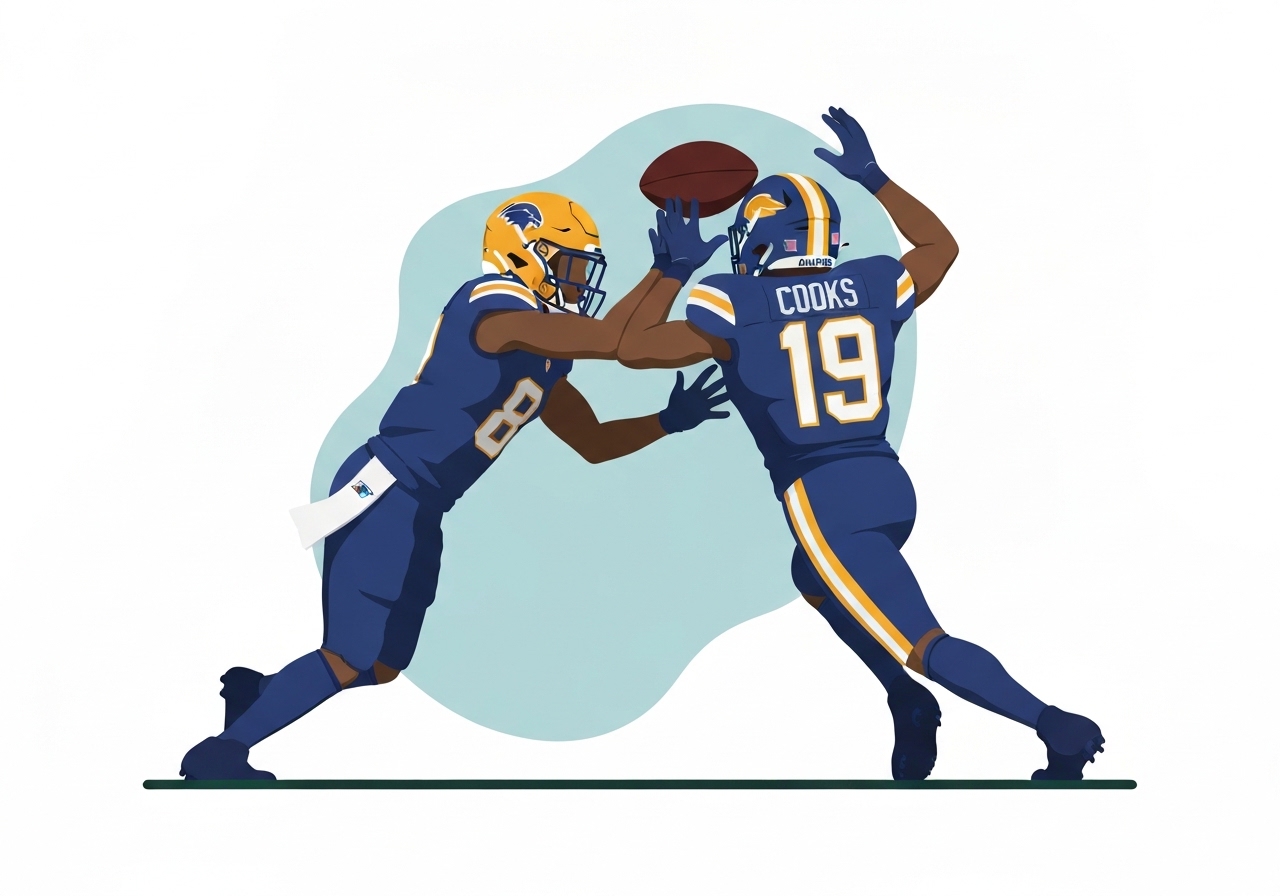
In overtime of a high-stakes Broncos–Bills matchup, Denver cornerback Ja’Quan McMillian wrestled the ball away from Buffalo wide receiver Brandin Cooks and came up with a pivotal interception. The takeaway halted a Bills possession in sudden-death extra time and handed momentum back to Denver. The play was widely replayed and quickly cited as a turning point in the game’s closing sequence. Its timing in OT magnified its impact for both rosters and coaching staffs.
Key Takeaways
- Ja’Quan McMillian (Denver) forced a turnover by ripping the ball from Brandin Cooks (Buffalo) and securing an interception in overtime.
- The interception ended the Bills’ offensive possession in OT and immediately gave the Broncos the ball under sudden-death conditions.
- The play occurred after a contested route to Cooks and came at a decisive moment when either possession could determine the game’s outcome.
- Replays show a contested catch and a strong defensive technique rather than a pure pass breakup, highlighting McMillian’s hands and timing.
- Coaches from both teams referenced the turnover as a critical swing in postgame comments and film-review notes.
- The sequence was circulated widely on league highlights and social feeds, elevating McMillian’s profile for that game.
Background
The Denver Broncos and Buffalo Bills entered the matchup with contrasting identities: Denver relying on a defense-first approach and Buffalo operating as one of the NFL’s more dynamic offensive units. Brandin Cooks has been a consistent deep and intermediate target for the Bills, creating matchup problems across defenses with his speed and route precision. Ja’Quan McMillian, a starting corner for the Broncos, was tasked with shadowing key receivers and making timely plays to disrupt Buffalo’s passing rhythm. Turnovers have been a recurring deciding factor in tightly contested NFL games, especially when they occur late or in overtime.
Overtime possessions carry outsized consequences because a single takeaway can immediately flip the field and the play-calling calculus for both teams. Coaches prepare for situational football — clock management and conservative-versus-aggressive play calls — but a turnover forces immediate adaptation. Both Denver and Buffalo entered the final period acutely aware that a single mistake or moment of execution could end the contest. That context explains why McMillian’s interception drew so much attention from analysts and team staff alike.
Main Event
Late in overtime, Buffalo ran a route intended for Brandin Cooks that put him in position to make a play on the ball. As the pass arrived, McMillian closed in on Cooks’ side, engaging in a physical contest at the catch point. Instead of simply attempting to prevent the catch, McMillian attacked the football directly, forcing contact at the hands and wresting the ball free.
The ball came loose and into McMillian’s control, and officials ruled the sequence an interception rather than an incomplete pass. That ruling immediately ended the Bills’ possession and transferred possession to the Broncos under the overtime rules in play. The on-field exchange prompted an extended replay review and commentary from both broadcast and team analysts.
Players and coaches from both teams briefly converged around the spot as staff on the sideline reviewed the replay on tablets. The momentum swing — from a potential Buffalo scoring opportunity to a Denver possession — was instant and decisive in the immediate tactical picture. Fans and commentators highlighted McMillian’s hand placement and timing as the critical factors that enabled him to secure the ball during the contest.
Analysis & Implications
Turnovers in overtime disproportionately determine outcomes because there is little time for the opposing offense to recover. McMillian’s interception did more than stop a drive; it changed the psychological balance on the field, putting pressure on Buffalo’s sideline and offering Denver a clear path to convert possession into points. Coaches put an emphasis on takeaway drills in practice for precisely these moments, and the play validated that preparation.
For Buffalo, the takeaway exposed a vulnerability in contested-catch situations against physical press coverage or quick, aggressive ball skills from opposing corners. Staff may adjust how they target Cooks in late-game situations, perhaps favoring lower-risk throws or different route concepts to minimize contested catch scenarios. For Denver, the play reinforced a blueprint that prizes turnover creation and opportunistic defense in clutch moments.
On a roster level, a high-profile interception in overtime can affect personnel evaluations and matchups in upcoming weeks. McMillian’s play may lead to more single-coverage assignments or increased trust in him on the boundary in critical downs. Conversely, Buffalo’s coaching staff will likely review the protection, route timing and throw placement that led to the contested target.
Reactions & Quotes
McMillian’s strip-and-recover was described in league highlight captions as a game-altering interception in overtime.
NFL video highlights (league media)
Team communications noted the defense’s timely execution and singled out the turnover as a decisive play in the game’s closing sequence.
Broncos postgame materials (team statement)
Analysts on broadcast coverage pointed to the timing and technique at the catch point, highlighting how contested catches in OT carry outsized risk.
National broadcast analysts (media commentary)
Unconfirmed
- Whether this interception directly produced the game’s final scoring play (field goal or touchdown) is not confirmed within league highlight captions alone.
- Precise details about any subsequent coaching adjustments or formal disciplinary notes tied to this single play have not been publicly disclosed.
Bottom Line
Ja’Quan McMillian’s forced ball and interception in overtime was a textbook example of a defensive play that shifts both momentum and tactical options in the final moments of a game. The sequence underscored how turnovers, particularly in extra time, can quickly determine outcomes and alter postgame narratives for players and coaches.
Moving forward, Denver can build on the play as evidence of its defensive resilience, while Buffalo will revisit the play in film study to reduce the risk of similar contested-catch turnovers. For fans and analysts, the interception will remain one of the lasting images from the matchup and a clear case study in situational defensive technique.
Sources
- NFL video highlight — league media (official video clip)
- Denver Broncos official site — team communications (official)
- Buffalo Bills official site — team communications (official)