
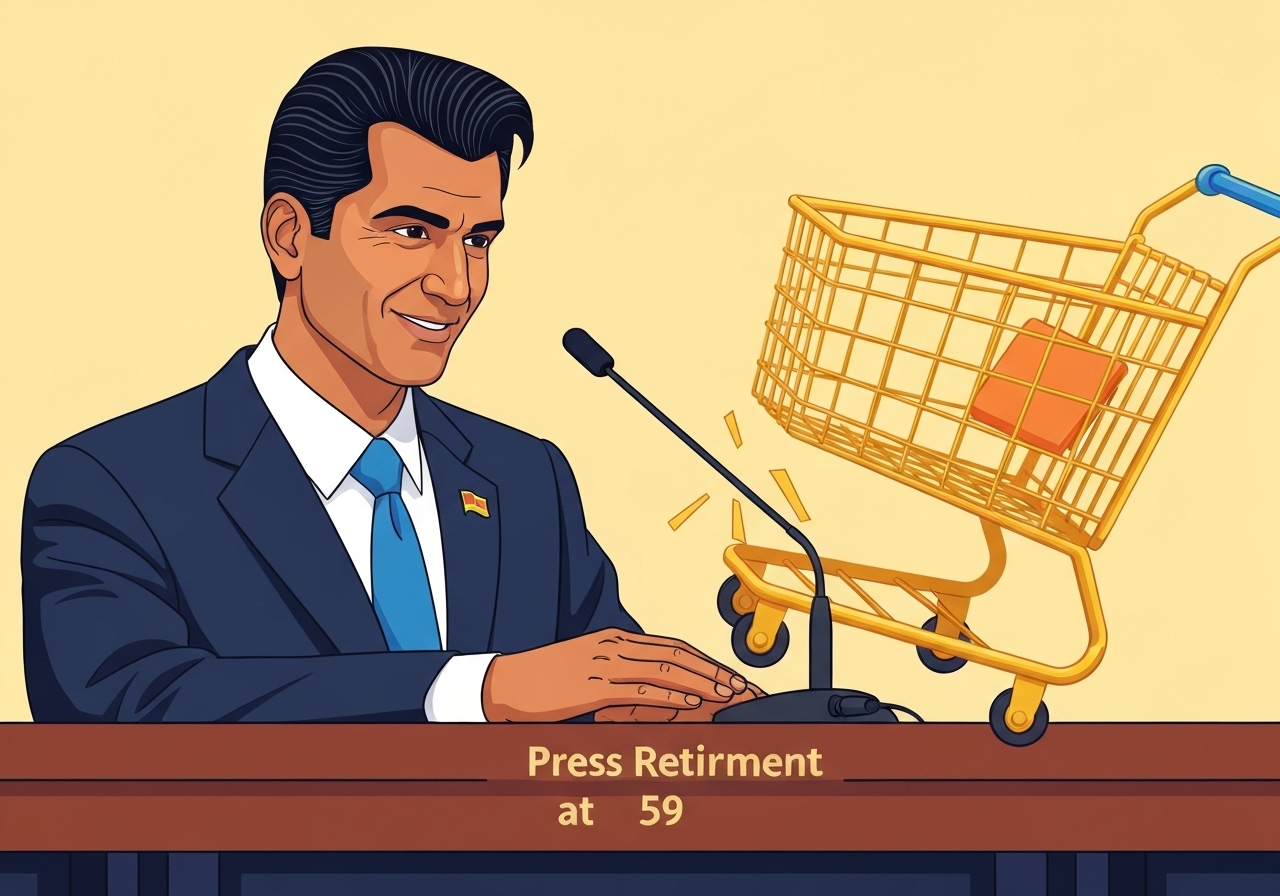
Lead: Doug McMillon, 59, who transformed Walmart into a tech-driven retail leader after becoming CEO in 2014, announced he will retire effective Jan. 31 with John Furner, 51, taking the helm on Feb. 1. The company said McMillon will advise Furner for a year while continuing to guide strategic priorities that drove a 40% revenue rise under his leadership. Shares dipped in premarket trading—falling about 3% immediately and settling roughly 1% lower by midday—reflecting investor uncertainty about the surprise timing. The change comes as retailers navigate tariffs, labor pressures and evolving consumer spending patterns.
Key Takeaways
- Doug McMillon will retire effective Jan. 31; John Furner becomes CEO on Feb. 1 and will be advised by McMillon for one year.
- Under McMillon’s decade-long leadership as CEO (since 2014), Walmart’s annual revenue rose from $485.7 billion to $681 billion, an increase of about 40%.
- Walmart is the largest U.S. private employer with 1.6 million U.S. workers and about 2.1 million employees globally.
- Premarket reaction to the announcement saw shares fall roughly 3% before partially recovering to about 1% down by midday.
- McMillon led major investments: a $2.7 billion, three-year wage and training initiative announced in 2015 and significant expansion of e-commerce and faster delivery offerings.
- Operational shifts under McMillon included ammunition sales limits and open-carry policies after 2019 mass shootings, plus climate and employee-focused commitments.
- About 150 million customers shop Walmart channels weekly; the company says it reaches roughly 90% of U.S. households.
Background
Doug McMillon joined Walmart as a summer associate in 1984 and rose through store, merchandising and international roles before becoming CEO in 2014. He inherited a business that faced messy stores, stagnant sales and low morale, and set out to modernize operations while improving the company’s image among workers and consumers. Early in his tenure he announced a $2.7 billion, three-year program to raise wages and expand education and training paths for hourly employees, part of a broader effort to improve retention and career mobility.
McMillon also prioritized digital transformation: Walmart invested heavily in e-commerce, fulfillment, and technology such as AI and robotics to speed deliveries and personalize the shopping experience. These moves coincided with broader retail disruptions from Amazon and changing consumer habits after the pandemic, when Walmart saw a surge in demand and used its scale to stabilize supplies and prices. The company’s position as a retail barometer — given its size and reach — made McMillon an influential figure in debates on labor, pricing and trade policy.
Main Event
The company announced the retirement Friday as an unexpected leadership shift, naming John Furner — head of Walmart U.S. and a 1993 hire who started as an hourly associate — as McMillon’s successor. Furner, 51, has led Walmart U.S. and previously served as president and CEO of Sam’s Club, bringing both store-level and membership-channel experience to the role. Walmart said McMillon will remain at the company for a year in an advisory capacity to ensure a smooth transition and continuity on strategic initiatives.
Markets reacted quickly: Walmart shares slid about 3% in premarket trading before recovering slightly to finish roughly 1% lower by midday, a signal that investors view the announcement as material but not catastrophic. Company statements framed the move as planned leadership succession that leaves Walmart well positioned for continued investment in low prices, technology and workforce development. The timing — early next year — places the new leadership in place before peak promotional seasons and key planning cycles for 2026.
The announcement also landed amid a challenging macro backdrop: recent U.S. tariffs on imports and immigration policy shifts have pressured labor availability and input costs, while inflation dynamics and consumer behavior remain uneven. Walmart executives have said the company has absorbed some import costs to keep prices low, and McMillon often framed Walmart as a counterweight to inflation for many households by leveraging supplier relationships and scale.
Analysis & Implications
Strategically, the immediate question is whether Furner will maintain McMillon’s multi-pronged approach: keep prices low, expand e-commerce and accelerate logistics modernization. Analysts expect continuity because Furner was instrumental in refining U.S. operations and shares many priorities with McMillon, but every CEO transition introduces execution risk during the handover phase. Investors typically reward clarity; the advisory year is meant to reduce uncertainty and preserve strategic momentum.
For employees, the leadership change appears unlikely to reverse labor-facing programs that were central to McMillon’s agenda, including wage increases, parental leave extensions and education initiatives. Furner rose from hourly roles and has foregrounded store-level execution in previous assignments, suggesting ongoing emphasis on front-line employee experience and retention. That stability matters for store operations and inventory management, both key to maintaining price competitiveness.
On the competitive front, Walmart’s investments in fast delivery, membership services and advertising monetization are now institutionalized capabilities that will influence how the company competes with Amazon and other omnichannel retailers. Operational scale gives Walmart leverage with suppliers to manage price pressure, but rising import costs and tariff uncertainty could compress margins or lead to selective price increases. Regulators and stakeholders will also watch how the company balances profitability with commitments on sustainability and community impact.
Comparison & Data
| Metric | At McMillon’s start (2014) | Latest fiscal year |
|---|---|---|
| Annual revenue | $485.7 billion | $681 billion |
| Approx. stock price on takeover | ~$25 per share | >$102 per share |
| U.S. workforce | 1.6 million (U.S.) | 1.6 million (U.S.) |
| Global workforce | — | 2.1 million (global) |
The table highlights growth in top-line revenue (about 40%) and a roughly fourfold rise in Walmart’s stock-price benchmark since McMillon became CEO. Those figures reflect not only core retail sales but also gains from e-commerce, membership services and new revenue streams such as advertising. The workforce numbers underscore Walmart’s outsized role in U.S. employment and why its policies on wages and benefits have broader social and economic implications.
Reactions & Quotes
Walmart’s board framed the departure as a successful succession: Chairman Greg Penner credited McMillon with strengthening the company across people, digital capability and supply-chain modernization. The board emphasized continuity and the readiness of Furner to lead a company of Walmart’s scale.
“He leaves Walmart stronger, more innovative and better aligned with our purpose to help people save money and live better,”
Greg Penner, Walmart Chairman (company statement)
Analysts noted Furner’s operational background but cautioned that replicating McMillon’s combination of vision and steady execution will be difficult. A TD Cowen analyst described Furner’s experience as robust and expected strategic continuity, while also acknowledging the challenge of following a long-serving leader who drove major transformation.
“Furner brings deep U.S. experience and a track record of refining operations, but stepping into Doug’s role is a demanding assignment,”
Oliver Chen, TD Cowen (analytic report)
Front-line employees and labor observers will watch whether the advisory year preserves momentum on pay and training. Customers and suppliers are likely to see limited immediate change in day-to-day operations because Furner’s background aligns with the company’s existing execution-focused priorities.
Unconfirmed
- No public explanation has been provided for McMillon’s choice of timing; the company has not disclosed personal or health reasons for the retirement.
- It is not yet confirmed whether Furner will accelerate or scale back investments in new revenue streams such as advertising and membership services beyond current commitments.
- Any changes to executive compensation, board dynamics or long-term strategic targets under Furner have not been released and remain speculative.
Bottom Line
Doug McMillon’s retirement marks a milestone for Walmart after a decade of heavy investment in people, technology and supply-chain modernization that delivered significant revenue and shareholder gains. Naming John Furner, an executive with deep store-level and membership-channel experience, signals the company values continuity and operational rigor as it faces uncertain trade and labor conditions.
For investors, the near-term risk is execution during leadership transition—but the advisory arrangement and Furner’s long tenure within the company reduce abrupt strategic shifts. For employees and customers, the most important indicators to watch will be whether pay, training and service investments continue and how Walmart manages inflationary pressures while preserving low prices.
Sources
- AP News — media (news report)
- Walmart Corporate Newsroom — official company announcements and press materials