
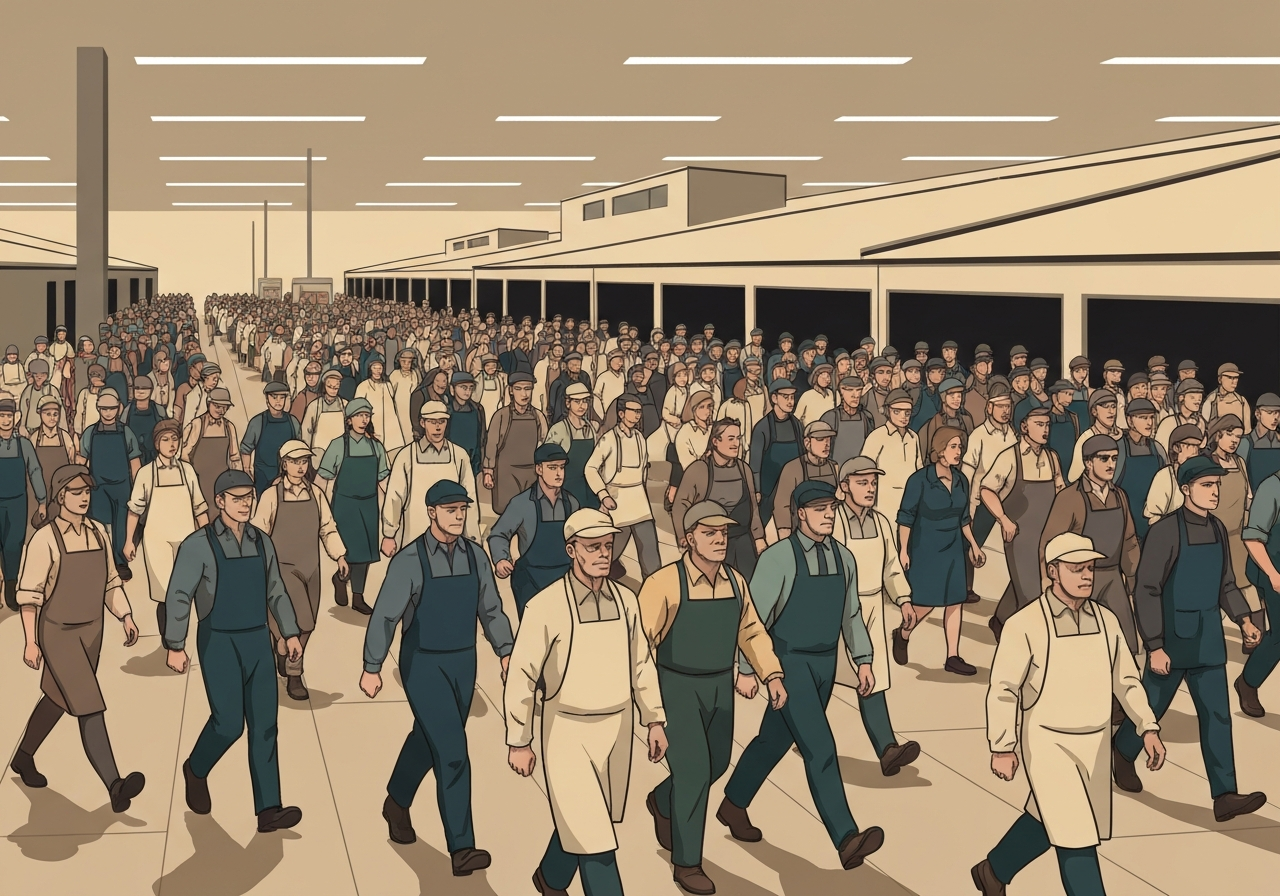
Lead: On Monday, March 16, 2026, roughly 3,800 workers at JBS’s Greeley, Colorado beef plant walked off the job, marking the meatpacking sector’s first strike in four decades. The United Food and Commercial Workers (UFCW) Local 7 says the walkout was prompted by stalled contract talks over wages, safety equipment and health benefits; the union planned an initial two-week action. JBS — the largest of the four major U.S. beef processors — said it will continue limited operations while negotiations continue. The stoppage raises immediate questions about local production and broader effects on beef supplies and prices.
Key Takeaways
- The strike began on Monday, March 16, 2026, at JBS’s Greeley, Colorado plant and involves about 3,800 workers represented by UFCW Local 7.
- JBS USA is the largest of four major U.S. beef processors; those four firms account for roughly 85% of U.S. production.
- JBS employs about 25,000 people across nine U.S. facilities; the Greeley action is intended to last two weeks but could be extended.
- Union demands center on higher wages, life-saving safety equipment and improved healthcare; the previous contract expired the day before the walkout.
- Beef prices have risen 15.2% year-on-year amid the smallest U.S. cattle herd in 75 years, per the American Farm Bureau Federation.
- In January 2026 JBS agreed to pay $83.5 million to resolve allegations of price-fixing with other packers.
- The union has alleged retaliation against organizers at the plant; JBS says it has offered meaningful wage increases and pension protections to other unionized employees.
Background
Meatpacking in the United States is highly consolidated: four large processors control the bulk of beef slaughter and processing, giving those firms substantial influence over supply chains and pricing. JBS USA is the largest of those four and operates nine U.S. facilities employing about 25,000 people, many of whom are immigrants. Concentration has long been cited by labor advocates and some policymakers as a factor that constrains workers’ bargaining power and can magnify workplace safety risks.
Workers at the Greeley plant are represented by UFCW Local 7, which says the contract that expired Sunday did not address rising living costs, healthcare affordability or known safety hazards on the line. The last large-scale strike in U.S. meatpacking was about 40 years ago; the rarity of such job actions reflects both the sector’s union density decline and the heavy economic interdependence between plants and regional meat supply chains.
Main Event
The walkout began after the union said negotiations produced no acceptable offer on pay, protective equipment, and healthcare cost-sharing. Union leaders told members to picket and maintain a two-week stoppage as leverage; they warned the action could be lengthened if talks remain stalled. JBS said it would operate the facility “to the best of its ability” while pursuing discussions with the union.
On the ground in Greeley, picket lines formed outside the plant as workers carried signs demanding higher pay and more protective gear. Union representatives emphasized that the strike is a last resort after months of bargaining and internal votes authorizing action. Management spokespeople highlighted prior settlements at other facilities and framed their offer as providing long-term financial stability for employees covered under other contracts.
Local officials and supply-chain managers monitored the stoppage for immediate disruptions to regional meat distribution. The union argues the plant shutdown has ripple effects on local economies and worker households; company officials cautioned that any prolonged stoppage could complicate production scheduling but said contingency plans exist.
Analysis & Implications
Economically, the strike tests the resilience of a tightly concentrated beef-processing sector. With four companies accounting for roughly 85% of U.S. beef processing, a stoppage at a single large plant can tighten regional supply flows and raise short-term prices. Retail beef prices have already climbed 15.2% over the past year amid the smallest U.S. herd in 75 years; any extended disruption at Greeley would likely add upward pressure on wholesale and retail margins.
For labor relations, the walkout is notable: a successful two-week strike or an extended stoppage that yields concessions could embolden organizing efforts elsewhere in food processing and adjacent industries. Conversely, failure to secure improved terms could discourage similar actions, particularly given the legal and financial risks unions and workers face during strikes. The immigrant composition of the workforce also shapes bargaining dynamics, public sympathy, and the union’s mobilization strategies.
Politically, the dispute could draw attention from state and federal officials weighing both labor protections and food-supply stability. The mention of additional beef imports — including a February decision to increase Argentine beef shipments by 80,000 metric tons — signals how trade policy can be used to manage domestic price shocks. However, imports are a blunt instrument and may not fully offset shortfalls from a major domestic plant disruption.
Finally, reputational and legal history matters: JBS’s January settlement of $83.5 million over price-fixing allegations remains a background factor that may influence public perceptions and bargaining leverage. Regulators and prosecutors will likely watch both the company’s conduct during the strike and any allegations of retaliation against organizers.
Comparison & Data
| Metric | Value |
|---|---|
| Workers at Greeley plant on strike | 3,800 |
| JBS USA total U.S. workforce | 25,000 (across 9 facilities) |
| Share of U.S. production by top 4 processors | ~85% |
| Year-on-year beef price change | +15.2% |
| U.S. cattle herd status | Smallest in 75 years |
| Settlement paid by JBS (Jan 2026) | $83.5 million |
| Additional Argentine beef imports (Feb) | 80,000 metric tons |
The table above shows the scale of the Greeley action relative to JBS’s broader U.S. footprint and current market signals. Even a localized stoppage matters because of the sector’s concentrated processing capacity and existing supply constraints from herd reductions. Policymakers monitoring inflation, competition, and food security will view the numbers as an input into potential interventions or regulatory scrutiny.
Reactions & Quotes
“For months now, JBS has been insisting on poverty-level wages for workers at the plant … while at the same time putting all the risk of rising healthcare costs on workers.”
Kim Cordova, President, UFCW Local 7
UFCW Local 7 framed the strike as a defense of living standards and workplace safety, linking wage demands to healthcare and protective equipment. The union also warned of broader economic consequences if processing slows.
“We work very hard, in difficult conditions, and want JBS to negotiate fairly for a contract that will allow us to live with dignity.”
Deborah Rodarte, inside skirt cutter, JBS Greeley plant
Workers at the picket line emphasized dignity and safety as core grievances, with personal testimonies aimed at building public support and bargaining leverage.
“Our current offer has already delivered meaningful wage increases, a secure pension, and long‑term financial stability”
JBS (company statement)
Company spokespeople emphasized concessions made at other sites and said the firm would operate the facility to the extent possible while negotiating.
Unconfirmed
- Allegations that JBS has engaged in systematic retaliation against organizers have been asserted by the union but not independently verified by public records at this writing.
- Claims that a plant closure will cause immediate nationwide beef shortages are speculative; short-term regional supply impacts are more likely than an instant national shortage.
- Details of any new proposals exchanged in negotiations after the walkout began have not been released publicly and remain unconfirmed.
Bottom Line
The Greeley strike is a high-stakes test for labor in a highly concentrated industry. With 3,800 workers off the job at a facility owned by the country’s largest beef processor, even a limited stoppage can affect regional throughput and put upward pressure on prices already elevated by herd constraints.
How quickly the dispute is resolved will shape near-term supply-chain dynamics and could influence organizing momentum across meatpacking and adjacent sectors. Watch for updated bargaining disclosures, independent verification of retaliation claims, and any regulatory or trade responses aimed at stabilizing supply and prices.
Sources
- CNN (Media report on strike and on-the-ground reporting)
- UFCW Local 7 (Union representation and announcements)
- American Farm Bureau Federation (Industry group; data on cattle herd and price changes)
- JBS (Company statements and press releases)