
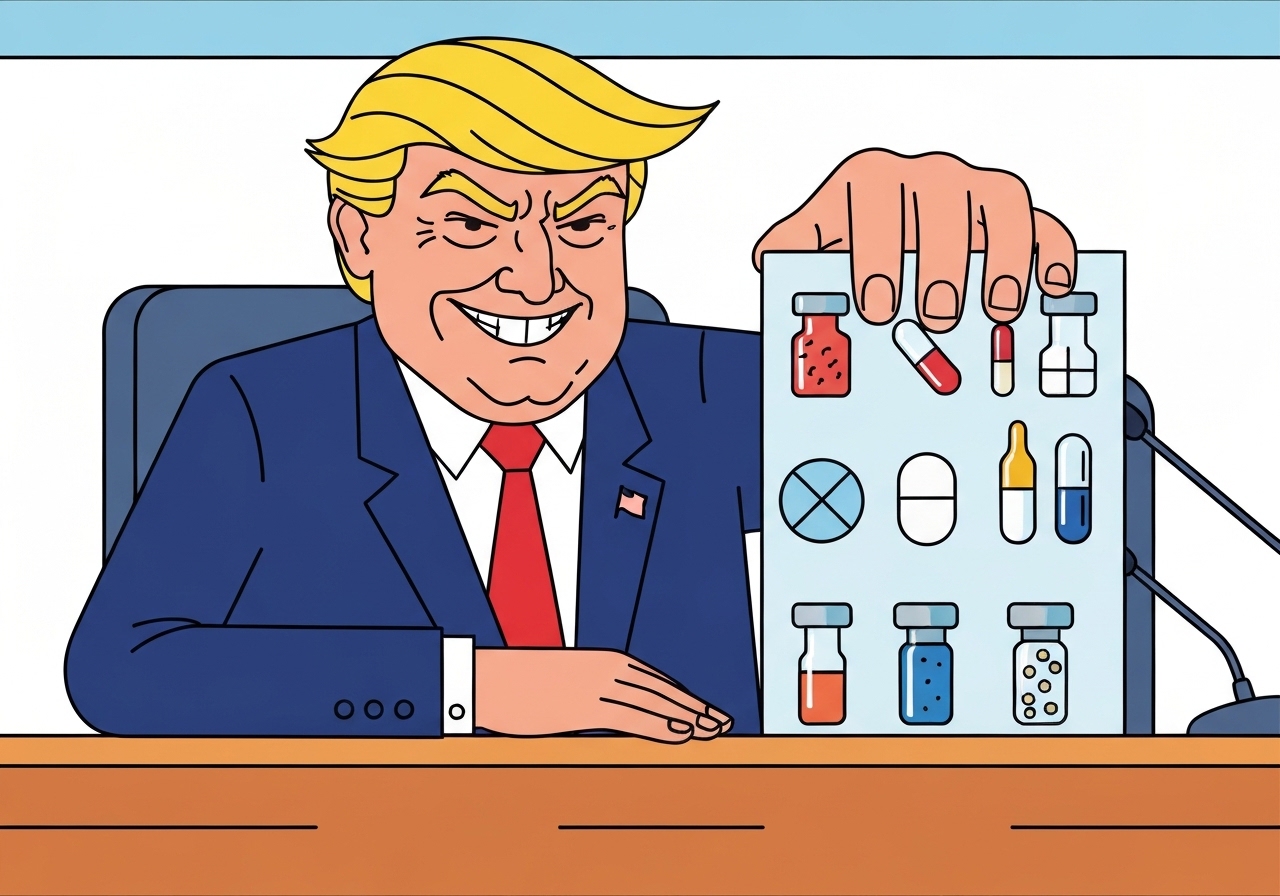
The Trump administration on Tuesday named 15 medications for inclusion in Medicare’s drug price negotiation program, covering treatments for Type 2 diabetes, HIV, arthritis and other conditions. The selections are part of the third round under the 2022 Inflation Reduction Act and are intended to allow the federal government to negotiate lower prices with manufacturers; negotiated rates from this round are scheduled to take effect in 2028. CMS said the selected medicines were used by about 1.8 million Medicare Part B or Part D enrollees over the past year and represent roughly 6% of total Part B and Part D spending. For the first time the program will include drugs payable under Medicare Part B (office-infused or injected medicines), alongside Part D retail prescriptions.
Key Takeaways
- Fifteen drugs were announced for negotiation on Feb. 1; they include Trulicity (Type 2 diabetes), Biktarvy (HIV) and Botox for Medicare-covered indications.
- The picks represent the third round of selections under the 2022 Inflation Reduction Act; negotiated prices from this round are slated to begin in 2028.
- CMS said about 1.8 million Medicare beneficiaries used one of these 15 drugs in the past year, and the medicines accounted for approximately 6% of Part B and Part D spending.
- This round expands eligibility to Part B drugs for the first time, which covers outpatient infused or injected treatments administered in clinical settings.
- With earlier rounds, the government has already reached negotiated prices for 25 drugs; combined with this round the program will cover 40 medicines.
- One previously negotiated diabetes drug, Tradjenta, will be subject to renegotiation under this cycle.
Background
The drug price negotiation program was created by the 2022 Inflation Reduction Act to give Medicare authority to directly bargain with drug manufacturers for select high-cost and high-use medicines. The law requires the federal government to pick a fixed number of drugs each year from among the most costly and widely used products in Medicare Parts B and D, and to publish selections by a statutory deadline — this year, Feb. 1. The program is structured as multi-year rounds: an initial set of negotiated prices took effect this year for the first group of medications, a second set announced earlier will take effect in 2027, and the new round announced Tuesday will affect prices starting in 2028. Supporters argue the mechanism can lower costs for taxpayers and beneficiaries by targeting the drugs that drive the largest Medicare expenditures; critics say it amounts to government price-setting that could discourage innovation or shift costs elsewhere in the system.
Previous negotiations have focused on retail prescription drugs covered under Part D; this year’s inclusion of Part B medicines marks an important expansion because Part B covers many infused and injected therapies administered in outpatient settings. Historically, Medicare’s drug payments and inflation have been politically contentious, with elected officials across the spectrum facing pressure to address rising out-of-pocket costs for seniors. The program’s design includes statutory timelines for negotiation and implementation, but the details of individual agreements — including final prices and manufacturer concessions — are reached through confidential talks followed by public notices as required by CMS.
Main Event
CMS announced the full list of 15 medicines chosen for negotiation: Anoro Ellipta, Biktarvy, Botox and Botox Cosmetic (for Medicare-covered uses), Cimzia, Cosentyx, Entyvio, Erleada, Kisqali, Lenvima, Orencia, Rexulti, Trulicity, Verzenio, Xeljanz and Xeljanz XR, and Xolair. The agency said these drugs are among the costliest in Medicare and were selected because of their high spending and beneficiary use. CMS also stated that Tradjenta, a diabetes drug previously negotiated, will be renegotiated in this round under the statutory process for revisiting earlier agreements.
Administration officials framed the announcement as action to curb rising prescription spending for seniors and taxpayers. CMS Administrator Dr. Mehmet Oz said the agency is targeting high-cost medicines to negotiate fairer prices and make the system work for patients rather than special interests. The administration highlighted that the list includes widely prescribed therapies — spanning chronic metabolic disease, autoimmune illnesses, cancer and neurologic indications — that impose large annual costs on the Medicare program.
The practical effect for beneficiaries depends on the negotiated terms and the statutory implementation schedule. CMS negotiates a maximum fair price and manufacturers can accept the price or face penalties if they do not comply when the program’s effective date arrives. For Part B medicines, negotiated prices will apply to drugs administered in clinician settings; for Part D medicines negotiated rates will affect retail pharmacy reimbursements and plan formularies. Stakeholders including insurers, pharmacy benefit managers and providers will have to adapt formularies, billing and coverage policies to the new rates when they are finalized.
CMS emphasized the scale by noting past rounds: 25 drugs already have negotiated prices and the first 10 drugs negotiated last year went into effect at the start of this year. With the 15 added in November and the 15 announced Tuesday, CMS says the program will cover 40 medicines in total across the three rounds once all negotiated price start dates have arrived.
Analysis & Implications
The immediate fiscal implication is a potential reduction in Medicare drug spending on the selected medicines when negotiated prices take effect in 2028; however, CMS has not released consolidated projections of federal savings tied specifically to this round. Savings depend on final negotiated prices, manufacturers’ responses, and how plans and providers implement formulary and billing changes. The program is structured to focus first on high-spend drugs to maximize budgetary impact, but quantifying net savings requires accounting for possible shifts in prescribing, manufacturer discounts outside negotiation, and administrative costs associated with implementing new price terms.
From an industry perspective, pharmaceutical manufacturers and their trade groups have criticized the approach as government price-setting that could dampen incentives for research and development. Industry representatives argue alternative cost-control measures — such as changing insurer incentives or increasing competition — could be preferable, while proponents counter that Medicare’s purchasing scale provides leverage that has been unavailable under prior law. The negotiation process also raises questions about smaller manufacturers or therapies with narrow patient populations, since the program targets the most costly and widely used drugs rather than rare or newly launched medicines.
Politically, the program remains a focal point in debates over health-care costs and the role of government in the pharmaceutical market. Supporters emphasize direct savings for beneficiaries and taxpayers; opponents warn of long-term impacts on innovation and access. Implementation hurdles — including legal challenges, administrative complexity for Medicare Parts B and D, and potential manufacturer strategies to limit revenue exposure — will shape real-world outcomes over the next several years.
Comparison & Data
| Round | Drugs Announced | Effective Year | Cumulative Drugs |
|---|---|---|---|
| First | 10 | 2026 (start of year) | 10 |
| Second | 15 | 2027 | 25 |
| Third (this) | 15 | 2028 | 40 |
The table summarizes the three rounds so far: an initial group of 10 drugs with prices that began at the start of the current year, a second group of 15 set for 2027, and the 15 announced Tuesday slated for 2028. CMS reported that about 1.8 million Medicare Part B or Part D enrollees used one of the 15 drugs in the latest round over the past year, and that the medicines represented roughly 6% of total Part B and Part D spending. Those usage and spending shares explain why regulators prioritized these products: targeting relatively small sets of high-spend drugs can produce outsized budgetary effects if meaningful discounts are secured.
Reactions & Quotes
CMS framed the move as a direct effort to reduce costs for seniors and taxpayers; officials highlighted the program’s statutory authority and the size of potential savings tied to high-expenditure drugs.
“For too long, seniors and taxpayers have paid the price for skyrocketing prescription drug costs,”
Dr. Mehmet Oz, CMS Administrator (official statement)
Advocacy groups welcomed the announcement as progress on a top voter concern. AARP emphasized cross-partisan demand among older Americans for lower drug prices and thanked the administration for protecting Medicare’s negotiation authority.
“Lowering drug prices is a top priority for older Americans across the political spectrum,”
Dr. Myechia Minter-Jordan, AARP CEO (advocacy group)
Pharmaceutical industry representatives reiterated opposition, calling government-led price setting the wrong policy path and urging alternatives such as changes to insurers and pharmacy benefit managers.
“The IRA continues to show why government price setting is the wrong approach for Americans,”
Elizabeth Carpenter, PhRMA EVP of Policy and Research (industry trade group)
Unconfirmed
- Exact aggregate federal savings from this specific round have not been published; CMS has not released a consolidated projection tied to the 15 drugs announced Tuesday.
- Details of individual negotiated price offers and final manufacturer responses remain confidential until CMS completes the statutory publication process.
- How negotiated prices will affect manufacturer pricing strategies for non-Medicare markets or commercial plans is uncertain and could vary by company.
Bottom Line
The administration’s selection of 15 additional drugs for Medicare price negotiation expands the program’s scope and marks the first time Part B medicines are formally included. The picks target high-spend therapies used by large numbers of beneficiaries, which is intended to amplify potential savings for Medicare and reduce out-of-pocket costs for enrollees when new prices take effect in 2028.
Realized savings and broader market effects will depend on the final negotiated terms, manufacturer responses, and how plans and providers adapt to new price rules. Policymakers, industry groups and patient advocates will closely monitor implementation and any legal, clinical or commercial repercussions over the coming years.