
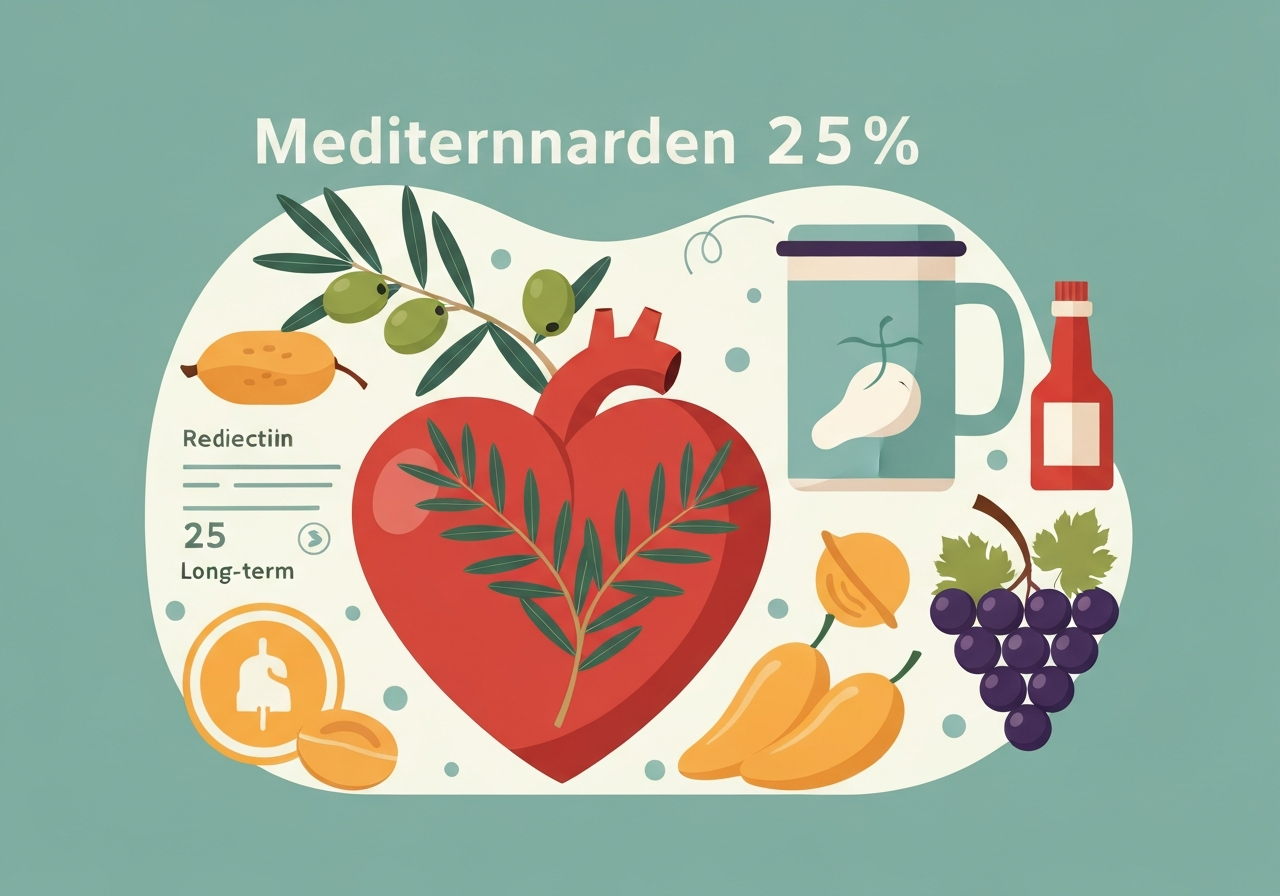
Researchers leading a 21-year cohort study of 105,614 US women report that high adherence to a Mediterranean-style diet was associated with substantially lower risk of stroke. The analysis, published in Neurology Open Access (American Academy of Neurology), found an 18% lower risk of any stroke, a 16% lower risk of ischemic stroke and a 25% lower risk of hemorrhagic stroke among the highest-scoring diet group. The association remained after adjustment for smoking, physical activity and hypertension, though the authors caution the results show correlation rather than definitive causation. Independent experts and a national stroke charity welcomed the findings as important for prevention efforts.
Key takeaways
- The study followed 105,614 women in California with a mean starting age of 53 for an average of 21 years, providing long-term outcome data.
- Diet adherence was scored 0–9; 30% of participants scored 6–9 (highest adherence) while 13% scored 0–2 (lowest adherence).
- After multivariable adjustment, highest adherence correlated with an 18% lower overall stroke risk compared with lowest adherence.
- Subtype results showed a 16% lower risk for ischemic stroke and a 25% lower risk for hemorrhagic stroke in the highest adherence group.
- The study used self-reported diet data and included only women, which the authors list as important limitations affecting generalisability.
- The analysis was published in Neurology Open Access (American Academy of Neurology); authors note association does not prove causation and call for further study.
Background
The Mediterranean diet—characterised by higher intake of olive oil, nuts, fish, whole grains, legumes, fruits and vegetables and lower intake of red meat and full-fat dairy—has been associated with reduced cardiovascular disease in multiple previous studies. Despite a growing evidence base for coronary disease and overall mortality, large-scale evidence on how this pattern relates to all major stroke types has been comparatively sparse. Stroke remains a major global health burden: more than 15 million people suffer a stroke each year, with roughly 5 million deaths and 5 million permanent disabilities worldwide.
Because ischemic and hemorrhagic strokes have different pathophysiologies—ischemic from blocked cerebral blood flow and hemorrhagic from intracranial bleeding—interventions that reduce both types would have broad public-health implications. Past research often focused on ischemic events or mixed cardiovascular endpoints; few prior large cohort studies reported clear estimates for hemorrhagic stroke. The new analysis was led by investigators based in the United States and Greece and aims to fill that evidence gap while acknowledging observational limits.
Main event
The cohort comprised 105,614 women in California, initially stroke-free and with a mean age of 53 at baseline. Participants completed dietary questionnaires that were used to compute a 0–9 Mediterranean-diet adherence score: points were awarded for intake above the cohort average of whole grains, fruits, vegetables, legumes, olive oil and fish, and for moderate alcohol; points were subtracted for above-average intake of red meat and dairy.
Thirty percent of women scored 6–9 (the highest adherence category) while 13% scored 0–2 (the lowest). Researchers followed participants for an average of 21 years and recorded incident stroke events, categorised as ischemic or hemorrhagic. Statistical models adjusted for known stroke risk factors including age, smoking status, physical activity, body mass index and history of hypertension.
After adjustment, women in the highest adherence group had an 18% lower risk of any stroke compared with the lowest group. Subtype analysis reported a 16% lower risk of ischemic stroke and a 25% lower risk of hemorrhagic stroke in the high-adherence group. The authors emphasised that the findings represent associations and cannot by themselves establish that the diet caused the reduced risks.
Analysis & implications
If causal, the observed associations imply that broader adoption of Mediterranean-style dietary patterns could reduce stroke incidence at population scale, including both ischemic and hemorrhagic subtypes. An 18% relative reduction in overall stroke risk applied to high-burden populations would translate into a notable absolute number of prevented events, given the annual global incidence exceeding 15 million strokes. Public-health campaigns that support dietary change alongside smoking cessation and blood-pressure control could therefore be synergistic.
However, uncertainty remains about mechanisms linking the dietary pattern to lower hemorrhagic stroke risk, which is less common but typically more severe. The Mediterranean pattern is associated with lower inflammation, better lipid profiles and improved endothelial function, any of which might plausibly reduce ischemic risk; effects on vessel fragility, blood pressure variability or clotting that could influence hemorrhagic risk need further exploration. Randomised trials with stroke endpoints are difficult and expensive, so high-quality cohort evidence such as this complements mechanistic and intermediate-outcome studies.
The study’s reliance on self-reported diet and the restriction to women limit direct extrapolation to men and to settings with different baseline diets or stroke risk profiles. Residual confounding is possible despite multivariable adjustment; for example, healthier diet adherents may differ in unmeasured ways such as access to care or lifelong health behaviours. Still, the consistent direction and magnitude of associations across stroke types strengthen the argument that diet is an important modifiable factor.
Comparison & data
| Outcome | Relative lower risk (highest vs lowest adherence) |
|---|---|
| Any stroke | 18% lower |
| Ischemic stroke | 16% lower |
| Hemorrhagic stroke | 25% lower |
The table summarises the adjusted relative reductions reported by the authors. Absolute risk reductions will vary by baseline risk: in low-risk populations the absolute number of prevented strokes per 1,000 people will be smaller than in high-risk groups. The authors adjusted for major confounders including smoking, physical activity and hypertension, but caution that observational designs cannot exclude all sources of bias.
Reactions & quotes
Lead author Sophia Wang put the findings in preventive terms while noting limitations of observational work.
“Our findings support the mounting evidence that a healthy diet is critical to stroke prevention; we were especially interested to see that this finding applies to hemorrhagic stroke.”
Sophia Wang, City of Hope Comprehensive Cancer Center (study author)
Juliet Bouverie, chief executive of the Stroke Association (UK), highlighted the public-health potential.
“Nine out of 10 strokes were preventable — this work underlines the huge potential for diet to reduce stroke risk across subtypes.”
Juliet Bouverie, Stroke Association (charity)
An independent academic expert noted the study’s value and cautioned against over-interpretation.
“Large, long-term cohorts add important signal, but we need triangulation from other study designs to move from association toward policy recommendations for causation.”
Independent stroke epidemiologist (academic)
Unconfirmed
- Whether the associations observed would be the same in men or in non-US populations remains untested within this dataset.
- Mechanistic explanations for the stronger association with hemorrhagic stroke are hypothetical and require targeted research to confirm.
Bottom line
This large, long-term cohort links higher adherence to a Mediterranean-style diet with lower risks of any stroke, ischemic stroke and hemorrhagic stroke in women. The effect sizes — 18% lower for any stroke, 16% for ischemic and 25% for hemorrhagic stroke — are meaningful if causal, and they reinforce dietary patterns already recommended for cardiovascular health.
Given limitations such as self-reported diet and a women-only sample, the findings are best interpreted as strong observational evidence that supports existing dietary guidance while signalling priorities for further research, including mechanistic studies and more diverse cohorts. For clinicians and public-health planners, promoting Mediterranean-style eating remains a low-risk, potentially high-benefit strategy alongside blood-pressure control and smoking cessation.
Sources
- The Guardian (news report summarising the study; media)
- Neurology Open Access (journal of the American Academy of Neurology; academic journal)
- City of Hope Comprehensive Cancer Center (author institution; official)
- Stroke Association (UK charity; advocacy/charity)