
Lead
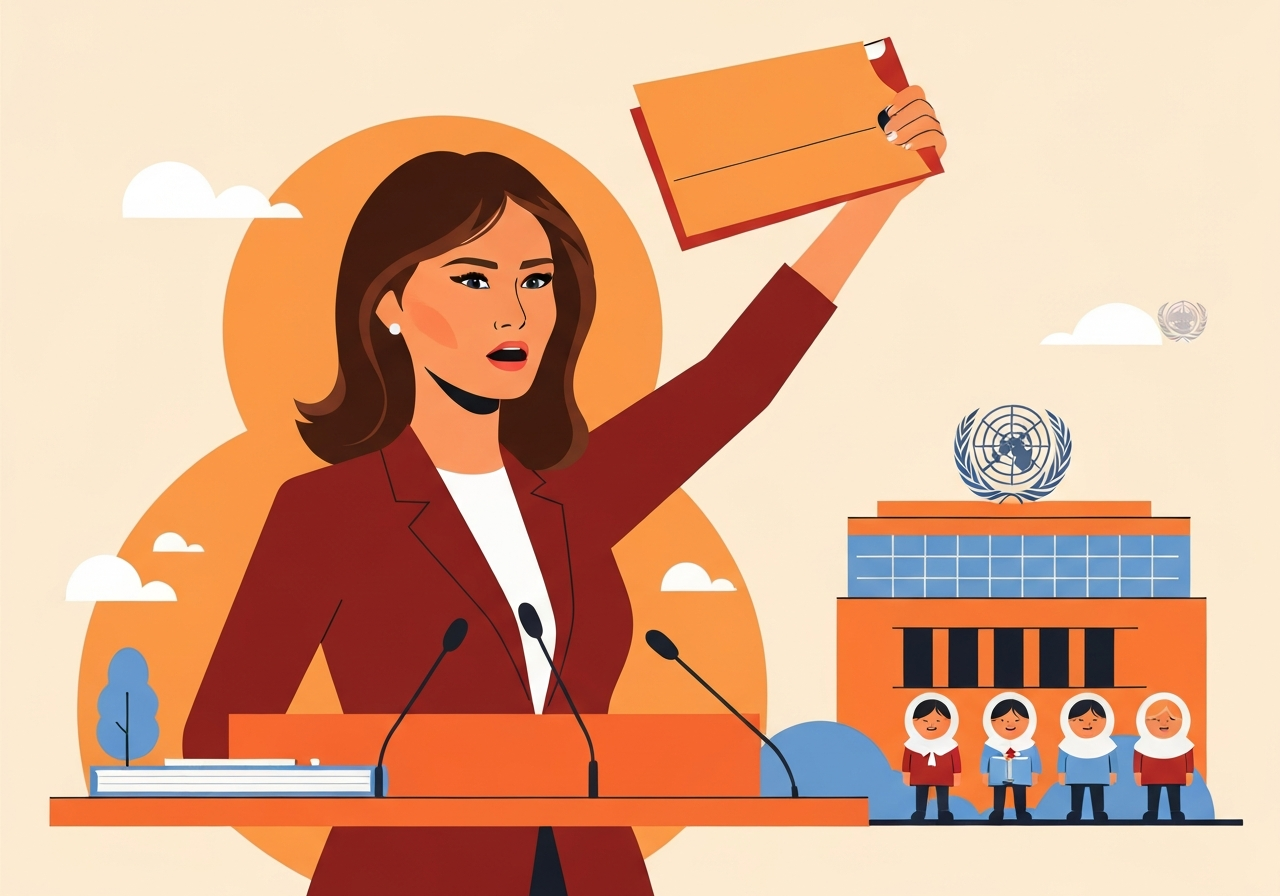
On Monday, 2 March 2026 in New York, Melania Trump presided over a United Nations Security Council meeting and urged member states to safeguard children’s access to education days after Iranian state media reported that an airstrike killed at least 165 people at a girls’ school in southern Iran. The session, held under the Council’s March presidency, was titled “Children, Technology and Education in Conflict” and had been scheduled before US and Israeli strikes against Iran on the preceding Saturday. Trump became the first spouse of a sitting world leader to chair a Security Council session, opening the session with calls for education as a bulwark against violence. The remarks came amid heightened diplomatic tensions and ongoing searches for clarity about the reported strike.
Key Takeaways
- At least 165 people were reported killed in an airstrike at a girls’ school in southern Iran, according to Iranian state media; attribution of the strike remains contested.
- Melania Trump presided over the Security Council on 2 March 2026, marking the first time a sitting leader’s spouse has chaired a Council session.
- The session, entitled “Children, Technology and Education in Conflict,” had been scheduled before US and Israeli military action against Iran on the previous Saturday.
- Trump addressed the Council’s 15 member-state representatives and was greeted by Secretary-General António Guterres; she emphasized education and the potential of artificial intelligence to expand access to learning.
- The Israeli military said it was not aware of strikes in the area, and the US military said it was investigating the reports.
- Iran’s UN ambassador, Amir Saeid Iravani, described US convening of the meeting as “deeply shameful and hypocritical,” linking timing to recent strikes.
- The US holds the Council presidency for March 2026; the White House said child welfare is the first lady’s principal issue and cited that as the reason for her selection.
- The meeting occurred against a background of strained US-UN ties, including US withdrawals from key UN bodies and a January warning from the Secretary-General about the organization’s financial strain.
Background
Tensions between the United States, Israel and Iran escalated in late February and early March 2026, culminating in reciprocal attacks and counterstrikes that prompted emergency diplomacy at the United Nations. A Security Council emergency session convened on Saturday after the outbreak of hostilities; Secretary-General António Guterres criticized the strikes and called for compliance with international law. The March Council agenda included a prearranged session on children and education in conflict zones, reflecting longer-term UN concern about disrupted schooling in wartime.
Melania Trump’s role at the table highlighted an unusual use of the Council presidency: the rotating monthly presidency is customarily exercised by a country’s foreign minister or ambassador, but the White House framed the first lady’s presence as an extension of her child-welfare diplomacy. Her past outreach on child welfare, including correspondence with world leaders and efforts to reunite Ukrainian children displaced to Russia, shaped Washington’s rationale for her appearance. Iran’s delegation and other member states viewed the timing through the lens of the recent strikes, producing immediate political pushback.
Main Event
At the start of the session, the first lady took her seat at the Council’s horseshoe table and was welcomed by Secretary-General Guterres; she exchanged handshakes with each of the 15 member-state representatives and joined a formal group photograph before opening the meeting. In brief opening remarks she said the United States stands with children worldwide and expressed a hope for peace. Her substantive speech framed education as central to preventing future conflict, asserting that societies that prioritize learning protect their languages, sciences and futures.
Trump also advanced a technological element to her argument, urging the Council to consider artificial intelligence as a tool to connect remote communities to knowledge. She characterized AI as a potential equalizer that could expand educational reach in conflict-affected and resource-poor regions. Notably, she did not address the reported strike on the girls’ school in southern Iran during her remarks; the omission drew immediate attention given the timing.
Officials responding to the reported strike gave differing statements. The Israeli military said it was not aware of strikes in the affected area, while US military officials said they were looking into Iranian state media reports. Iran’s ambassador to the UN called the US convening of the session hypocritical, tying criticism of the timing to the recent military actions. The White House defended the selection of the first lady by pointing to her long-running child welfare advocacy.
Analysis & Implications
The optics of the first lady presiding over a Security Council session while a major alleged attack on a school was being reported creates both diplomatic and humanitarian complications. On one hand, the session amplified an explicit humanitarian agenda—keeping education running in conflict zones—at the highest multilateral level. On the other hand, the proximity of the meeting to combat operations meant that attendees and outside observers read the event through a security and credibility lens, with critics arguing the timing undercut the message.
Trump’s emphasis on AI and technology as pathways to education signals a policy direction that blends humanitarian aims with a technology-forward approach. If member states treat AI as a priority for educational access, the Council may see new initiatives or donor appeals focused on connectivity, digital literacy and protections against technology misuse. However, deploying tech-based solutions in active conflict zones raises practical risks—security of infrastructure, misinformation, and equity of access—that will require sustained funding and safeguards.
The broader US-UN relationship also shapes how this message will be received. The United States’ recent withdrawals from agencies and unpaid dues have compounded concerns about the UN’s budget and operational reach; Secretary-General Guterres warned in January that the organization faced acute financial strain. A symbolic presidential role for a first lady may be intended to signal US engagement, but long-term credibility depends on consistent funding and diplomatic follow-through from Washington and other major contributors.
Comparison & Data
| Item | Date | Reported Figures |
|---|---|---|
| Girls’ school airstrike (Iran) | Reported 1–2 March 2026 | At least 165 killed (Iranian state media) |
| Security Council session on children | 2 March 2026 | 15 member-state representatives; US holds March presidency |
The table presents the most widely reported figures and dates related to the meeting and the reported strike; the casualty figure comes from Iranian state media and has not been independently verified by UN bodies at the time of writing. Comparing the scheduled Council session to the unexpected escalation that weekend highlights how preplanned diplomatic forums can be overtaken by rapid developments on the ground.
Reactions & Quotes
Officials and diplomats offered sharply different framings of the events and of the United States’ role. The following selected remarks were delivered in public or to the press; each quote is shown with brief context.
“The US stands with all of the children throughout the world.”
Melania Trump, First Lady (opening remarks at UN Security Council session)
This line framed the humanitarian thrust of the session and prefaced her appeals for education and technological solutions to widen access.
“It is deeply shameful and hypocritical.”
Amir Saeid Iravani, Permanent Representative of Iran to the UN
Ambassador Iravani used this wording in a statement criticizing the United States for convening a session on protecting children while strikes were underway, tying the meeting’s timing to ongoing military actions.
“The United Nations faces imminent financial collapse.”
António Guterres, UN Secretary-General (January warning)
Secretary-General Guterres’ earlier warning about the UN’s finances provided the backdrop for questions about whether symbolic gestures will be matched by tangible funding and policy support.
Unconfirmed
- The precise source or perpetrator of the airstrike that Iranian state media says killed at least 165 people has not been independently verified by UN monitors or third-party investigators.
- Detailed casualty breakdowns, including ages and the number of children among the dead, have not been corroborated by independent humanitarian agencies available at publication time.
- Official military logs from potential actors have not been published that confirm or deny operational activity in the location and time cited by Iranian state media.
Bottom Line
The session underscored an enduring multilateral concern: education in conflict zones is both a humanitarian imperative and a strategic investment in peace. Melania Trump’s appearance brought high-profile attention to that agenda, but the timing amid reported strikes and deep US-UN tensions complicated the message and sparked immediate political pushback. For the idea of education-as-prevention to translate into measurable outcomes, member states must align rhetoric with funding, access agreements and protections for students and schools on the ground.
Short-term priorities to watch include verification of the reported school strike, any Council statements or resolutions responding to attacks on education, and whether donors and major UN contributors commit new resources to support education in conflict-affected areas. Equally important will be follow-through on proposals to use AI and technology: pilot programs, safeguards for data and content, and equitable access will determine whether such proposals deliver real benefits to children caught in warzones.
Sources
- The Guardian (news report on the session and reported Iran strike)
- United Nations Press (official UN press and meeting records) — official UN materials and session records
- Associated Press (news) — reporting on UN spokesperson comments and diplomatic reactions
- The White House (official) — explanation of US selection and child-welfare priorities
- Israel Defense Forces (official) — public statements from Israeli military offices
- Permanent Mission of the Islamic Republic of Iran to the UN (official) — statements from Iran’s UN delegation