
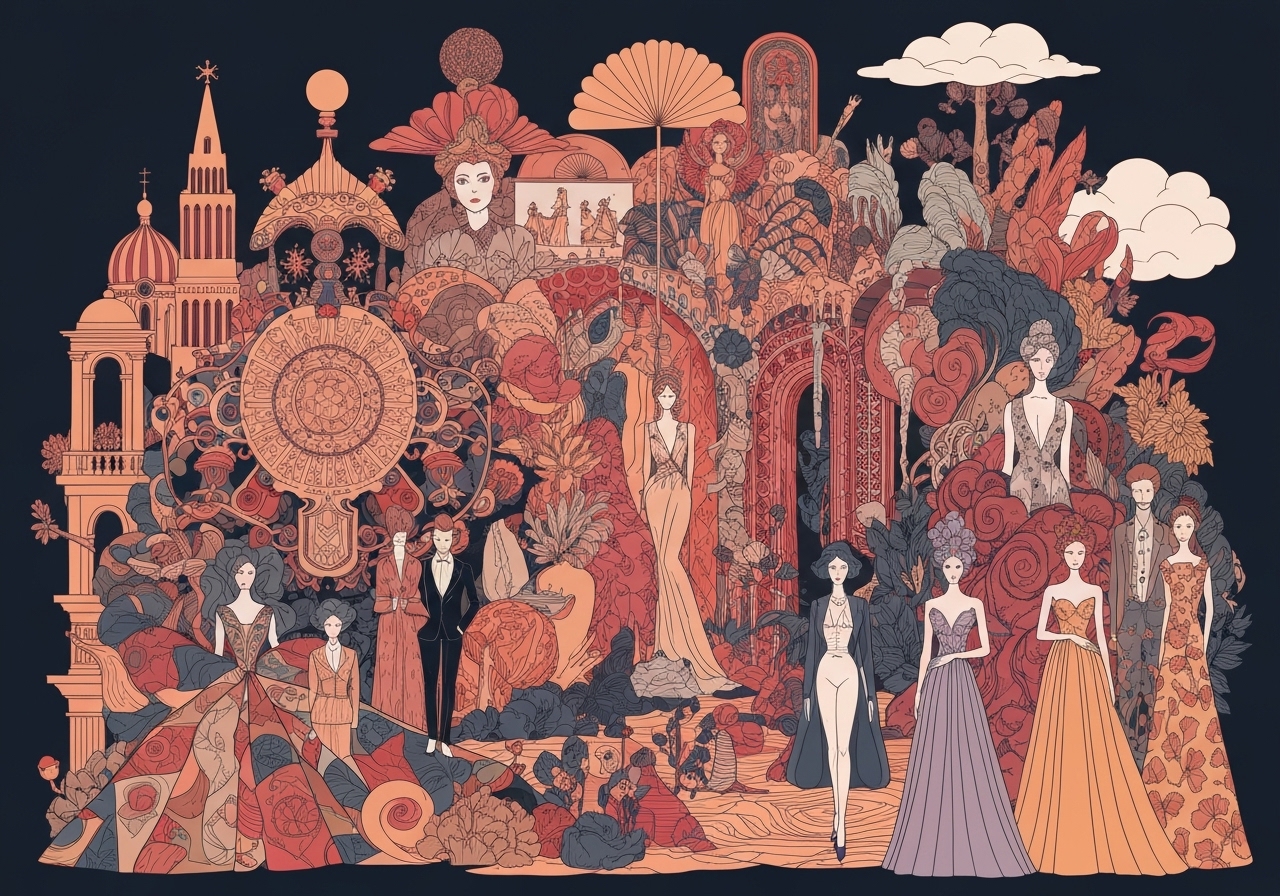
On Nov. 17, 2025, the Metropolitan Museum of Art in New York announced that the Costume Institute’s 2026 exhibition will be titled “Costume Art” and will open May 10, 2026. The show will put nearly 200 works of fine art alongside roughly 200 garments and accessories to trace connections between dress and visual art. Curator Andrew Bolton framed the project as an effort to treat fashion as art through its relationship to the body, and the museum said the exhibition will set the agenda for the 2026 Met Gala. Sponsors named for the gala include Saint Laurent, Condé Nast and donors Jeff Bezos and Lauren Sánchez Bezos.
Key Takeaways
- The exhibition “Costume Art” opens May 10, 2026, and pairs almost 200 artworks with around 200 garments and accessories.
- Announcement came from the Metropolitan Museum of Art in New York on Nov. 17, 2025, with Andrew Bolton as the Costume Institute curator who selects the annual theme.
- Sponsors for the 2026 gala include Saint Laurent, Condé Nast and Jeff Bezos and Lauren Sánchez Bezos; sponsoring brands typically host tables of guests wearing their designs.
- The Costume Institute relies entirely on the Met Gala for funding; tickets reportedly cost about $75,000 and last year raised approximately $31 million for the institute.
- Recent past themes cited include 2019’s Camp and 2011’s Alexander McQueen tribute; 2024’s “Sleeping Beauties” drew criticism for overreliance on AI concepts.
Background
The Costume Institute has long used a rotating exhibition theme to position fashion within broader cultural and artistic conversations. Since Andrew Bolton joined as curator, the annual theme has become the starting point for a high-profile summer exhibition and the headline Met Gala—an event transformed over decades from a private dinner into a global fashion spectacle. The Institute does not receive regular museum budget support; instead, the gala functions as its primary fundraiser for exhibitions, acquisitions and upkeep.
Over the last decade, some shows have reshaped public thinking about dress as a form of art—2019’s Camp exhibition is often cited as a turning point for how red-carpet and street-style risk-taking is interpreted. Other themes have provoked debate: the 2024 exhibition “Sleeping Beauties” used AI-driven displays that some critics found distracting, and earlier tributes have at times overlooked controversial aspects of namesakes’ legacies. That mixed reception shapes curatorial choices as the museum seeks balance between spectacle, scholarship and cultural sensitivity.
Main Event
At a morning press conference announcing the 2026 program, Bolton described the title “Costume Art” as a nod to the Costume Institute’s history and to fashion’s embodiment. He emphasized the exhibition’s ambition to physically juxtapose works on canvas, paper and sculpture with wearable objects, letting garments be read in dialogue with fine art across time. The museum said the curatorial team selected almost 200 artworks and roughly 200 clothing items and accessories to create those juxtapositions.
Anna Wintour attended the announcement; though she stepped down as Vogue US editor-in-chief earlier in 2025, she continues as Vogue’s global editorial director and Condé Nast’s chief content officer and remains the long-standing organizer of the Met Gala. The announced sponsors—French house Saint Laurent alongside Condé Nast and the Bezos donors—are expected to shape some guest tables and programming, as is customary when brands underwrite the gala.
Museum officials reiterated the practical stakes: the gala underwrites the Costume Institute’s exhibitions, acquisitions and maintenance. Ticket prices for the gala are commonly reported at around $75,000 per seat, and the event’s fundraising capacity can exceed tens of millions; the museum reported roughly $31 million raised for the institute at last year’s gala. Preparations for the gala and accompanying editorial coverage will occupy designers, stylists and media teams through the spring leading up to the May opening.
Analysis & Implications
The framing of “Costume Art” signals an institutional push to make the visual parallels between fashion and fine art explicit and curated rather than incidental. By mounting near one-to-one pairings of artworks and garments, the Institute intends to encourage visitors to see dress as a medium that operates with compositional, historical and symbolic strategies similar to painting or sculpture. This approach may bolster academic readings of fashion while offering red-carpet observers new interpretive tools.
Commercially and culturally, the gala remains both a money-raiser and a global media moment. Sponsors like Saint Laurent can expect elevated brand visibility; high-profile donors strengthen ties between philanthropy and the museum’s programming. However, dependence on a single annual fundraiser places curatorial independence and programming continuity in a delicate position—if public opinion turns against a theme or sponsor, fundraising and reputation can be affected quickly.
Curatorial risk is also reputational risk. Recent missteps—critics’ complaints about the 2024 AI-driven show and debates over celebrations of contentious figures—illustrate how thematic framing can overshadow scholarship. For “Costume Art” to succeed, curators will need to balance spectacle with rigorous interpretation, ensuring that garments are contextualized historically and ethically, not just staged for viral red-carpet moments.
Comparison & Data
| Year | Theme (Exhibition) | Reported Gala Funds |
|---|---|---|
| 2011 | Alexander McQueen tribute | — |
| 2019 | Camp | — |
| 2024 | Sleeping Beauties | — |
| 2025 | Superfine: Tailoring Black Style | Approximately $31 million |
The table highlights select recent themes and the one publicly cited fundraising figure: last year’s gala reportedly generated about $31 million for the Costume Institute. That single-event funding model sets the Costume Institute apart from other Met departments that receive institutional budget support. As a result, each theme’s public reception can materially affect the Institute’s financial health and its ability to make acquisitions.
Reactions & Quotes
“The title ‘Costume Art’ refers to the history of the Costume Institute,”
Andrew Bolton, Costume Institute curator
“Fashion has the status of art because of, and not in spite of, its relation to the body,”
Andrew Bolton, Costume Institute curator
Observers in fashion media noted the commercial implications of the announced sponsors, while commentators on cultural institutions highlighted the curatorial challenge of connecting scholarly narratives with mass-audience spectacle. Industry insiders expect the usual scramble of designers and stylists to prepare statement looks for the gala, and editorial operations at outlets such as Vogue were flagged as gearing up for months of coverage.
Unconfirmed
- Exact guest lists and which celebrities designers will successfully dress for the 2026 gala remain unannounced and subject to change.
- The specific artworks and garments selected for individual pairings have not been fully disclosed by the museum at the time of the announcement.
- Details about how Saint Laurent, the Bezos donors or other sponsors will program their tables or events at the gala have not been officially published.
Bottom Line
“Costume Art” positions the Costume Institute to make a direct institutional argument that fashion and fine art are mutually illuminating. If the show achieves its pairing ambitions with clear historical framing, it could strengthen scholarly appreciation for fashion while supplying vivid visual arguments for a mass audience.
Yet the stakes extend beyond aesthetics: the institute’s reliance on a single annual gala for funding makes public reception and sponsor alignment crucial. Watch for the museum’s forthcoming loan lists, interpretive texts and conservation notes—those details will determine whether “Costume Art” resonates as a rigorous exhibition or is remembered mainly as a high-fashion spectacle.