
Lead
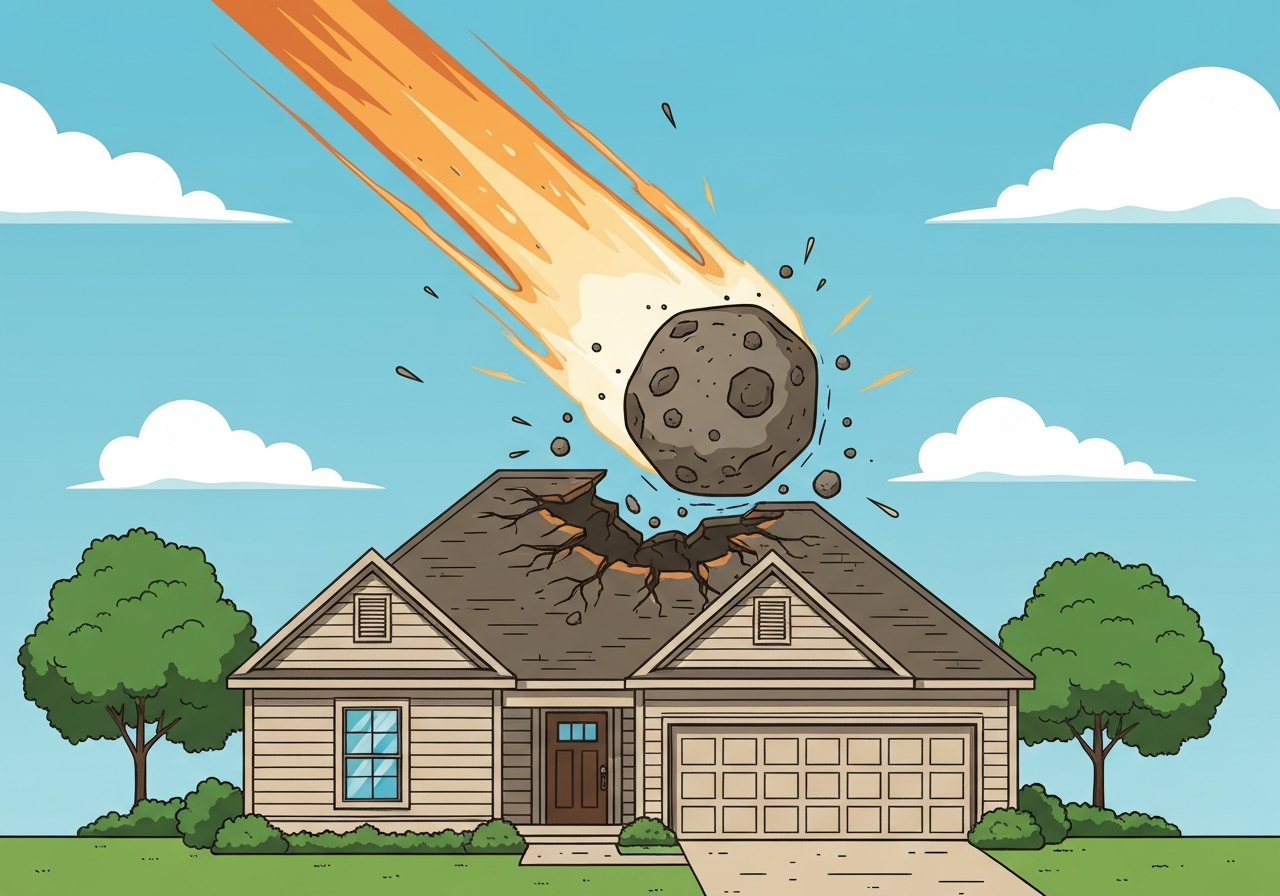
On March 22, 2026, at about 4:45 p.m., a meteorite struck a two-story house in an unincorporated area of northwest Harris County, north of Houston, leaving a fist-sized hole in the roof. The fragment fell into a bedroom, ricocheted off the floor and damaged another section of ceiling. No one was injured, and the homeowner later said she was grateful for that outcome. Local fire officials and television reporters documented the scene and shared photos of the rock inside the residence.
Key Takeaways
- Incident time and place: Approximately 4:45 p.m. on March 22, 2026, in unincorporated northwest Harris County, north of Houston.
- Physical impact: The meteorite tore a roughly fist-size hole in the roof of a two-story house and struck a bedroom floor before hitting another ceiling area.
- Injuries and damage: No injuries were reported; the homeowner reported roof, floor and ceiling damage and launched a GoFundMe to cover repairs.
- Local response: The Ponderosa Fire Department responded and released a photo of the rock; Chief Fred C. Windisch said he had not seen a similar local event in decades.
- Meteor context: The fragment was part of a larger meteor streaking across Texas that produced multiple pieces, according to local reports.
Background
Meteorites — solid debris from meteoroids that survive passage through Earth’s atmosphere — strike the ground only occasionally and rarely damage inhabited structures. Most falls deposit small stones in open or sparsely populated areas; impacts into homes are exceptional and attract immediate media and scientific attention. Large, well-documented airburst events such as the 2013 Chelyabinsk meteor in Russia remain the closest analogs for public-scale meteor incidents, though scale, altitude and damage vary widely.
Harris County, the state’s most populous county, includes densely settled suburbs and unincorporated tracts north of Houston where this event occurred. Local emergency services and television stations commonly coordinate on unusual incidents, and images shared by first responders often form the first public record. In this case, the Ponderosa Fire Department posted a photo of the rock on site and provided initial details to reporters.
Main Event
According to local authorities, a meteor streaked across Texas on the afternoon of March 22, 2026, shedding fragments as it descended. One fragment punched through the roof of a two-story house in an unincorporated area of northwest Harris County at about 4:45 p.m., creating a visible hole in the roof and landing inside a bedroom. The rock then bounced and struck another portion of the ceiling before coming to rest on the floor.
Fire Chief Fred C. Windisch of the Ponderosa Fire Department responded to the scene and shared a photograph of the object inside the home. Chief Windisch described the event as unprecedented in his experience with the department, saying he had not seen a similar incident in decades of service. Reporters from KHOU-TV and other local outlets interviewed neighbors and documented the homeowner’s account.
The homeowner, identified in local reports as Sherrie James, posted on social media describing how the object “unexpectedly” came through her roof and listing the damage. She told followers she was relieved no one was injured and set up a GoFundMe to raise funds for repairs to the roof, floor and ceiling. Local crews secured the property while investigators and reporters gathered initial information.
Analysis & Implications
Physically, most meteorites are small and lose most kinetic energy during atmospheric entry, but even modest fragments retain enough momentum to penetrate roofs or windows under rare circumstances. A fist-sized stone striking a residential roof can create localized structural and water-damage risks even when occupants are unharmed. This incident highlights the low-probability but high-consequence nature of impacts to built environments.
From a public-safety standpoint, emergency responders must balance investigation, evidence preservation and homeowner assistance. Teams typically document the scene, collect the specimen for scientific identification, and advise residents on structural safety and insurance steps. In this case, the Ponderosa Fire Department’s prompt photo documentation and public statements helped establish a credible initial record for scientists and insurers.
There are also legal and financial questions that follow such falls. Ownership of meteorites that land on private property is generally clear in the United States: the finders or property owners typically control them, though state or federal claims can arise in exceptional cases. For the homeowner, the immediate concern is repairing structural damage and addressing any insurance or recovery options; the GoFundMe reflects the practical, short-term needs of the household.
Comparison & Data
| Event | Date | Location | Reported Damage | Injuries |
|---|---|---|---|---|
| Harris County house strike | March 22, 2026 | Northwest Harris County, TX | Fist-size hole in roof; bedroom floor/ceiling damage | 0 |
| Chelyabinsk airburst | Feb 15, 2013 | Chelyabinsk, Russia | Widespread window and structural damage | ~1,500 (mostly glass-related) |
The table shows the local Texas incident is far smaller in scale than major airbursts such as Chelyabinsk, which produced a shock wave that injured many people and damaged thousands of buildings. Still, the Harris County strike is notable because it directly affected a private residence — an uncommon outcome. Scientists will prioritize laboratory analysis of the fragment to determine its mass, composition and whether it is part of a recorded meteor stream or a sporadic fall.
Reactions & Quotes
Fire officials and local media provided the earliest verified descriptions and imagery, which shaped the public’s initial understanding of the event. Emergency personnel emphasized that the immediate hazard had passed and documented the scene for investigators.
“It’s the first time I’ve seen something like this in the area in decades.”
Chief Fred C. Windisch, Ponderosa Fire Department (local fire official)
The homeowner communicated gratitude that family members were unharmed and sought community support for repairs. Her social post, and the subsequent fundraising page, framed the incident as both alarming and fortuitous because no one was injured.
“Grateful no one was hurt,” the homeowner wrote in a social post describing the damage and her plans for repairs.
Sherrie James (homeowner)
Local reporters also relayed early on-the-ground observations and contextualized the event within broader meteor sightings that afternoon. Scientists and meteor observers typically treat such reports as initial leads until laboratory analysis confirms the specimen’s origin.
The object matched eyewitness accounts of a meteor streaking across the sky that afternoon, producing several fragments reported across parts of Texas.
KHOU-TV reporting (local media)
Unconfirmed
- The precise mass, composition and classification of the recovered fragment have not yet been reported publicly and await laboratory analysis.
- The total number of fragments produced by the meteor over Texas and their exact landing locations remain under confirmation by observers and authorities.
- Any potential insurance claims or formal compensation outcomes for the homeowner’s damages have not been disclosed.
Bottom Line
This March 22, 2026 incident is a rare example of a meteorite directly penetrating a residence without causing injury. It underscores that while meteorite falls are infrequent, they can impose sudden property damage and logistical challenges for homeowners and first responders. Documented imagery and rapid local reporting provided initial evidence, but scientific analysis of the specimen will be necessary to fully understand the object’s origin and physical properties.
For residents in populated areas, the event is a reminder of low-probability natural hazards — uncommon but real. In practical terms, homeowners should document damage, consult insurers, and coordinate with local authorities before disposing of recovered material; scientists and institutions can offer identification and, in some cases, conservation or acquisition services. The coming days should clarify the fragment’s classification and any broader meteor activity across the region.
Sources
- The New York Times (national news reporting)
- KHOU-TV (local television reporting)
- Ponderosa Fire Department social posts (local emergency services/photos)