
Lead
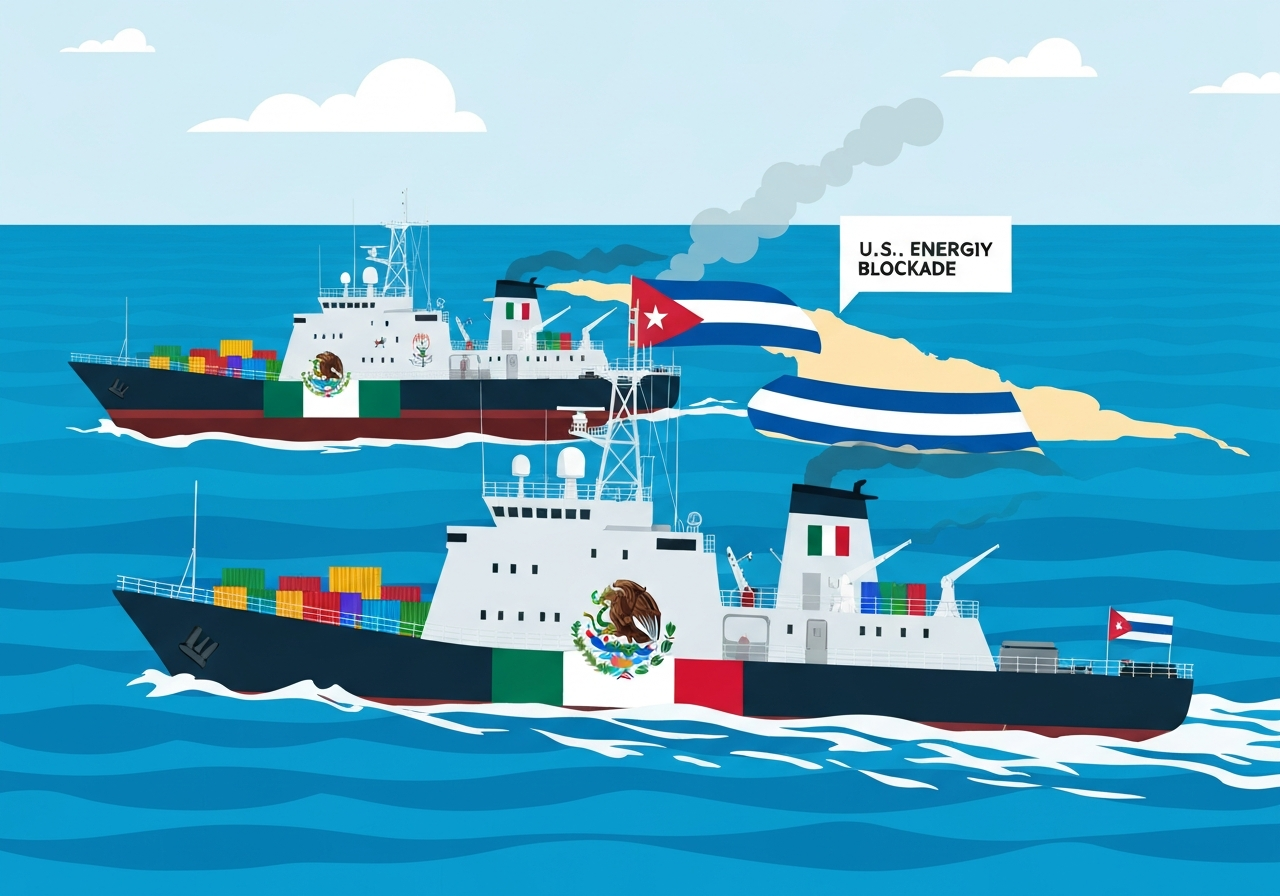
Two Mexican Navy vessels carrying food and powdered milk docked in Havana on Thursday as Cuba confronts a deepening energy squeeze tied to a U.S. blockade. The first ship delivered about 536 tons of mixed foodstuffs and hygiene supplies; the second carried just over 277 tons of powdered milk. The arrivals come after U.S. threats of tariffs on any country supplying oil to Cuba, which prompted recent fuel rationing and service disruptions across the island. Mexican officials said more shipments are planned while diplomatic channels are pursued to restore oil flows.
Key Takeaways
- Two Mexican Navy ships arrived in Havana on Thursday carrying roughly 536 tons of food and 277 tons of powdered milk.
- Mexico says it plans further deliveries, including a pledged 1,500 tons of beans and powdered milk to follow these initial shipments.
- Cuban authorities have imposed fuel rationing and set retail fuel sales to dollars, limited to 20 liters (5.28 gallons) per user.
- Air Canada suspended flights to Cuba this week and some carriers rerouted or added refueling stops due to limited island fuel supplies.
- Cuban officials estimate U.S. sanctions cost the country more than $7.5 billion between March 2024 and February 2025.
- Russian officials declined to confirm potential oil deliveries and emphasized they do not seek escalation with the United States.
Background
The arrival of Mexican aid comes amid a broader diplomatic standoff over oil supplies to Cuba. U.S. public warnings that countries providing oil to Cuba could face tariffs followed moves that have reduced regular crude and refined-product flows to the island. Cuba historically relied on subsidized oil and shipments from partners such as Venezuela; interruptions to those arrangements have left the country vulnerable to shortages.
The energy shortfall has translated into cascading service impacts: transportation networks, hospitals, schools and tourism operations all report strain as fuel becomes scarcer. Cuban authorities have adjusted bank hours, curtailed cultural events and changed retail fuel policies to manage limited resources. The Mexican government frames its assistance as humanitarian relief while saying diplomatic efforts continue to re-establish routine energy deliveries.
Main Event
The two Mexican Navy ships reached Havana’s port on Thursday, unloading palletized food supplies, tins of tuna, rice, beans, powdered milk, vegetable oil and personal hygiene items. Mexican officials quantified the cargo: about 536 tons on the first vessel and slightly more than 277 tons of powdered milk on the second. Local residents gathered along the seawall and at the docks to watch and photograph the arrivals, describing the shipments as timely relief amid mounting uncertainty.
President Claudia Sheinbaum said Mexico would continue aid deliveries and is coordinating with U.S. authorities to seek a peaceful pathway for Cuba to receive oil and petroleum products needed for essential services. Mexico’s government has publicly stated its intention to send a larger consignment — about 1,500 tons of beans and powdered milk — after the vessels complete their return voyage. Pemex, Mexico’s state-owned oil company, had suspended crude shipments to Cuba in January; Mexican officials have not provided a full explanation for that suspension.
Cuban President Miguel Díaz-Canel labeled U.S. moves an “energy blockade,” asserting the measures have already hit hospitals, transit and tourism. Aviation authorities warned that available jet fuel on the island is insufficient for normal refueling operations, prompting airlines to suspend or reroute flights. Airline responses this week included Air Canada suspending some services and other carriers instituting layovers in the Dominican Republic en route to Havana.
On the international front, Russian presidential spokesman Dmitry Peskov declined to publicly discuss whether Moscow might supply oil to Cuba, citing sensitivity and an interest in avoiding escalation with the United States. He said Russia remains hopeful for constructive diplomatic dialogue, but did not offer a concrete commitment on energy shipments.
Analysis & Implications
Short-term humanitarian shipments from Mexico provide immediate relief for families facing food and hygiene shortages, but they do not address the structural problem of fuel scarcity. Food deliveries can ease acute hunger and substitute for some lost domestic production inputs, yet critical services that depend on consistent fuel — hospitals, public transit and airports — require reliable petroleum supplies or alternative energy solutions.
The diplomatic dimension is central: U.S. warnings about sanctions or tariffs on third parties supplying oil raise the political and legal costs for countries weighing support for Cuba. Mexico’s decision to send aid while pursuing dialogue with the United States reflects an attempt to balance humanitarian concerns with geopolitical constraints. The risk is that aid alone could become a stopgap while deeper economic and diplomatic frictions continue to degrade Cuba’s energy security.
For Cuba’s tourism-dependent economy, the near-term impacts are acute. Flight suspensions and reduced on-island refueling capacity will likely depress arrivals and tourist spending this season, compounding preexisting economic pressures. Over the medium term, persistent supply disruptions could force Cuba to accelerate energy diversification, including imports via third countries, expanded renewable projects or domestic conservation measures, each of which carries costs and political choices.
Comparison & Data
| Item | Quantity / Date |
|---|---|
| Ship 1 cargo | ~536 tons (mixed food & hygiene) |
| Ship 2 cargo | ~277 tons (powdered milk) |
| Planned next shipment | ~1,500 tons (beans & powdered milk) |
| Retail fuel sale limit | 20 liters (5.28 gallons) per user |
| Estimated sanction cost | $7.5 billion (Mar 2024–Feb 2025) |
The table places the Mexican delivery in context: the combined initial load totals roughly 813 tons, modest relative to the 1,500-ton package Mexico says it intends to send next. Fuel rationing at 20 liters per person reflects a tight allocation policy designed to stretch limited reserves, and the $7.5 billion figure indicates the scale of economic disruption Cuban officials attribute to tightened international restrictions over the 12-month period cited.
Reactions & Quotes
Local residents and officials offered immediate responses that illustrate the humanitarian and political dimensions of the shipments.
This is incredibly important aid for the Cuban people at this moment. We are living through difficult times of great need and uncertainty, and we don’t know how long we will be like this.
Yohandri Espinosa, Havana resident
Espinosa watched the ships arrive with his daughter, characterizing the deliveries as critical while expressing worry about the duration of shortages. Observers along the Malecon echoed a mix of relief and apprehension about what comes next.
We can’t stay how we are because it’s too hard. We’ll have to wait and see.
Javier González, Havana resident
González’s comment on the seawall captured the wider public sentiment: gratitude for aid and frustration over persistent economic strain. The arrivals offered temporary respite but not a solution to systemic shortages.
As soon as the ships return, we will send more support of different kinds.
President Claudia Sheinbaum (Mexico)
President Sheinbaum framed the shipments as part of an ongoing assistance program while reiterating Mexico’s preference for diplomatic engagement to restore energy supplies. Russian and U.S. officials have so far kept public comments cautious, underscoring the sensitivity of bilateral tensions that affect third-party assistance efforts.
Unconfirmed
- Reports that Russia will supply oil to Cuba remain unconfirmed; officials have declined to offer a public commitment.
- The full reasons for Pemex’s suspension of crude shipments to Cuba in January have not been fully detailed by Mexican authorities.
- Some accounts linking the halt in Venezuelan shipments directly to a U.S. attack and arrest of that country’s leader are reported in some outlets but lack independent confirmation in public official records.
Bottom Line
Mexico’s naval deliveries provide immediate food and milk for Cubans coping with shortages, but they do not resolve the island’s broader fuel crisis. The shipments signal humanitarian concern and diplomatic maneuvering, yet durable relief depends on restoring reliable energy supplies or building alternative capacity.
Policymakers and residents should watch three indicators in the coming weeks: whether promised Mexican consignments arrive on schedule, whether third countries commit to fuel shipments without provoking secondary sanctions, and whether airlines and tourism operators adjust capacity in response to evolving fuel availability. These developments will determine whether the current measures remain temporary stopgaps or mark a longer-term shift in Cuba’s energy and economic trajectory.