
Lead
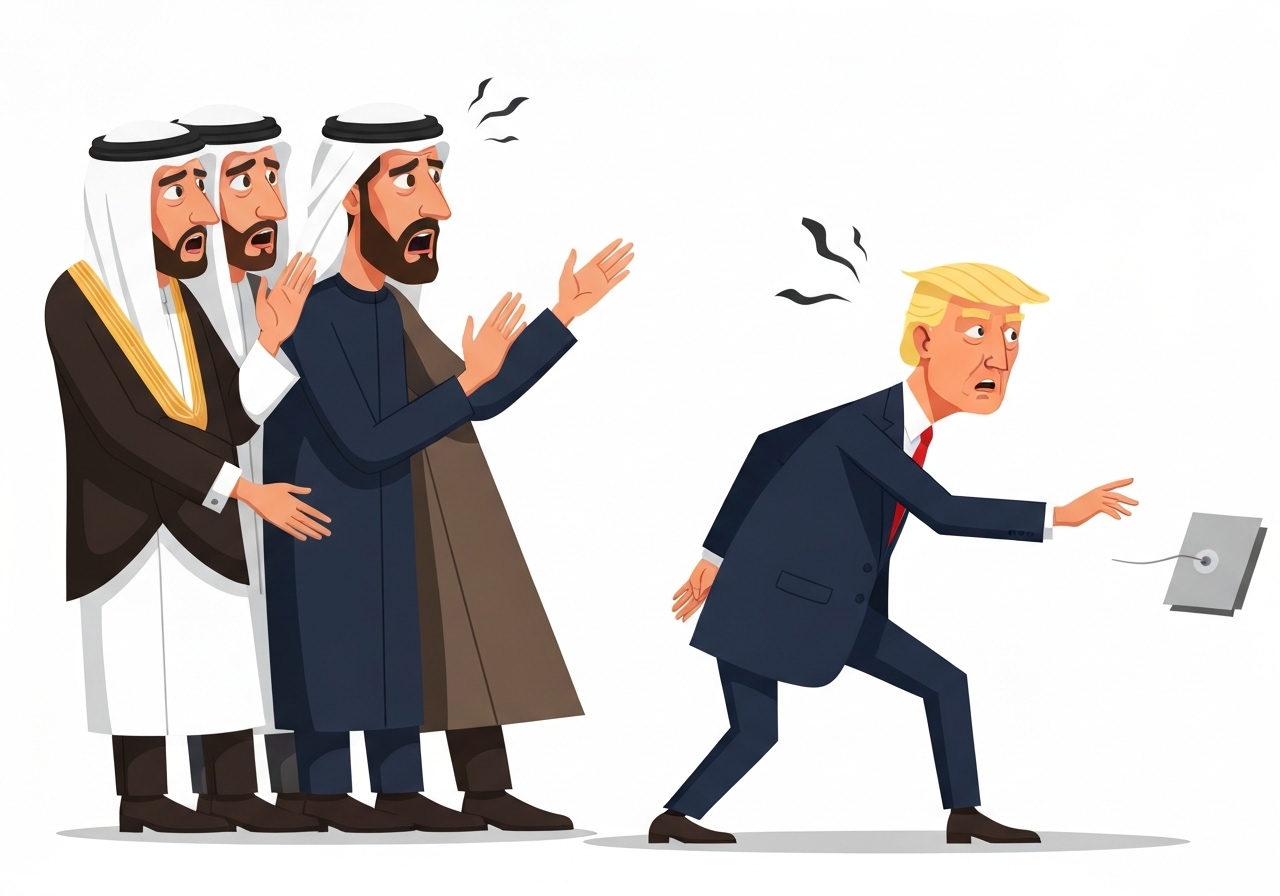
Several U.S. partners in the Middle East — including officials from Egypt, Oman, Saudi Arabia and Qatar — urged the Trump administration over the past 48 hours to pause any military strikes on Iran in response to Tehran’s lethal crackdown on protesters, an Arab diplomat familiar with the conversations told reporters. The appeal came as oil prices fell Thursday amid market readings that President Donald Trump was softening his threats after days of stern warnings. White House Press Secretary Karoline Leavitt said on Thursday that “all options remain on the table,” even as the administration signaled some de-escalation. The diplomacy underscored allied fears that a U.S. strike could unsettle global markets and further destabilize an already volatile region.
Key Takeaways
- Top officials from Egypt, Oman, Saudi Arabia and Qatar privately urged the U.S. to hold off on strikes against Iran in the last 48 hours, an Arab diplomat told reporters.
- Markets reacted: oil prices fell Thursday after traders interpreted President Trump’s softer rhetoric as reducing the immediate risk of military action.
- White House press secretary Karoline Leavitt reiterated that “all options remain on the table,” maintaining that the U.S. response could still include military measures.
- The Treasury Department sanctioned 21 people and firms tied to Houthi procurement and smuggling networks, signaling continued U.S. pressure on Iran-aligned actors.
- Conflicting statements emerged: a Saudi embassy official denied outreach to the White House on strike plans, highlighting sensitive, partly opaque diplomacy.
- Iran’s domestic crisis — widespread protests and reports of executions or planned executions — remains the proximate cause of the U.S. considerations and allied appeals.
Background
The immediate flashpoint is Tehran’s crackdown on nationwide protests, which activists and exiled opposition figures have described as deadly and extensive. President Trump had publicly warned of possible U.S. military action if the Iranian government carried out mass executions linked to the unrest; he later thanked Iran, saying it had halted planned hangings of more than 800 people — a figure his administration cited. That claim and the wider casualty figures are central to Washington’s deliberations over whether to respond militarily.
Regionally, Gulf and Arab capitals fear that direct U.S.-Iran hostilities would roil oil markets, endanger shipping lanes and energize proxy conflicts across the Levant and Yemen. Those concerns have motivated repeated, often private, diplomatic outreach to Washington. At the same time, Tehran’s networks — including groups like the Houthis in Yemen — have drawn sanctions from the Treasury Department for allegedly facilitating weapons procurement and smuggling, which U.S. officials say complicates the security picture.
Main Event
The Arab diplomat who spoke on condition of anonymity described a series of quiet, high-level contacts in the past two days, in which senior officials urged restraint. According to that account, ministers and envoys warned that a U.S. strike would not only deepen regional instability but could also trigger rapid spikes in energy prices that would ripple through global markets. Those consultations appear aimed at persuading the White House to pursue nonmilitary pressure or to coordinate any action with a broader international coalition.
Markets reacted quickly: traders trimmed risk premia for a near-term military showdown with Iran, and oil benchmarks fell on Thursday. The move reflected growing investor confidence that diplomatic channels and allied counsel were tempering the administration’s earlier, sharper threats. Still, White House officials were cautious in public messaging; Press Secretary Karoline Leavitt maintained that the president was keeping all options available while noting recent developments in Iran.
The United States also took parallel steps short of kinetic strikes. The Treasury Department’s Office of Foreign Assets Control announced sanctions targeting 21 people and firms accused of supporting the Houthi militant group’s procurement and revenue networks, naming entities in Yemen, Oman and the United Arab Emirates. U.S. officials framed the sanctions as part of a broader toolkit to pressure Iran and its partners without immediately resorting to military force.
Analysis & Implications
The allied pleas to Washington reflect a familiar dynamic: regional governments often seek to temper U.S. military responses that could produce blowback at home. For Gulf monarchies and other Arab states, the calculus balances a desire to counter Tehran’s regional influence against the economic and security costs of open conflict. A direct strike on Iran would likely elevate prices, threaten maritime traffic through the Strait of Hormuz, and risk retaliation via proxies across several theaters.
Domestically in the U.S., the administration faces competing pressures. Hawkish voices argue that robust action is necessary to deter mass repression and to punish Tehran for destabilizing behavior. At the same time, economic advisers and some national-security officials warn that military strikes would impose short-term costs on global markets and could draw the U.S. into an extended confrontation. That tension helps explain why public statements mix firmness with hedging language — “all options” kept available even as steps short of force are pursued.
For Iran, international restraint by the United States and its partners may relieve immediate pressure, but it leaves unresolved the political drivers of the protest movement. If Tehran believes it can weather diplomatic rebukes without facing direct military consequences, the government may continue hardline domestic measures, risking further unrest. Conversely, a U.S. strike could unify disparate Iranian factions behind the regime and lead to escalatory responses through proxies, raising the prospect of a broader regional conflagration.
Comparison & Data
| Measure | Recent Item |
|---|---|
| Sanctions announced | 21 people and firms (Treasury OFAC) |
| Countries cited in sanctions reporting | Yemen, Oman, United Arab Emirates |
The sanctions entry underlines how the U.S. is layering financial and legal pressure on networks tied to Iran without immediately using force. Economic tools such as asset freezes and trade restrictions can degrade procurement channels over months, but they do not produce the instantaneous deterrent effect that some military actions claim to provide. Policymakers must weigh the time horizons, costs and likely responses when selecting among these instruments.
Reactions & Quotes
U.S. officials kept public statements measured even as private diplomacy intensified.
“All options remain on the table”
Karoline Leavitt, White House Press Secretary
The White House language reinforced that the president had not ruled out military steps, a stance intended to preserve bargaining leverage. At the same time, allies’ appeals were reported privately and reflect a different tone focused on regional stability and market consequences.
“We urged restraint because a strike would shake the global economy and destabilize the region.”
Arab diplomat (spoke on condition of anonymity)
The diplomat’s characterization summarized the core allied concern but was discussed off the record, leaving public officials to navigate the gap between private counsel and public posture.
Unconfirmed
- Saudi outreach: Saudi embassy officials publicly denied contacting the White House about strike plans; the diplomat who described allied appeals spoke on background, so the precise degree of Saudi engagement remains unresolved.
- Execution figures: President Trump cited more than 800 planned executions that were reportedly halted; independent verification of that number and the circumstances around the cancellations is incomplete.
- Private meetings: Reports of closed-door meetings between U.S. envoys and exiled Iranian figures (including Reza Pahlavi) lack full disclosure of topics and outcomes and remain partly unconfirmed.
Bottom Line
In the short term, allied diplomacy appears to have nudged U.S. messaging toward de-escalation, which market moves reflected with lower oil prices on Thursday. Yet the administration continues to reserve military options, maintaining leverage while pursuing sanctions and other measures. This hybrid strategy — threat plus selective economic pressure — is designed to deter further mass repression in Iran while avoiding an immediate, costly military engagement.
Looking ahead, the key variables to watch are whether Iran resumes executions or escalatory proxy attacks and whether Gulf partners can sustain coordinated pressure on Washington to prioritize nonmilitary tools. If Tehran takes dramatic new steps, the equilibrium could shift rapidly; if not, diplomatic and financial instruments will likely remain the principal U.S. response.
Sources
- Associated Press live updates (news media)