
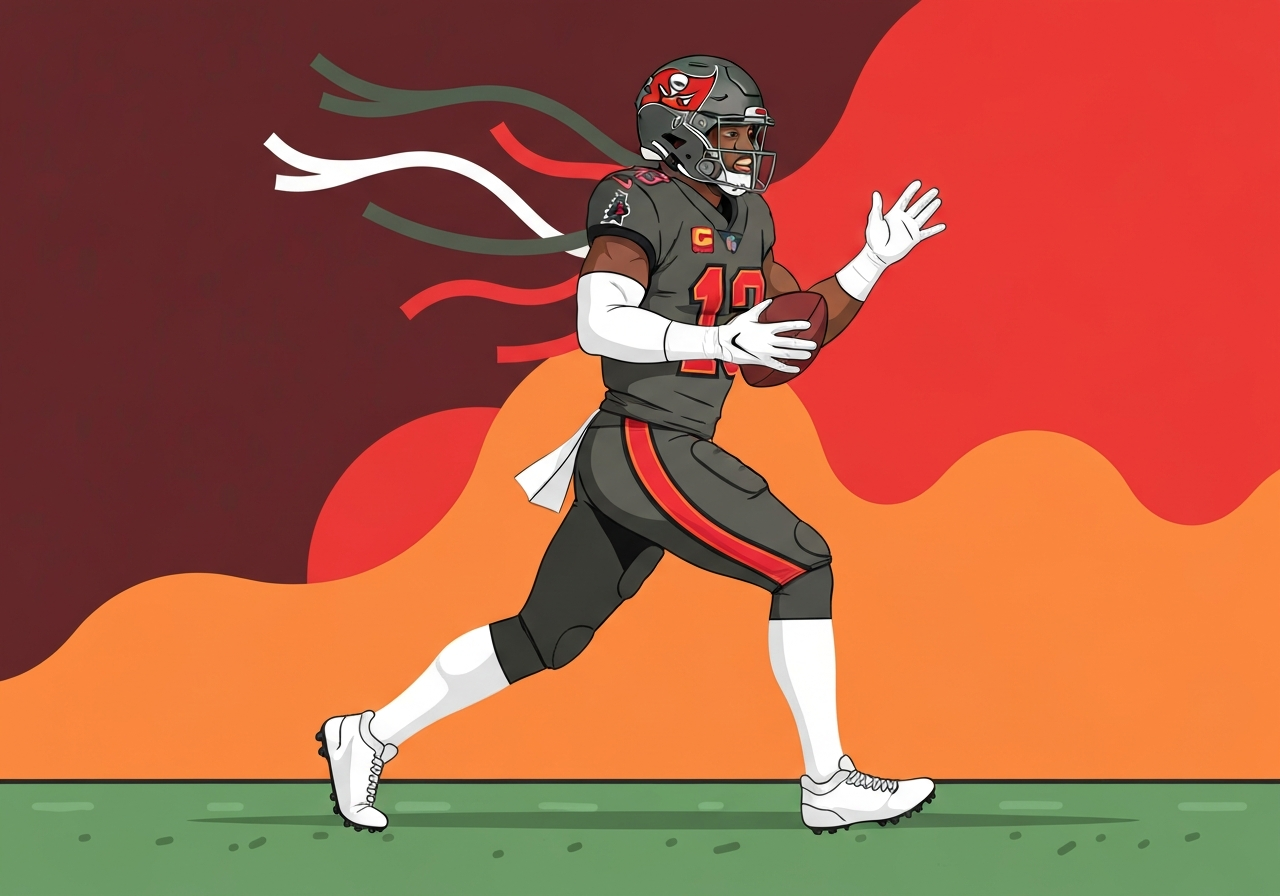
Mike Evans is set to depart the Tampa Bay Buccaneers and join the San Francisco 49ers as the 2026 NFL free-agency window opens. The league’s legal tampering period began Monday, March 9 at 12:00 p.m. ET, allowing teams to negotiate with agents ahead of the new league year. The new league year — and the point at which contracts from the 2025 season officially expire — begins March 11 at 4:00 p.m. ET, when unrestricted free agents can formally sign. Reports identifying Evans’ move surfaced immediately as tampering began and dominated early free-agency coverage.
Key Takeaways
- Mike Evans is reported to be leaving the Tampa Bay Buccaneers to sign with the San Francisco 49ers, a move announced as legal tampering opened on March 9, 2026.
- The NFL’s legal tampering window opened March 9 at 12:00 p.m. ET; the new league year starts March 11 at 4:00 p.m. ET when contracts officially expire.
- Evans’ reported signing alters 49ers receiving depth ahead of the 2026 season and removes a veteran target from the Buccaneers’ offense.
- Early reports focus on the headline move; specific contract length and financial terms for Evans had not been disclosed at the time of reporting.
- Sports Illustrated and other outlets provided live updates during the initial tampering hours, tracking negotiations and projected landing spots for top free agents.
- The opening of tampering traditionally accelerates a wave of prearranged deals and rapid roster decisions before the formal signing period.
Background
Each offseason the NFL’s calendar divides negotiation windows to give teams and players structured opportunities to reach agreements. The legal tampering period — now beginning March 9, 2026 at noon ET — permits teams to discuss and reach terms with prospective free agents before the roster changes become official. That countdown culminates when the new league year begins March 11 at 4:00 p.m. ET, at which point remaining deals can be signed and cap accounting for the 2026 season begins.
Free agency shifts roster construction dramatically: teams with cap flexibility often pursue established veterans to fill immediate needs, while rebuilding clubs prioritize younger assets and draft capital. High-profile departures reshape plans quickly; when a veteran with Evans’ profile is reported to be changing teams, it prompts immediate strategic adjustments for both the acquiring franchise and the one losing him. Media outlets and team beat reporters typically document the timeline in near real time during the tampering window and the initial signing rush.
Main Event
The report that Mike Evans will sign with the San Francisco 49ers emerged as legal tampering began, placing a marquee wide receiver on a team that has consistently pursued offensive upgrades. According to live updates, negotiations accelerated in the hours after the tampering period opened, with the 49ers moving to secure veteran receiving talent to complement their existing corps. The timing — ahead of the March 11 official start — mirrors a pattern in which clubs reach verbal agreements during tampering and finalize contracts once the new league year begins.
For the Buccaneers, Evans’ departure marks the end of a significant chapter in their receiving group plans. Teams losing a proven pass-catcher often respond by promoting younger players, exploring trade markets, or chasing free agents to fill the void. For the 49ers, adding a veteran of Evans’ caliber signals a win-now approach, aiming to expand their immediate offensive weapons and sustain competitive momentum into the 2026 season.
Media outlets covering the initial tampering period flagged Evans’ move among the day’s top stories, and analysis immediately pivoted to potential contract structure, cap impact and how the signing changes matchups around the league. While terms remained undisclosed at the time of reporting, the likely immediate effects are on-field alignment and play-calling adjustments to integrate a veteran receiver into the 49ers’ scheme.
Analysis & Implications
Strategically, the 49ers’ reported acquisition of Mike Evans alters both short-term game planning and long-term roster construction. In the short term, adding a reliable perimeter target gives the offense another predictable option on third downs and in the red zone, potentially improving scoring efficiency. Opposing defenses will have to adjust coverage plans, which can open opportunities for other skill players. Longer term, the 49ers must balance veteran salary commitments with draft assets and depth needs across the roster.
From Tampa Bay’s perspective, losing a consistent veteran receiver creates an immediate gap in experience and contested-catch ability. The Buccaneers will need to evaluate internal options and consider aggressive moves — free-agent signings or trades — to replenish the receiving corps. Alternatively, they may lean into schematic changes that distribute targets more broadly among younger receivers and tight ends.
Leaguewide, early high-profile moves during tampering can set market benchmarks for remaining free agents. A marquee signing influences pricing and expectations for other veterans seeking new deals. Teams watching the market will adjust their outreach and financial strategies based on headline transactions like this one, particularly when they involve players who have been long-tenured leaders on their former teams.
Comparison & Data
| Event | Date/Time (ET) |
|---|---|
| Legal tampering opens | March 9, 2026 — 12:00 p.m. |
| New league year begins (contracts expire) | March 11, 2026 — 4:00 p.m. |
The two-step calendar is central to how deals are negotiated: the tampering window allows verbal agreements and agent-team negotiations, while the new league year is the administrative moment when contracts can be executed and salary-cap implications take effect. Coverage during these days emphasizes both the timing and the unfolding roster moves.
Reactions & Quotes
“Legal tampering began March 9 at 12:00 p.m. ET, allowing teams to negotiate with agents ahead of the new league year.”
Sports Illustrated (media summary)
This description was circulated widely by outlets tracking the first hours of the 2026 negotiation window and set reader expectations for the volume of reports that followed.
“Contracts from the 2025 season expire when the new league year begins March 11 at 4:00 p.m. ET; that is when deals can be formally signed.”
Sports Illustrated (media summary)
Reporters used that timing to explain why many signings are announced as verbal agreements during tampering and become official after the new league year starts.
Unconfirmed
- Final contract length and guaranteed money for Mike Evans with the 49ers had not been publicly disclosed at the time of reporting.
- Whether the reported agreement includes immediate roster guarantees or out clauses was not confirmed by official team statements.
- Any ancillary moves (trades or signings) tied directly to Evans’ signing were still being explored and had not been verified.
Bottom Line
The report that Mike Evans will leave the Buccaneers to sign with the 49ers is one of the earliest marquee stories of the 2026 tampering window and reflects how the league’s timeline accelerates roster change. While verbal agreements are common during the tampering period, full transparency on contract terms typically follows the new league year’s administrative opening.
For both franchises, the implications are immediate: the 49ers add established receiving talent that can impact offensive scheming and opponent game-planning, while the Buccaneers must address a veteran departure that affects experience and target distribution. League observers should expect a steady flow of follow-up reporting with confirmed contract details and any consequential roster moves in the hours after March 11 at 4:00 p.m. ET.
Sources
- Sports Illustrated — 2026 Free Agency live updates (media)
- NFL — Official site (league official)