
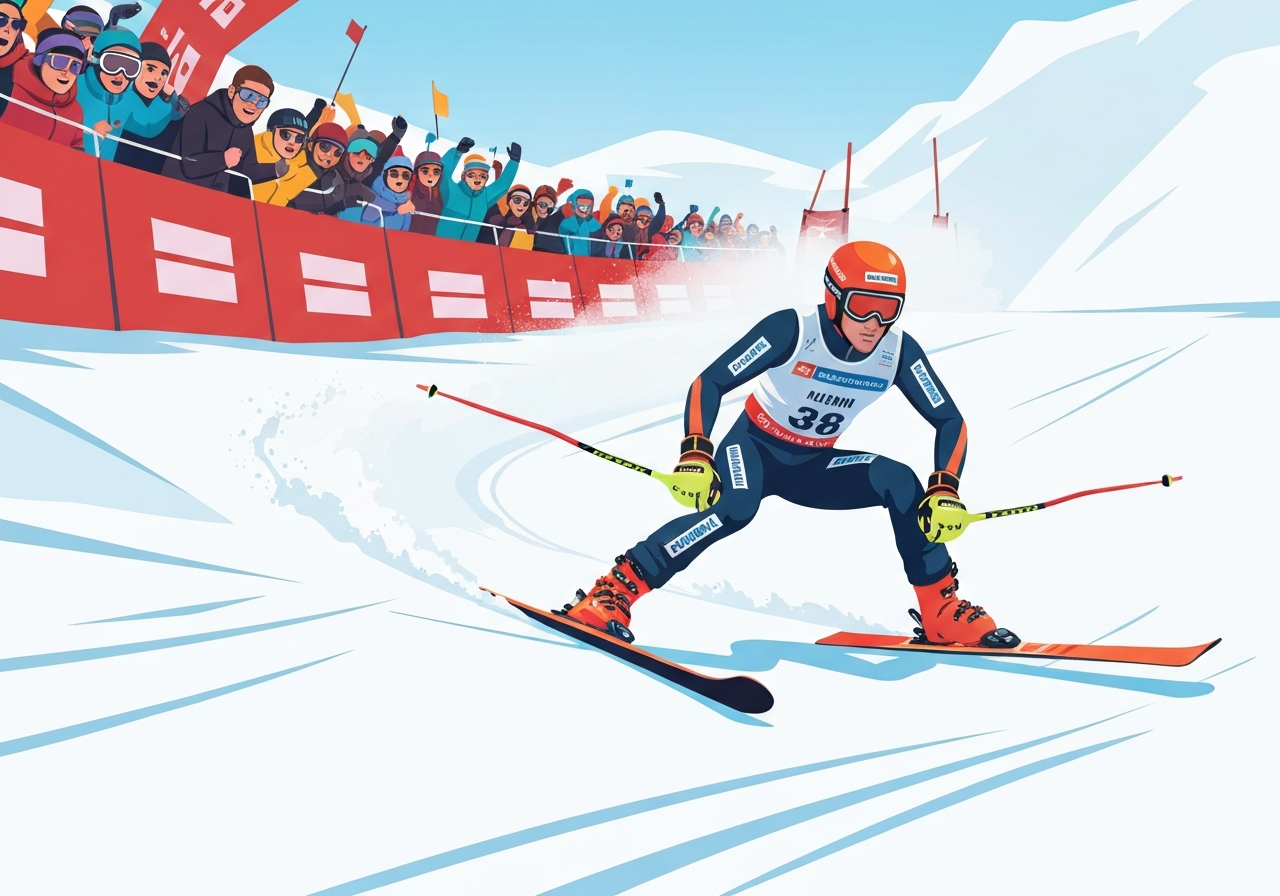
Lead: The Milan Cortina 2026 Winter Olympics open with the men’s downhill at Stelvio Ski Center in Bormio as the first medal event on Saturday, with the race slated to start at 11:30 a.m. local time (1030 GMT, 5:30 a.m. ET) weather permitting. U.S. figure skating star Ilia Malinin will skate his short program in the team competition in Milan that evening, while American cross‑country veteran Jessie Diggins competes in the 20 km skiathlon in Val di Fiemme. A handful of other medal events — including women’s normal‑hill ski jumping, men’s snowboard big air and the women’s 3,000m speedskate — round out Day 1 activity across northern Italy. The schedule and field combine established medal contenders and local favorites, shaping an unpredictable opening day.
Key takeaways
- Men’s downhill at Bormio is the first medal event, scheduled for 11:30 a.m. local time; the course is the Stelvio Ski Center.
- Swiss racers Marco Odermatt and world champion Franjo von Allmen are top contenders among a deep podium field.
- Italy’s Dominik Paris, 36 and competing in his fifth Games, seeks his first Olympic medal on a Bormio course where he has six World Cup downhill victories.
- U.S. skier Ryan Cochran‑Siegle posted the fastest time in Wednesday’s opening downhill training session; he is a Beijing super‑G silver medalist.
- Ilia Malinin, two‑time reigning world champion and the favorite for Olympic men’s singles gold, will skate his short program in the team event at 7:45 p.m. local time.
- Jessie Diggins, 34 and a three‑medal Olympic veteran, races the 20 km skiathlon at 1 p.m. local (1200 GMT, 7 a.m. ET) in Val di Fiemme; medals there could precede the downhill podium.
- The U.S. women’s hockey team, fresh off a 5‑1 win over Czechia, faces Finland at 4:40 p.m. local time; Finland’s roster was affected by a norovirus outbreak earlier in the Games.
Background
The Milan Cortina Games combine alpine speed events in the northern reaches of Italy with figure skating and hockey staged closer to Milan. Historically, Bormio’s Stelvio run is one of the most demanding downhill courses on the World Cup circuit and has often produced surprise results due to its steep pitches and variable conditions. That history amplifies attention on veterans such as Dominik Paris, who has built a reputation at Bormio with six World Cup downhill wins, and on younger challengers aiming to capitalize on any fluctuations in weather or snow.
Figure skating’s team event now spans three days, with short programs and rhythm dances contributing to aggregate standings before singles medals are contested. Ilia Malinin arrives as the reigning two‑time world champion and the overwhelming favorite in men’s singles, making his team performance a marquee moment for U.S. supporters. Cross‑country competition in Val di Fiemme sits high in the Dolomites, where altitude and waxing conditions can materially affect outcomes — a factor that elevates the strategic importance of ski preparation for athletes like Jessie Diggins.
Main event
Men’s downhill on the Stelvio is expected to feature a crowded list of podium contenders. Marco Odermatt of Switzerland and Franjo von Allmen (the current world champion) are among the names most often cited by oddsmakers and coaches, but the slope’s complexity has allowed opportunists to break through in the past. The start window is 11:30 a.m. local time (1030 GMT, 5:30 a.m. ET) on Saturday, though organizers will monitor weather closely and could delay the run for safety.
Italy’s Dominik Paris carries local interest and experience: at 36, and in his fifth Olympics, he has yet to claim an Olympic medal but knows Bormio’s terrain intimately. Young Italian Giovanni Franzoni also represents home hopes, while the U.S. contingent will look to Ryan Cochran‑Siegle and others after Cochran‑Siegle topped the opening downhill training session on Wednesday — a performance that signals form but does not guarantee a podium finish on race day.
Ilia Malinin will perform his short program in the team event in Milan at 7:45 p.m. local time (1845 GMT, 1:45 p.m. ET). The United States led the standings going into the second day of the team competition, with Japan and Italy close behind; the U.S. free dance pair Madison Chock and Evan Bates — three‑time world champions — are expected to skate in the free dance segment. Team competition scoring will influence medal prospects for individual events later in the week.
Jessie Diggins, a 34‑year‑old from Minnesota, races the 20 km skiathlon at 1 p.m. local time (1200 GMT, 7 a.m. ET). Diggins already has a complete set of Olympic medals from earlier Games and has announced plans to retire at the end of the season; she is a favorite for a strong result but faces a field of experienced Scandinavians and rising competitors who favor classic and skate techniques across the skiathlon format.
Analysis & implications
The opening downhill as the first medal event places early national narratives on the line: a Swiss win would reinforce their alpine dominance, while an Italian podium — especially from Paris or Franzoni — would energize local audiences and media. Bormio’s Stelvio has produced galling course‑set challenges in past seasons, so athletes who can manage risk without sacrificing speed typically fare best. Alpine results here could shape team morale and media attention for the remainder of the alpine program.
In figure skating, Malinin’s team short program carries dual significance: it contributes points to the U.S. team total and serves as a high‑pressure preview of his individual campaign. A clean short program bolsters momentum and reduces the margin for error entering singles competition; conversely, an uncharacteristic mistake would invite scrutiny and tactical recalibration from the athlete and coaching staff. For Chock and Bates, a strong free dance keeps U.S. depth evident and may relieve pressure on the singles skaters.
Jessie Diggins’ skiathlon performance could produce an early cross‑country medal and possibly precede the downhill podium, altering the day’s headline order. Val di Fiemme’s conditions — particularly snow texture and temperature — will influence waxing choices and stamina over 20 kilometers. For Diggins, an Olympic medal on Day 1 would both extend her medal collection and set the tone for her final competitive season.
Team sports also matter: the U.S. women’s hockey victory over Czechia and the pending game with Finland will test roster depth after Finland’s norovirus‑related disruption. If Finland returns a full complement of players, the matchup will offer a clearer measure of both teams’ short‑term form; if not, tournament dynamics could shift, affecting group standings and knockout seeding down the line.
Comparison & data
| Event | Location | Local start | GMT/ET |
|---|---|---|---|
| Men’s downhill | Stelvio Ski Center, Bormio | 11:30 a.m. | 1030 GMT / 5:30 a.m. ET |
| 20 km skiathlon (women) | Val di Fiemme | 1:00 p.m. | 1200 GMT / 7:00 a.m. ET |
| Figure skating team (short/free) | Milan | 7:45 p.m. | 1845 GMT / 1:45 p.m. ET |
| Women’s hockey (USA–Finland) | Milan | 4:40 p.m. | 1540 GMT / 10:40 a.m. ET |
The table highlights the geographic spread and timing pressure for broadcasters and teams: alpine events in the mountains often run earlier and can be delayed for visibility or wind, while indoor events in Milan follow later in the day. This temporal mix means medal ceremonies and podium moments may arrive in a different order than local start times suggest, particularly if weather impacts alpine starts.
Reactions & quotes
“The men’s downhill is scheduled to start at 11:30 a.m. local time, pending weather checks.”
International Olympic Committee (official schedule)
“Ryan Cochran‑Siegle was the fastest in Wednesday’s opening downhill training session.”
Event training report / FIS
“The U.S. opened with a 5‑1 win over Czechia and now face Finland in their second group game.”
USA Hockey (match report)
Unconfirmed
- Whether medals in Val di Fiemme’s skiathlon will be awarded before the downhill podium depends on the downhill start remaining on schedule; timing could change with weather.
- Finland’s full roster recovery from a norovirus outbreak remains uncertain as teams continue to monitor player health and official clearances.
- Any late alterations to downhill start times due to wind, visibility or snow conditions were not finalized at the time of reporting.
Bottom line
Day 1 of Milan Cortina 2026 blends alpine speed, endurance skiing and marquee skating moments that together create an unpredictable, high‑stakes opening slate. The Stelvio downhill’s reputation for challenge makes it a headline act — but early cross‑country results or a strong team skating performance could reframe the day’s top stories.
Watch for experience versus form: veterans like Dominik Paris and Jessie Diggins bring course knowledge and Olympic pedigree, while favorites such as Marco Odermatt and Ilia Malinin carry expectations that will be tested under Olympic pressure. Weather and health developments (notably Finland’s roster situation) are the main variables that could reshape outcomes and schedules on Saturday.