
Lead
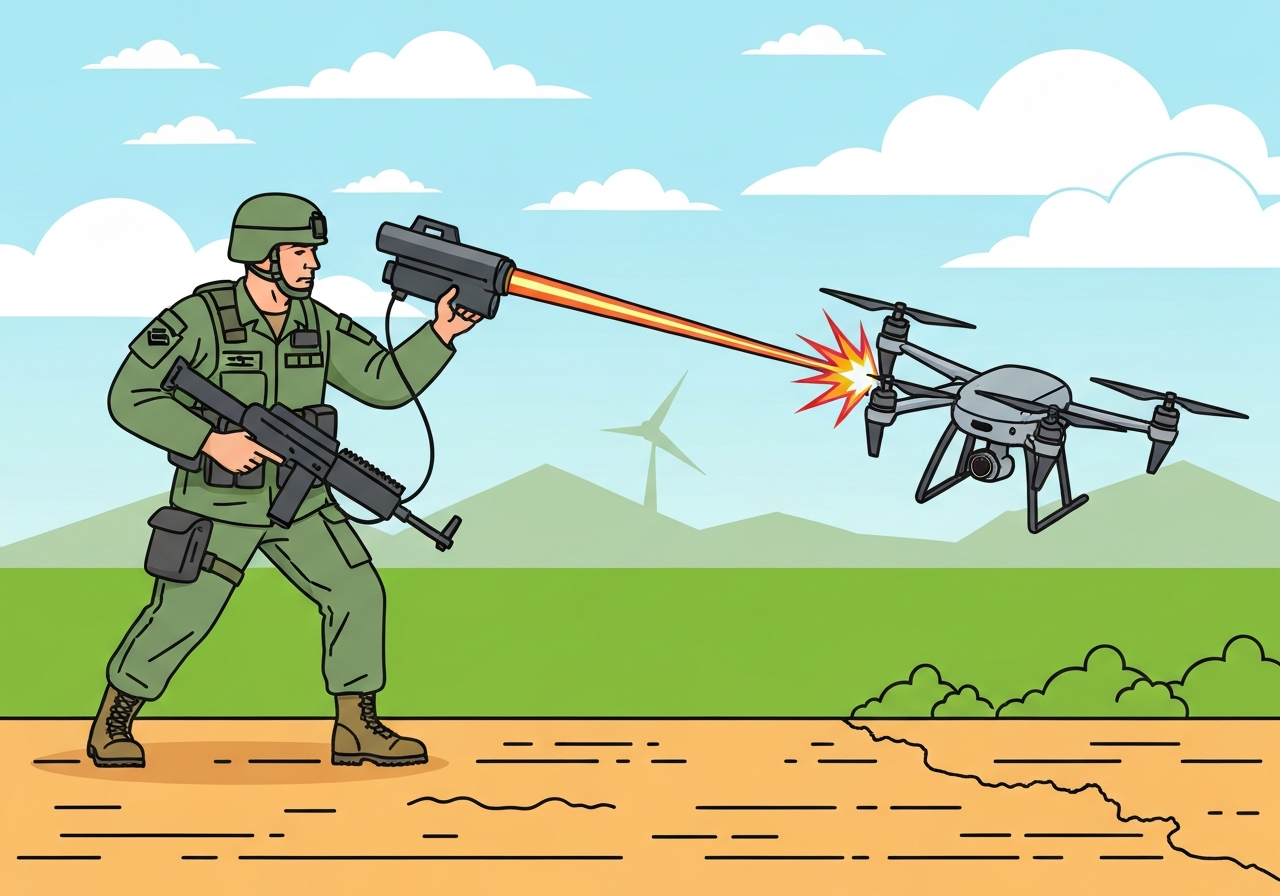
On Thursday the U.S. military fired a directed-energy laser at an unmanned aircraft near the U.S.–Mexico border and later learned the drone belonged to U.S. Customs and Border Protection (CBP), lawmakers said. The event occurred near Fort Hancock, about 50 miles (80 kilometers) southeast of El Paso, and prompted the Federal Aviation Administration (FAA) to close a limited portion of airspace there. Officials said the military acted under counter‑unmanned aircraft authorities after deeming the drone a potential threat. Lawmakers and aviation officials have raised alarm about coordination and notification protocols after a similar laser deployment in the region two weeks earlier.
Key Takeaways
- The military used a laser to disable a drone Thursday near Fort Hancock, roughly 50 miles (80 km) southeast of El Paso.
- The drone was later identified as belonging to U.S. Customs and Border Protection (CBP), according to lawmakers.
- The FAA temporarily closed additional airspace around Fort Hancock; commercial flights were not reported affected during this closure.
- This was the second laser counter‑drone event in the area in two weeks; the earlier deployment near Fort Bliss led to a brief El Paso airspace shutdown and some flight cancellations.
- Congress has recently expanded authorities and funding for local and state agencies to counter rogue drones, with more than $250 million already distributed and another $250 million planned this year.
- Border officials reported more than 27,000 drones detected within 1,600 feet (500 meters) of the southern border in the last six months of 2024, highlighting rising drone activity.
- There are an estimated 1.7 million registered drones in the United States, increasing the complexity of airspace safety and enforcement.
Background
U.S. agencies have been stepping up counter‑drone measures along the southern border in response to growing use of small unmanned aircraft by criminal groups and other actors. Cartels have used drones for smuggling and surveillance, and federal officials have flagged numerous drone detections near the border; Congress and executive agencies have treated the issue as a fast‑escalating security and aviation safety concern. Until recently, relatively few law enforcement entities were authorized to take down drones; in the last months Congress expanded permission for certain state and local agencies to act if they meet training and coordination criteria.
The FAA requires formal notification whenever military or other authorities take counter‑drone action in domestic airspace, a rule intended to protect commercial and civilian flights. Coordination problems between agencies have surfaced before: an earlier incident in the region saw CBP deploy an anti‑drone laser near Fort Bliss and the FAA subsequently close El Paso airspace for safety, disrupting airport operations. Those events intensified scrutiny from lawmakers worried about cross‑agency communication and operational safeguards.
Main Event
According to lawmakers who were briefed, the military on Thursday engaged a seemingly threatening unmanned aerial system with a laser while it was operating within designated military airspace near Fort Hancock. After the action, officials determined the downed aircraft was a CBP asset conducting border operations. The FAA responded by temporarily restricting a limited block of airspace around the site to ensure safety while authorities assessed the situation.
The joint notice issued by FAA, CBP and Defense acknowledged the military had used counter‑UAS authorities to mitigate a perceived threat and said the action occurred away from populated areas and commercial flight paths. Officials emphasized that the deployment was part of wider efforts to bolster security at the border, but they also confirmed the military is required to formally inform the FAA when it takes counter‑drone measures inside U.S. airspace.
This episode followed another laser deployment two weeks earlier near Fort Bliss that prompted a broader FAA closure over El Paso and led to several flight cancellations in the metropolitan area. That earlier event reportedly involved CBP firing an anti‑drone laser without prior coordination with the FAA, a lapse that officials said caused the more disruptive airspace shutdown. In the Fort Hancock case, the closure was smaller and commercial flights were not reported affected.
Analysis & Implications
The recurrence of directed‑energy deployments in Texas underscores a policy tension: agencies need tools to counter increasingly capable and numerous small drones, but those tools carry risks in congested domestic airspace. Directed‑energy systems, high‑power microwaves and jamming capabilities can neutralize threats quickly, yet their use requires precise protocols to avoid damaging friendly assets or creating hazards for civilian aircraft. The mistaken‑identity element in this episode highlights gaps in real‑time identification and interagency notice.
Operationally, the incident raises legal and procedural questions. Federal rules require the military to inform the FAA of counter‑UAS actions inside U.S. airspace; failure to do so, or delays in notification, can force the FAA into reactive airspace closures to protect commercial aviation. Lawmakers are likely to press for clearer lines of authority, faster information‑sharing systems, and mandatory training or certification when multiple agencies operate overlapping counter‑drone systems near public airspace.
Strategically, the events fuel congressional momentum for funding and broader authorities for state and local partners. Lawmakers have already approved expanded takedown powers for more agencies and allocated hundreds of millions in grant funding to strengthen domestic drone defenses ahead of major events. However, expanding the number of actors with takedown authority increases the need for interoperable communications and standardized tactics to prevent incidents like this one.
Comparison & Data
| Incident | Location | Agency that fired | FAA impact |
|---|---|---|---|
| Most recent (Thursday) | Fort Hancock (~50 mi / 80 km SE of El Paso) | U.S. military | Limited airspace closure; commercial flights unaffected |
| Two weeks earlier | Near Fort Bliss / El Paso | CBP | Broader FAA closure; some flight cancellations in El Paso |
The table shows two distinct deployments of laser‑type counter‑drone systems in the same Texas border region within a two‑week span. Federal officials have reported rising drone detections near the border — more than 27,000 detections within 1,600 feet (500 meters) in the last six months of 2024 — and roughly 1.7 million registered drones nationwide, driving demand for defensive systems and coordination mechanisms.
Reactions & Quotes
“Our heads are exploding over the news,” said Rep. Rick Larsen and two other top Democrats on House panels after being notified, expressing shock at the mistaken engagement of a CBP drone.
Rep. Rick Larsen and colleagues (House Democrats)
Their statement criticized the administration for bypassing bipartisan reforms intended to improve training and communication among the Pentagon, FAA and the Department of Homeland Security, which includes CBP.
“The administration’s incompetence continues to cause chaos in our skies,” said Sen. Tammy Duckworth, calling for an independent investigation into how agencies coordinate on air safety and counter‑drone actions.
Sen. Tammy Duckworth (Senate)
Transportation Secretary Sean Duffy said he planned to brief Congress on the incident and told reporters that the FAA’s earlier El Paso closure was not a mistake and that he did not believe the problems stemmed solely from communication failures.
Unconfirmed
- Whether procedural notification to the FAA was delayed in the Fort Hancock incident remains under review and has not been publicly confirmed by all agencies.
- Full technical details about the laser system used, including its model and exact operational parameters, have not been released.
- Any internal after‑action findings or disciplinary steps by involved agencies have not been made public at the time of this report.
Bottom Line
This event exposes the operational friction between the need to counter an accelerating drone threat at the southern border and the safety imperative to protect civilian airspace. The military’s engagement of what turned out to be a CBP aircraft underscores persistent identification and coordination challenges when multiple federal entities operate counter‑drone systems in overlapping airspace.
Expect intensified congressional scrutiny, calls for independent review, and pressure to formalize notification, training and real‑time information‑sharing protocols among the Pentagon, FAA and DHS. Policymakers will face a trade‑off: broaden defensive capabilities and authorities to address rising drone threats, while tightening rules and systems to prevent mistaken engagements that can disrupt civil aviation and erode public trust.