
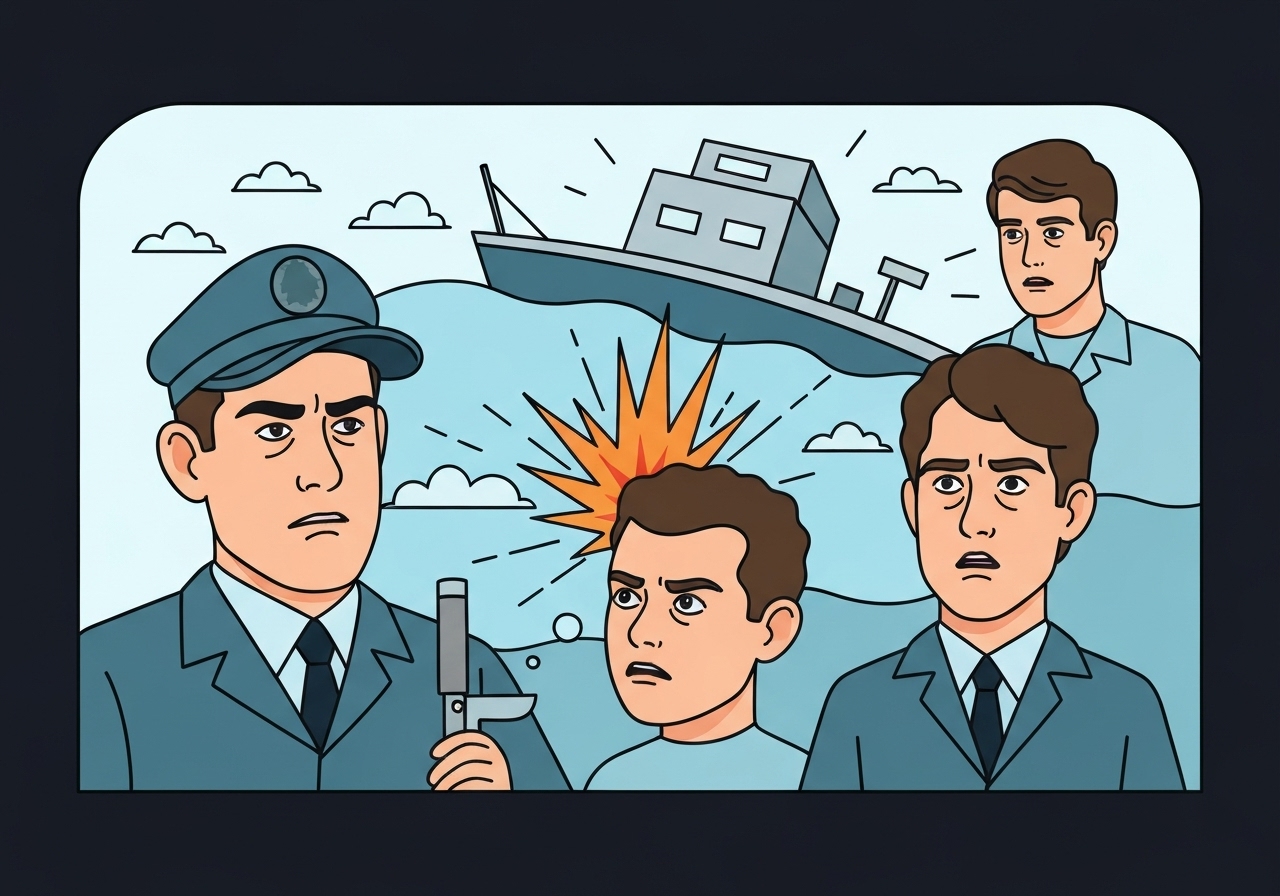
Lead: Over the past three months, U.S. service members have expressed growing anxiety about potential personal legal consequences tied to a campaign of lethal strikes on suspected drug-running boats in the Caribbean and Eastern Pacific. The administration says it has destroyed more than 20 vessels since September and attributes over 80 deaths to the actions, asserting the strikes are lawful under the laws of armed conflict and authorized by the president’s Article II powers. Service members from staff officers to at least one drone pilot have sought outside legal counsel and counseling, citing confusion over whether participation could expose them to criminal or career penalties. Those concerns have emerged amid sharp disagreement among legal experts over whether the strikes target lawful military objectives or unlawfully target civilians.
Key Takeaways
- More than 20 suspected drug-running vessels were struck in the Caribbean and Eastern Pacific since September; officials report over 80 fatalities linked to those strikes.
- The White House and administration spokespeople assert the strikes are lawful, executed under the laws of war, and authorized by presidential Article II authority and self-defense claims.
- Former military lawyers and other legal scholars dispute that view, arguing some strikes may violate international law and could amount to unlawful killings.
- Service members — including planning officers and at least one drone pilot — have contacted outside groups for advice, notably Quaker House and the Orders Project.
- Callers report pressure within chains of command when career officers register non-concurrence on targeting or legal reviews, prompting concerns about career harm.
- Outside groups advise documentation of orders and pressure, and offer counsel focused on a caller’s legal and professional interests rather than blanket rulings.
- The number of calls has risen in the last three months, signaling mounting unease even if the total callers remain limited.
Background
The strikes began in September and have intensified into a multimonth campaign declared by the administration as an effort to disrupt the flow of illicit narcotics toward the United States. Officials frame the operations as part of broader counter-drug measures, describing maritime targets as involved in trafficking and asserting military rules of engagement apply. That legal framing rests on the executive branch’s assertion of commander-in-chief powers under Article II of the U.S. Constitution and claims of anticipatory self-defense to justify strikes beyond U.S. territorial waters.
Opponents, including many former military attorneys and international law scholars, counter that vessels crewed by civilians engaged in smuggling do not automatically qualify as lawful military targets and that lethal force may breach the laws of armed conflict. Historically, the U.S. military’s targeting process involves layers of legal, intelligence and operational review intended to limit unlawful killings; when those internal reviews diverge, career officers can face pressure from civilians or political appointees to fall in line. Non-governmental counseling services and legal referral groups have long served as resources for service members uncertain about orders that raise legal or moral questions.
Main Event
Since the campaign began, advocacy and counseling organizations said they have received multiple calls from active-duty personnel seeking guidance. Quaker House in North Carolina reported at least two service members who were “very concerned” about their role and possible repercussions, while the Orders Project said calls from staff-level officers and others have increased in recent months. Callers are reportedly more often involved in planning, intelligence or legal review than in direct weapons employment.
According to outside counsel reached by service members, some career officers who register non-concurrence on legal or targeting findings have experienced pressure from senior officials and political appointees to reverse their assessments. Those dynamics have prompted callers to seek advice on documenting internal direction, clarifying orders, and protecting their careers while trying to comply with the law. The Orders Project and similar groups emphasize they avoid broad injunctions about lawfulness, instead offering tailored counsel about a service member’s options and best interests.
The administration maintains the campaign is a legal and necessary measure to reduce narcotics reaching U.S. shores. Officials argue that the strikes are proportionate and consistent with U.S. obligations under international humanitarian law. Critics, however, point to the number of civilian deaths and the rapid pace of operations as indicators that legal review may be insufficient or overridden by policy objectives, raising the specter of later investigations or prosecutions for those who participated.
Analysis & Implications
The dispute centers on competing legal interpretations: one side treats the vessels as legitimate military objectives tied to an ongoing transnational drug threat; the other side contends that suspected smugglers are civilians or criminal actors outside an armed conflict context, making lethal strikes unlawful. This legal bifurcation creates acute risk for personnel who must apply rules of engagement in real time but cannot rely on a single, uncontested legal standard. For planners and lawyers within the military, the difference between approving and dissenting on a strike determination can carry significant professional risk if political pressure is applied.
Individual exposure to criminal liability depends on multiple factors: the nature of the orders received, the clarity of legal advice in operational records, whether the actor followed or disobeyed a manifestly unlawful order, and any post-hoc political decisions about accountability. The U.S. Uniform Code of Military Justice and international criminal law both provide mechanisms for individual prosecution, but such cases are rare and politically fraught. The current situation raises questions about command responsibility and how the Pentagon documents its targeting decisions.
Internationally, repeated strikes with civilian casualties could invite scrutiny from foreign governments, U.N. bodies or human rights organizations, complicating U.S. diplomatic relationships in the Caribbean and Latin America. Domestically, if legal challenges or congressional inquiries materialize, service members who participated could face investigations, even if prosecutors ultimately decline charges. That prospect contributes to the anxiety now driving service members to seek external counsel rather than relying solely on internal legal channels.
Comparison & Data
| Period | Reported Strikes | Reported Fatalities |
|---|---|---|
| Since September 2025 (three months) | More than 20 | More than 80 |
The table condenses public tallies released by the administration and reported in press coverage. Because official reporting has been limited to aggregate counts, precise breakdowns by incident, target type, or nationality of those killed are not publicly available. Those gaps complicate outside legal and human-rights assessments and have driven service members to obtain independent legal advice to understand operational and personal risk.
Reactions & Quotes
“It’s hard to be a soldier and make determinations in any situation, but it’s especially hard in a situation like this — where most people don’t see an imminent threat — to be sent to do something that you’re really worried about, could I go to prison for this?”
Steve Woolford, Quaker House resource counselor
Woolford described callers’ moral unease and said Quaker House connected worried service members with attorneys for more detailed legal assessments.
“We’re receiving a lot more calls in the last three months than we did before,”
Frank Rosenblatt, former military lawyer, Orders Project
Rosenblatt said callers include staff officers with legal, intelligence and targeting roles; the Orders Project focuses on advising individual service members about documentation and options rather than issuing blanket legal verdicts.
Unconfirmed
- Precise identities and nationalities of all victims in the strikes remain incompletely reported and have not been independently verified in every incident.
- Claims that specific strikes were authorized solely for political signaling, rather than operational necessity, are alleged in some circles but lack direct public evidence.
- Whether any individual service member will face criminal charges or administrative punishment related to these strikes has not been confirmed.
Bottom Line
The recent boat-strike campaign has exposed a fissure between administration assertions of legality and the skepticism of many legal experts, creating real uncertainty for service members tasked with implementing the operations. That uncertainty has driven some personnel to seek outside counsel and counseling, underscoring how legal ambiguity translates into personal and professional risk for those in the chain of command.
Looking ahead, clarity will depend on more transparent documentation of targeting decisions, potential independent reviews, and whether political authorities or military leaders establish firmer procedural safeguards. For now, the combination of rapid operational tempo, contested legal interpretations, and career pressures leaves service members balancing obedience to orders against fears of later accountability.
Sources
- NPR (news report) — original reporting on service-member concerns and organization responses.
- Quaker House (nonprofit/NGO) — counseling group cited for assisting callers from the military.
- Orders Project (nonpartisan legal resource) — organization providing legal guidance to service members.