
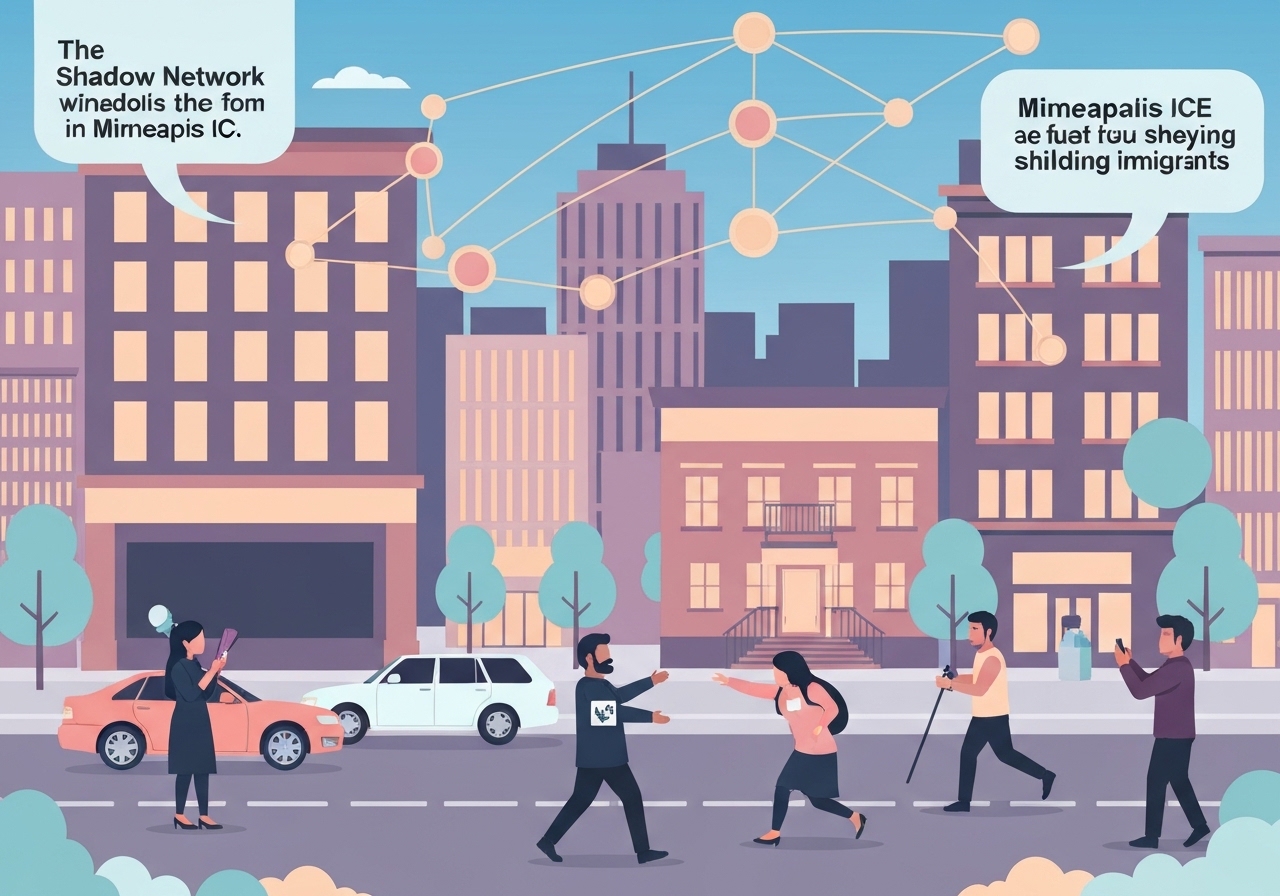
Lead: In Minneapolis this month, thousands of volunteers formed a loose but persistent network shadowing federal immigration agents during Operation Metro Surge, responding to what the federal government termed its largest enforcement operation. The surge, which intensified in early January after scattered December arrests, has led to more than 3,400 arrests and put at least 3,000 enforcement officers on city streets. Residents, advocates and local officials say the response—from tracking convoys to sounding whistles and documenting detentions—has reshaped daily life in immigrant neighborhoods and pushed local leaders to press for accountability. Federal changes in personnel followed high-profile violence, but community organizers say the networks will continue regardless of who leads enforcement locally.
- More than 3,400 arrests: ICE reported 3,400+ people detained during Operation Metro Surge after arrests escalated in early January.
- Large enforcement footprint: Officials say roughly 2,000 ICE officers and 1,000 Border Patrol agents were deployed on the ground during the operation.
- Volunteer rapid-response: Hundreds to thousands of volunteers formed interlocking networks that track federal vehicles, report convoy movements and warn residents using encrypted messaging apps.
- Community disruptions: Immigrant families have avoided medical care, children are missing school, and some businesses cut hours or closed temporarily because of fear.
- Confrontations and crowd tactics: Protests and caravan-style followings of agents have resulted in confrontations; law enforcement sometimes used pepper spray, pepper balls and tear gas.
- Legal and civil concerns: Complaints include warrantless entries, detention of children with parents, and stops of licensed city employees who were asked for citizenship papers.
- Local pushback: Groups such as Defend the 612 and many ad hoc volunteers coordinated food deliveries, transportation and legal guidance for those targeted.
Background
Federal enforcement in the Twin Cities deepened after months of scattered arrests in December that moved into a sustained campaign in early January under what the administration described as Operation Metro Surge. Administration officials have framed the operation as focused on individuals with criminal records living in the U.S. illegally, but many Minneapolis residents experienced a broader, more aggressive presence of masked, heavily armed agents in unmarked vehicles. Minneapolis and St. Paul have long been centers of progressive activism and strong immigrant communities, creating fertile ground for organized civilian responses when enforcement actions intensified.
Historically, large federal immigration sweeps have prompted localized resistance and legal challenges; the current Minneapolis activity follows that pattern but is notable for the speed and scale of volunteer mobilization. Stakeholders include federal agencies (ICE and Border Patrol), local law enforcement, immigrant families and a range of community groups—some long-established, some formed in the past weeks. Local officials have voiced concerns about tactics used during arrests and searches, while community organizations emphasize harm reduction and legal support for those at risk of deportation or detention.
Main Event
The operation shifted visibly in early January as convoys of unmarked SUVs and masked agents appeared in several neighborhoods, prompting volunteers to begin tracking vehicle movements and recording license plates. At least one Liberian man reported his front door was forced open and he was detained without what local advocates characterized as a proper warrant, despite regular check-ins with immigration authorities. In some instances, children were detained alongside parents and federal agents clashed with protesters outside a high school, where tear gas was reported during an altercation.
Volunteers organized into dozens of overlapping rapid-response networks that use encrypted apps like Signal to communicate sightings and dispatch brief warnings. Typical responses range from quietly reporting convoy locations to assembling caravans that follow agents through neighborhoods while sounding whistles and honking to alert residents. Organizers also coordinated nonconfrontational support: food deliveries, rides to work and on-call legal advice for people stopped by federal officers.
Confrontations have sometimes escalated when crowds gather near agents. Protesters have shouted, thrown snowballs and attempted to block vehicles; federal personnel have at times used crowd-control measures, including pepper balls and tear gas, according to witnesses and local activists. Meanwhile, the federal presence has been uneven across the metro area—highly visible in some immigrant neighborhoods and scarcely present in others—producing a mix of intense local disruption and areas largely unaffected.
Analysis & Implications
The surge and the public reaction highlight the tension between federal immigration enforcement priorities and local community stability. The visible deployment of several thousand federal officers in a major urban area amplified fear among immigrant populations, prompting behavior that public-health and education professionals warn will result in lasting harms: missed medical appointments, deferred preventive care and prolonged school absences for children. Those immediate harms translate into longer-term costs for municipal services and community trust, complicating relationships between immigrant residents and public institutions.
Politically, the operation has placed municipal leaders in a difficult position: balancing calls for public safety and cooperation with federal law enforcement against growing demands for oversight and protection of residents’ civil rights. The removal of a high-profile local federal official after a weekend killing signaled a tactical shift from some corners of the administration, but organizers and advocates say personnel changes alone are unlikely to end aggressive enforcement or the community response that has emerged.
Economically, concentrated enforcement can depress small-business activity in immigrant neighborhoods, as proprietors shorten hours or close to avoid interactions with agents. That immediate economic pullback is compounded by reduced mobility for workers and parents who fear leaving home, interrupting labor supply and consumer demand in affected corridors. Over the longer term, sustained enforcement patterns could influence settlement decisions and local demographics if immigrant families relocate to perceived safer jurisdictions.
Comparison & Data
| Measure | Reported Count |
|---|---|
| Total arrests (Operation Metro Surge) | 3,400+ (ICE) |
| ICE officers on ground | ~2,000 (officials) |
| Border Patrol agents | ~1,000 (officials) |
The tabulated totals underscore the scale federal officials reported but do not capture the uneven geographic footprint or the spectrum of enforcement activity. Local leaders and advocates note that numerical totals mask qualitative effects on neighborhoods, such as increased fear, disrupted services and the rise of grassroots monitoring networks. Data on longer-term outcomes—health care utilization, school attendance and local economic indicators—will be needed to measure the full impact of the surge over months and years.
Reactions & Quotes
Local organizers framed the volunteer networks as humanitarian and protective, not merely oppositional, arguing that their actions prevent unnecessary detentions and keep families informed. Defend the 612 and other hubs described a spike in volunteer sign-ups after high-profile incidents and emphasized a mix of support services and monitoring.
“I think that everyone slept a little better knowing that Bovino had been kicked out of Minneapolis.”
Andrew Fahlstrom, Defend the 612 organizer
Fahlstrom’s comment captures relief tied to a personnel change—Gregory Bovino’s transfer—while also reflecting organizers’ skepticism that shifting the local face of enforcement will eliminate the underlying threat posed by federal operations. Other local officials and activists stress the networks are about harm reduction and accountability rather than spectacle.
“I didn’t see anybody ‘confronting.’ I saw people alerting neighbors that ICE was in their neighborhood.”
Jason Chavez, Minneapolis City Council member
Chavez provided context for a street confrontation, characterizing many volunteer actions as neighborhood alerting rather than provocation. City leaders have struggled to disentangle peaceful neighborhood warnings from moments that escalate into physical clashes, and they continue to urge de-escalation while demanding clarity about enforcement practices.
“Sometimes people just want to pick up their kid and walk their dog and go to work. … I just don’t know if that’s the world we live in anymore.”
“Sunshine,” rapid-response volunteer (pseudonym)
The volunteer known as Sunshine described a daily “commuting” routine of monitoring and weighing risks, showing the personal toll on citizens who commit hours to neighborhood patrols. Her account illustrates why many volunteers combine caution with a willingness to confront what they see as threats to community safety.
Unconfirmed
- Whether certain enforcement actions were intended as diversionary tactics to distract observers while arrests occurred elsewhere; this has been alleged by volunteers but lacks independent verification.
- Specific counts of how many detentions involved children held with parents during the operation; official tallies by age group have not been released publicly.
- Precise details around every claimed warrantless entry; case-by-case documentation and court records are needed to confirm legality.
Bottom Line
The Minneapolis operation and the volunteer response expose a widening rift between federal enforcement aims and local community stability. Hundreds to thousands of volunteers have built decentralized systems that can detect, document and respond to agent movements—mitigating some harms but also producing moments of confrontation that have led to crowd-control tactics and further fear.
Personnel changes at the federal level signal a short-term shift in tone, but they do not resolve the structural drivers of conflict: divergent priorities between federal enforcement and municipal officials, the vulnerability of immigrant households, and broader national debates over immigration policy. Monitoring, independent documentation and legal review will be essential to assess long-term consequences for public health, education and civic trust in the Twin Cities.
Sources
- Associated Press (news reporting)
- U.S. Immigration and Customs Enforcement (ICE) (official federal agency)
- City of Minneapolis (local government statements and briefings)