
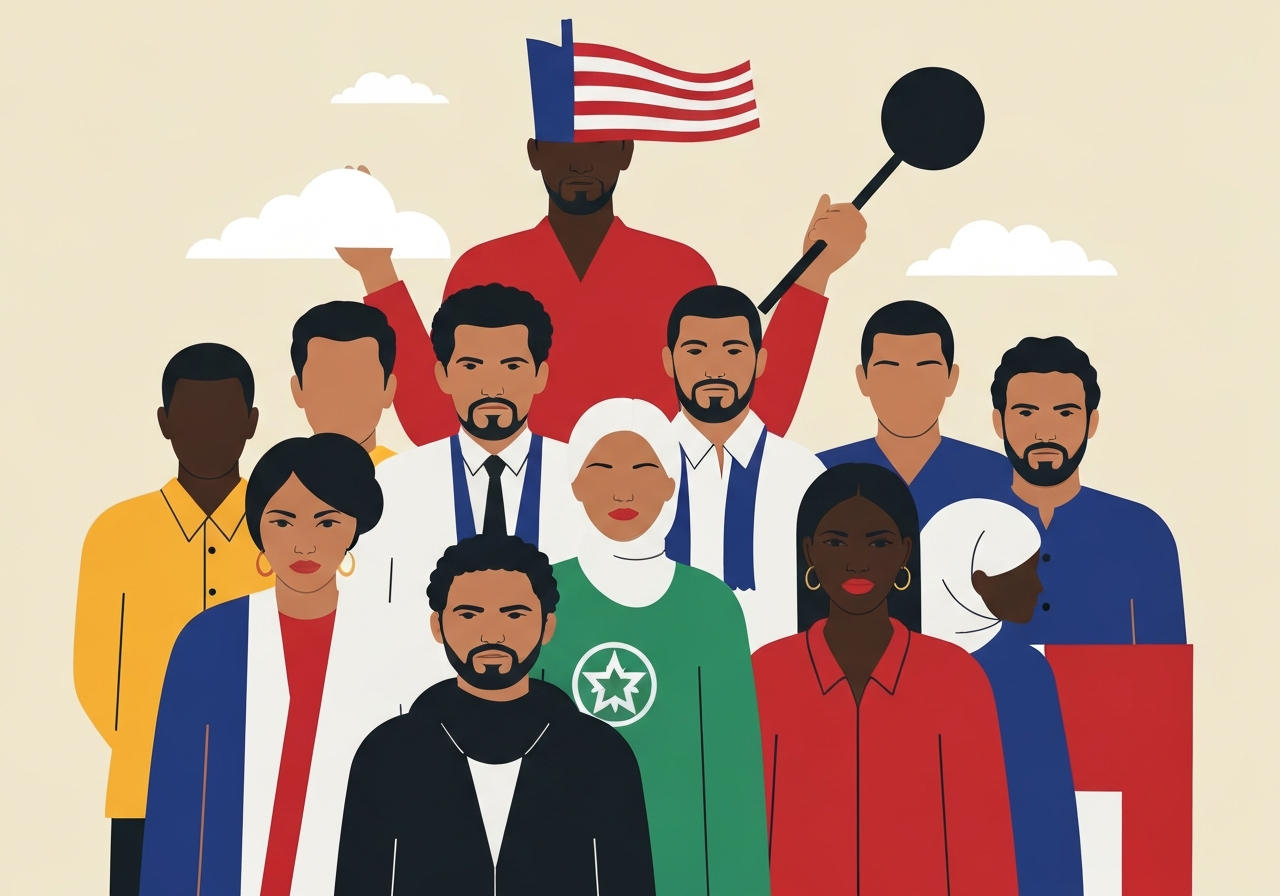
In January 2026, after two people were killed during encounters with federal immigration officers, thousands of Minnesota residents mobilized across the Twin Cities and beyond to protect immigrant neighbors and monitor Immigration and Customs Enforcement (ICE) activity. Volunteers documented agents from cars, escorted families to safety, staffed hotlines and distributed food and legal aid as a reported surge of federal agents operated in the region. The response drew on organizing networks rebuilt after George Floyd’s 2020 protests and the state’s deep mutual-aid traditions, and it has markedly altered everyday life in Minneapolis and surrounding communities. Officials have launched investigations and shifted personnel, but detentions and raids continue in suburbs and rural counties.
Key takeaways
- Two high-profile deaths in January — Alex Pretti (37) and Renee Nicole Good — helped trigger an expansion of community monitoring and protests across Minnesota.
- Organizers and coalition groups say more than 50,000 Minnesotans took action around the January 23 rally; a Blue Rose Research poll of nearly 2,000 likely voters found 23% reported participating in some way.
- Local networks have repurposed mutual-aid systems: food distribution, hotlines and rapid-response teams now operate metro-wide to support families who stay home for fear of detention.
- Reported federal deployments included thousands of officers assigned to operations in the region; leadership changes followed, including the removal of Border Patrol agent Gregory Bovino and the replacement of some staff with senior federal appointees.
- Unions and faith groups organized an economic blackout and subzero rally on 23 January; hospitality union Unite Here Local 17 reported about 200 members receiving mutual aid and 16 airport workers detained despite work authorization.
- Community documentation — observers recording ICE activity from vehicles and at schools — is widespread, with many volunteers receiving legal bystander training and coordinating through encrypted chats and hotlines.
Background
Minnesota’s large immigrant communities, including Somali and Latino populations, are woven into the state’s economy and civic life. The Twin Cities sustained intense organizing and cross-sector coordination after the police killing of George Floyd in 2020; those networks—nonprofits, labor unions, faith groups and mutual-aid projects—remobilized when federal immigration enforcement escalated in late 2025 and January 2026. Organizers say prior training on bystander documentation, know-your-rights briefings and rapid-response tactics circulated from other cities that had faced federal surges, giving Minnesota groups an operational head start.
Local leaders and residents describe a clear moment of escalation in December 2025 when public comments and early deployments were followed by visible operations that emptied some Somali and Latino business corridors. Two killings in January crystallized widespread alarm and prompted mass demonstrations, fundraising drives and the rapid expansion of supports—rides, legal funds, groceries and door-to-door outreach—to reduce the need for people to leave their homes. The federal presence has been framed by city and state officials as an unprecedented intrusion into daily life, while the administration has asserted it is enforcing federal immigration law.
Main event
After reports of aggressive immigration enforcement intensified, volunteers began driving in teams to follow and record vehicles they believed were used by federal agents. Observers look for tinted windows, out-of-state plates and men in masks; many described carrying whistles and using encrypted group chats to warn residents. Some volunteers were pepper-sprayed or threatened; others worry agents now know where they live. The killing of Alex Pretti while filming and the death of Renee Nicole Good amplified fears and motivated more people to join monitoring efforts.
Mutual-aid networks shifted to logistics-mode: restaurants and small businesses became donation hubs, churches hosted distributions, and food banks like Second Harvest Heartland coordinated large packaging operations. One organizer recounted moving tens of thousands of pounds of food in days; another described crowdfunding and rent-relief pushes that raised tens of thousands of dollars for families unable to work. Unions organized coordinated economic actions: on 23 January a multi-faith and labor-backed blackout and rally drew national attention and widespread participation.
Officials responded with personnel changes and public statements. Federal leadership reassigned some officers and the Justice Department announced a civil-rights inquiry into at least one of the deaths. Local elected officials, from city councilors to U.S. Senator Tina Smith, publicly supported resident-led protections while the administration blamed local governance for disorder. Media and residents reported arrests of protesters and, in some cases, journalists documenting demonstrations near the Whipple federal building.
Across suburbs and rural counties, residents not previously active in organizing confronted agents at community entrances and roadways. In several small-town encounters, neighbors queried officers about warrants or targets; in others, organizers reported that immigrant-led leadership remained the backbone of rapid response because those community members carry the greatest risk. Volunteers also began meeting released detainees with coats, phones, legal information and rides home.
Analysis & implications
The Minnesota response shows how densely networked civic infrastructure can reshape a community’s ability to resist or mitigate federal operations. Training on documentation, the pre-existence of hotlines and the rapid pivot of mutual-aid systems reduced friction in mobilizing volunteers. That institutional memory—honed during 2020 protests—meant organizers could scale actions quickly and coordinate across neighborhoods, labor unions and faith institutions.
Politically, the clashes create a difficult dilemma for federal authorities: enforcement tactics that generate deaths, widespread protests and negative press can undermine the administration’s stated goals by provoking national backlash and triggering oversight inquiries. The Justice Department’s civil-rights probe and the reassignment of field leadership are immediate consequences that could reshape the strategy and pace of future operations in politically contested jurisdictions.
Economically and socially, the surge has produced localized labor disruptions and consumer pullback—businesses closing, workers staying home, supply chains stressed at neighborhood levels. Mutual-aid fills immediate needs but is not a long-term substitute for systemic services; prolonged fear of enforcement may depress local commerce, strain nonprofit capacity and increase reliance on temporary donations or union support.
Comparison & data
| Item | Date / Period | Reported figure |
|---|---|---|
| Reported federal agent deployment | January 2026 | Thousands (including cited figure of ~3,000) |
| Mass action / economic blackout | 23 January 2026 | Organizers cite >50,000 engaged |
| Blue Rose Research poll | Post-action survey | ~2,000 likely voters; 23% reported participation |
| Unite Here Local 17 impact | Late January 2026 | ~6,000 members represented; ~200 receiving mutual aid; 16 detained at airport |
The table summarizes central numbers reported by organizers, unions and a commissioned poll. Those figures show both the scale of public participation in coordinated actions and the immediate human impact on specific worker groups. Organizers emphasize that participation figures combine in-person protest with economic actions—calling in sick, not shopping and donating funds.
Reactions & quotes
Political leaders and local officials offered contrasting framings of the events. Several elected representatives praised resident vigilance and community solidarity; federal officials defended enforcement actions and pointed to legal authorities. The following short quotes capture public rhetoric and institutional responses.
“All of that anti-democratic activity has been focused on Minnesota as their proving ground for what they can actually accomplish. That’s why it’s been so important that Minnesotans have stood up and said: ‘You can’t bully us.’”
Sen. Tina Smith (D–MN), quoted to the press
Senator Smith’s remarks were offered in the context of national debates over federal immigration policy and were cited by local outlets covering rallies and community defense efforts.
“After Pretti was killed, I thought for sure we were going to completely lose control of the city at this point.”
Brian O’Hara, Minneapolis police chief, to CBS News
Minneapolis’s police chief said the city’s stability reflected both civic mobilization and law-enforcement coordination; his comment followed the January incidents and preceded federal personnel changes announced by Washington.
“We know some things that worked and some things that didn’t were tested, and we’re meeting the moment. The leaders who were involved then are involved now.”
Kirstie Kimball, organizer and mutual-aid coordinator
Organizers described a blend of institutional memory and improvisation: tested techniques like hotlines and documentation were combined with ad-hoc logistics to support families and sustain demonstrations in subzero weather.
Unconfirmed
- Claims that federal agents systematically targeted journalists during every protest remain partially reported and in some cases are under local review; comprehensive, independently verified counts are not publicly available.
- Assertions that the deployment was intended as an “ethnic cleansing” campaign have been voiced by some residents and organizers but lack corroboration in official documentation and therefore remain allegations.
- Threats that the administration will invoke the Insurrection Act to further expand deployments have been discussed in public forums; no formal invocation specific to Minnesota had been enacted as of late January 2026.
Bottom line
Minnesota’s reaction to the January 2026 immigration operations demonstrates how layered civic infrastructure—mutual aid, unions, faith networks and trained volunteers—can rapidly scale community protections when residents perceive a direct threat. The combination of visible documentation, hotlines, food distribution and legal support has blunted some immediate harms and drawn national attention to enforcement tactics that produced fatalities and sparked civil-rights scrutiny.
Outcomes in the coming weeks will depend on several variables: the Justice Department’s investigations, any further federal personnel or strategy shifts, sustained local organizing capacity, and whether residents and businesses feel safe enough to resume normal activity. For now, organizers insist they will continue monitoring and supporting affected families until those most impacted say they can live without daily fear of enforcement.
Sources
- The Guardian — news report providing on-the-ground reporting and interviews (primary source for this piece).
- Reuters — international news agency, cited for photographic coverage and dispatches from the region.
- CBS News — national broadcast report, cited for statements by Minneapolis police leadership.
- Second Harvest Heartland — nonprofit food bank (organizational source on food distribution and community needs).
- Blue Rose Research — polling firm commissioned by local groups (survey cited: ~2,000 likely voters, 23% reported participation).