
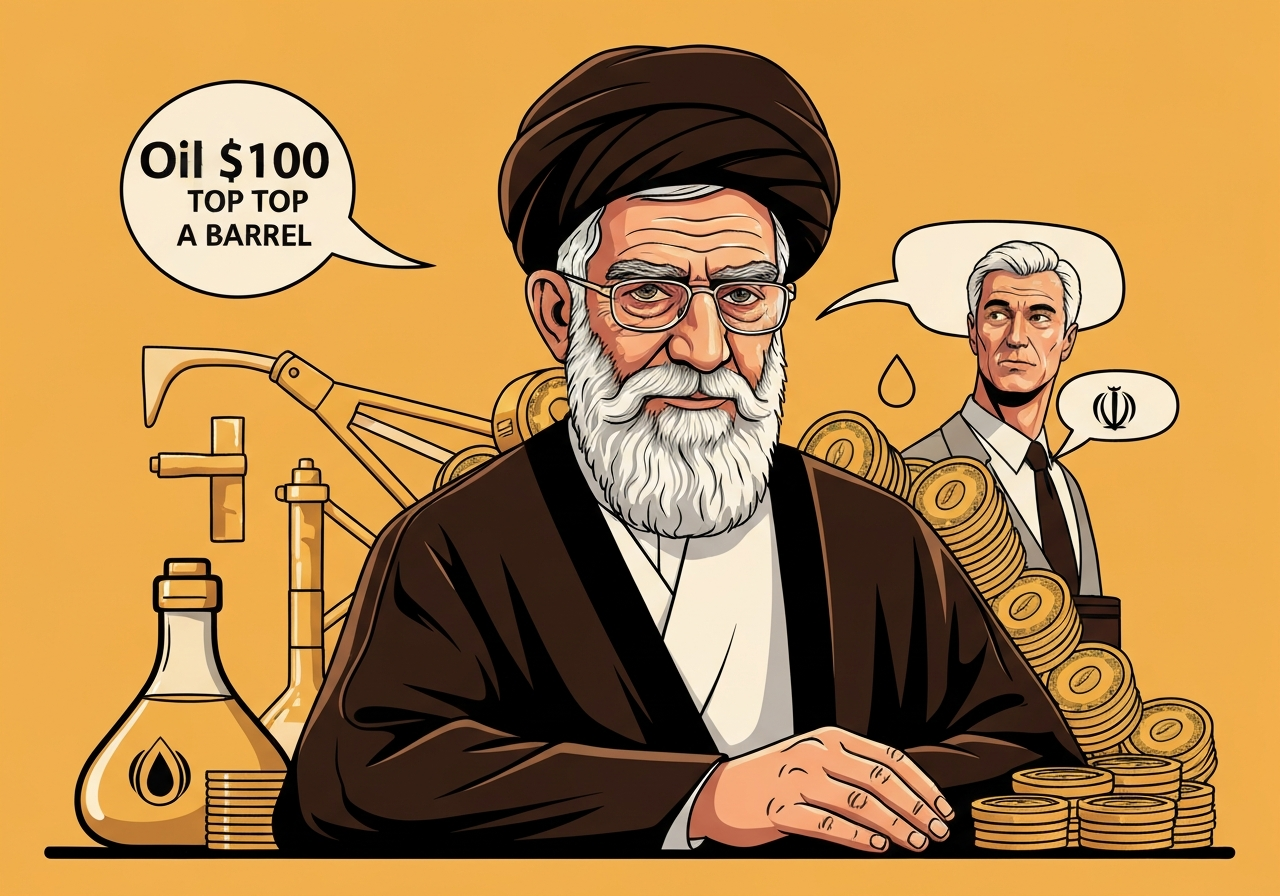
Lead: Iran’s clerical Assembly of Experts on 9 March 2026 appointed Mojtaba Khamenei, 56, as the country’s new supreme leader following the death of his father, Ayatollah Ali Khamenei, in recent US‑Israeli strikes. The selection comes amid an escalation of regional violence that has pushed Brent and WTI crude above $100 a barrel, prompting market turmoil and a sharp sell‑off in Asian stock markets. Gulf states and global capitals have condemned and responded to cross‑border strikes and drone attacks that left dozens wounded in Bahrain and damaged energy infrastructure. Governments and energy firms are assessing supply disruption risks while diplomats warn the conflict could widen.
Key takeaways
- The Assembly of Experts (88 members) named Mojtaba Khamenei, born 1969 in Mashhad and long active behind the scenes, as Iran’s new supreme leader on 9 March 2026.
- Global benchmark crude rose above $100 per barrel for the first time since 2022; Brent was reported at $114.13 and WTI at $112.26, gains of roughly 23% on the session.
- A Bahraini health ministry statement said 32 people were injured in an overnight Iranian drone attack on Sitra, including four serious cases—a 17‑year‑old girl and a two‑month‑old infant among the wounded.
- Asian markets plunged: Japan’s Nikkei fell about 7%, South Korea’s Kospi about 7.3% and Hong Kong’s Hang Seng about 2.6%; Australia’s ASX 200 dropped 4% midday, erasing roughly AU$13bn in market value.
- Officials report multiple intercepted missiles and drones across the Gulf; Saudi Arabia issued a formal condemnation of Iranian strikes as “reprehensible” and reserved the right to defend sovereignty.
- US officials say seven US service members have now died from combat‑related wounds since the conflict began; Lebanon’s health ministry reported 394 killed by Israeli strikes over the prior week.
- Iranian authorities reported damage to five oil facilities near Tehran and cited major casualties in a reported US attack on an Iranian warship off Sri Lanka—claims now noted by analysts as part of competing battlefield narratives.
Background
The current crisis accelerated after a series of US and Israeli air operations against Iranian targets, which Iranian officials say included energy and naval facilities. Iran answered with cross‑border missile and drone launches targeting Gulf states and other regional sites, escalating a conflict that began in earnest in late February 2026. The strait of Hormuz, a strategic chokepoint for crude shipments, has been effectively disrupted for about a week, raising immediate supply‑security concerns for oil‑importing nations.
Mojtaba Khamenei has remained largely out of the public eye until now: a cleric who built influence inside the supreme leader’s office and among conservative clerical networks and Revolutionary Guard elements. He has not held elected office or a high public government post, but his selection follows Iranian institutional practice in which the Assembly of Experts confirms succession when the supreme leadership becomes vacant. The appointment arrives amid intense external pressure, domestic security concerns and debates inside Iran about political direction and military strategy.
Main event
On 9 March 2026 the Assembly of Experts announced Mojtaba Khamenei as supreme leader, urging unity and calling for support to preserve national stability. State broadcasters released images and statements asking Iranians to rally behind the new leader as Tehran vowed continued retaliation for perceived foreign aggression. International responses were swift: the White House and several Western capitals framed the succession against the backdrop of sustained Iranian strikes across the Gulf.
Concurrently, regional governments reported renewed drone and missile incidents: Bahrain’s health ministry said 32 civilians were wounded in an attack on the island of Sitra, with four serious injuries. Qatar, Saudi Arabia and Kuwait reported intercepts and explosions, while witnesses and open‑source imagery showed smoke rising near oil and industrial sites. Iran’s Revolutionary Guards and government spokespeople framed strikes and counter‑strikes as proportionate responses to foreign operations.
Markets reacted within hours: Brent and WTI spiked more than 20% as traders priced in supply disruptions and a prolonged closure of the Hormuz shipping lane. Asian equities fell sharply on the session, and some governments announced emergency energy measures—from cutting fuel tariffs to temporary closures of public institutions—to conserve supplies and calm domestic markets. Energy firms and traders scrambled to re‑route cargoes and assess refinery availability.
Analysis & implications
Political: The elevation of Mojtaba Khamenei consolidates clerical control at a moment of intense external pressure. His background—close to conservative clerics and elements of the IRGC—suggests continuity in Iran’s security posture rather than an immediate pivot to conciliation. That continuity may harden regional actors’ calculations and reduce short‑term prospects for de‑escalation without substantive diplomatic engagement.
Economic: An oil price surge above $100 a barrel amplifies inflationary pressures globally, especially in import‑dependent economies in Asia. Governments with thin fiscal buffers face rising subsidy costs and balance‑of‑payments stress; some have begun emergency fiscal and administrative measures to limit domestic price pass‑through and conserve energy. Central banks will face a trade‑off between defending currencies and tempering inflation via monetary tightening.
Security: Repeated strikes on energy infrastructure raise the risk of longer‑term supply damage and force companies to reassess operations in the Gulf. Insurers and shipping firms may reroute tankers, increasing transit times and costs. Militarily, the conflict could draw in external partners through logistics, basing, or intelligence support, increasing the chance of miscalculation or accidental escalation.
Comparison & data
| Indicator | Recent level | Change (approx.) |
|---|---|---|
| Brent crude | $114.13/bbl | +23.1% |
| WTI crude | $112.26/bbl | +23.5% |
| Nikkei 225 | ▼ about 7% | Session drop |
| Kospi | ▼ about 7.3% | Session drop |
| ASX 200 | ▼ 4% (midday) | ~AU$13bn wiped |
These moves reflect a near‑term risk premium priced into oil and risk assets. The scale of energy price jumps matches major geopolitical shocks seen in 2008 and 2022, though the ultimate path will depend on how long Hormuz disruptions and damage to production sites persist. Market participants will watch tanker traffic, OPEC+ production statements, and insurance premiums for signs of sustained dislocation.
Reactions & quotes
“The Ministry of Foreign Affairs renews the Kingdom of Saudi Arabia’s categorical condemnation of the reprehensible Iranian aggressions… which cannot be accepted or justified under any circumstances.”
Saudi Ministry of Foreign Affairs (official statement)
“He’s going to have to get approval from us. If he doesn’t get approval from us he’s not going to last long.”
Donald Trump (reported remark)
“If you can tolerate oil at more than $200 per barrel, continue this game.”
Spokesperson, Iran’s Islamic Revolutionary Guard Corps (reported)
Each quote reflects different incentives: Saudi Arabia stresses sovereign defense and regional diplomacy, the US presidential comment signals direct political friction over succession, and IRGC rhetoric underscores willingness to accept high economic costs as leverage. Officials and analysts caution that public statements often aim to shape domestic politics as much as signal strategic intent.
Unconfirmed
- Claims about the precise extent of damage to five oil sites around Tehran are reported by Iranian officials and remain independently unverified.
- The Iranian report that at least 104 people died and 32 were wounded in a US attack on an Iranian warship off Sri Lanka has not been corroborated by independent international investigators.
- Assertions that the strait of Hormuz is permanently closed should be treated as fluid—shipping has been disrupted, but full closure and its duration are not independently confirmed.
Bottom line
The appointment of Mojtaba Khamenei as Iran’s supreme leader formalizes a power transition at a moment of acute regional conflict and economic shock. Short‑term market and political volatility is already visible: crude surged past $100 a barrel, Gulf states reported fresh strikes and casualties, and equity markets tumbled as investors reappraise risk exposure to the region.
Policy and market watchers should monitor three variables closely: the duration of maritime disruption in the Strait of Hormuz, the scale and repair time for damaged energy facilities, and diplomatic channels that might open to de‑escalate hostilities. If tensions remain high, expect sustained price pressure on energy and wider economic spillovers—particularly in import‑dependent Asian economies.