
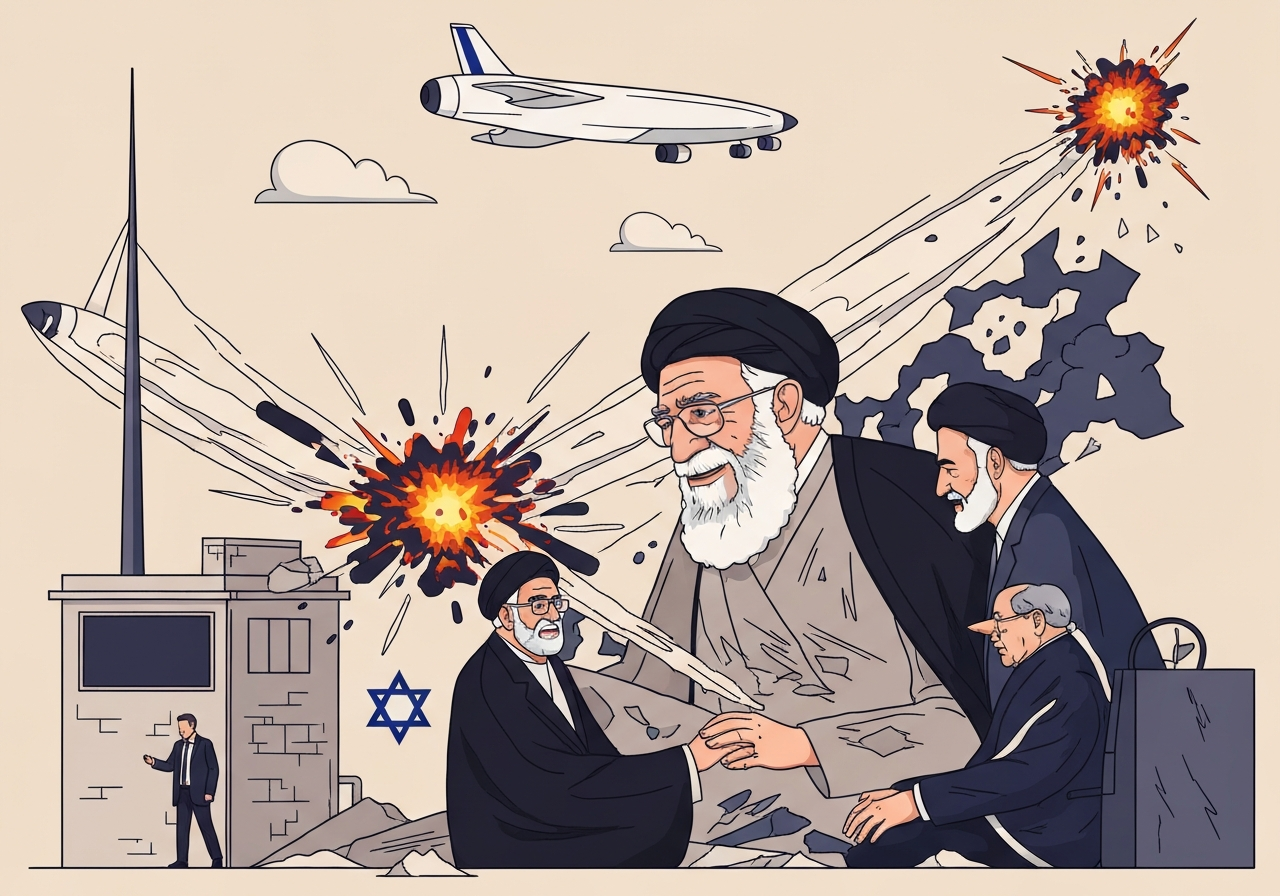
Reports say Mojtaba Khamenei, widely seen as the most likely successor to Iran’s late Supreme Leader, was wounded in an Israeli air strike on Feb. 28 during the joint Lion’s Roar operation that coincided with the U.S. Operation Epic Fury. The same set of strikes reportedly killed Ayatollah Ali Khamenei and roughly 40 other senior Islamic Republic figures, and also reportedly killed Mojtaba’s wife, Zahra Haddad Adel. Iranian state detail on the incident remains limited, and independent verification of several individual claims has not been published. International and regional actors continue to monitor both the military and political fallout.
Key Takeaways
- On Feb. 28, Israeli strikes tied to the operation dubbed “Lion’s Roar” — coordinated in time with the U.S. Operation Epic Fury — reportedly wounded Mojtaba Khamenei and killed Ayatollah Ali Khamenei and about 40 senior Iranian officials.
- Mojtaba Khamenei, age 56, is described in reports as the favored successor by the Islamic Revolutionary Guard Corps (IRGC), though some members of the 88-member Assembly of Experts have expressed reservations.
- Zahra Haddad Adel, reported to be Mojtaba’s wife and a member of a family long linked to Iran’s theocratic leadership, was reported killed in the strikes.
- Reports do not make clear whether Mojtaba was inside the Ayatollah’s compound when it was struck or was targeted separately; the scope and nature of his injuries remain unspecified.
- The Assembly of Experts reportedly plans to convene within 24 hours, with the vote to be held virtually after damage to the assembly building from recent strikes.
- If confirmed, the new supreme leader would assume command of the IRGC and broad constitutional authority over Iran’s domestic and foreign policy.
Background
Iran’s succession process centers on the 88-member Assembly of Experts, a clerical body empowered by Iran’s constitution to select the supreme leader. While the position is technically elective, in practice succession has hinged on clerical standing, political alliances, and the approval of influential institutions such as the IRGC. Mojtaba Khamenei has long been discussed in Tehran as a plausible successor partly because of his lineage and reportedly close ties to senior security elements.
The IRGC has been a decisive actor in Iran’s power structure since the 1979 revolution, playing both a military and political role. Factions within the Assembly of Experts and among other clerical networks have at times resisted straightforward dynastic transfer, citing theological qualifications and political prudence. That internal debate has taken on heightened urgency given recent high-casualty strikes and the reported death of the current supreme leader.
Main Event
According to media reports, Israeli forces carried out a concentrated air campaign on Feb. 28, identified in reporting as part of “Lion’s Roar.” The strikes were reported to coincide with a separate U.S. military operation called Epic Fury. Sources cited by press outlets say the attacks hit a compound associated with Ayatollah Ali Khamenei and other regime sites, resulting in heavy leadership losses.
Multiple outlets reported that Ayatollah Khamenei was killed in the strikes and that Mojtaba Khamenei was wounded; those accounts also named approximately 40 senior officials among the dead. Reports say Mojtaba’s wife, Zahra Haddad Adel, was among the fatalities. Iranian official statements confirming individual casualties have been limited or delayed in the immediate aftermath.
News accounts indicate Mojtaba has likely gone into hiding given ongoing missile and air activity by U.S. and Israeli forces. The Assembly of Experts reportedly faces an accelerated timetable to select a successor; some reports say a virtual session is planned after the assembly building was damaged in recent strikes.
Analysis & Implications
If Mojtaba Khamenei is confirmed as wounded but survives, his political position will depend on the speed and cohesion of IRGC backing versus resistance within clerical bodies. The IRGC’s endorsement would shortcut political opposition, but significant resistance in the Assembly of Experts or among other clerical factions could spark a contested or elongated succession process. That internal dynamic will shape whether Tehran pivots toward consolidation under a familiar regime figure or explores broader consultations.
The reported killing of a sitting supreme leader and numerous senior officials represents an unprecedented shock to Iran’s centralized leadership framework. Such losses could degrade command-and-control for certain security elements in the short term, while strengthening the IRGC’s hand if it moves swiftly to install a loyal successor. Conversely, fragmentation among clerical elites could create openings for rival factions or provoke internal repression aimed at shoring up authority.
Regionally, a confirmed leadership decapitation and a rapid succession would reverberate across the Middle East. U.S. and Israeli objectives appear aimed at significantly weakening Iran’s senior command and deterring further state-directed operations; however, the strikes also carry risks of unpredictable retaliation by proxies or remaining elements of Iran’s security apparatus. International diplomatic responses and sanctions dynamics will pivot on independent confirmations and the perceived legitimacy of any successor.
Comparison & Data
| Item | Reported Figure |
|---|---|
| Date of strikes | Feb. 28, 2026 |
| Named operations | Lion’s Roar (Israel), Operation Epic Fury (U.S.) |
| Reported senior leaders killed | ~40 |
| Reported supreme leader | Ayatollah Ali Khamenei (reported killed) |
| Reported wounded | Mojtaba Khamenei (age 56) |
The table summarizes the main reported figures and labels associated with the Feb. 28 strikes. Independent confirmation of most casualty and targeting details remains limited at the time of writing; numbers come from media reports citing unnamed officials and assessments. Historical precedent for large-scale leadership-targeted strikes in the region is limited, making direct analogs imperfect. Analysts will weigh both immediate casualty figures and subsequent political moves when assessing longer-term impacts.
Reactions & Quotes
U.S. political figures and other international actors have issued rapid public commentary in response to the reports, framing possible successor choices and signaling diplomatic stances. Domestic Iranian reaction has been constrained by communications disruptions and state control of official messaging.
“They are wasting their time. Khamenei’s son is a lightweight.”
Donald J. Trump (former U.S. president) — reported remark
This comment, reported in press accounts, frames the prospective succession in dismissive terms and underscores U.S. skepticism about dynastic continuity. Such public statements are intended for domestic audiences and international signaling and may affect perceptions of legitimacy among foreign partners and adversaries.
“We want someone that will bring harmony and peace to Iran.”
Donald J. Trump (former U.S. president) — reported remark
That second reported remark frames U.S. preferences for Iranian leadership as oriented toward stability; however, U.S. statements offer limited direct influence within the clerical selection process. International calls for restraint or dialogue will likely increase if confirmation of leadership losses is verified.
Unconfirmed
- Precise location of Mojtaba Khamenei at the time of the strikes is unverified; reports differ on whether he was in the Ayatollah’s compound or targeted elsewhere.
- Full casualty list and the identities of the ~40 reported senior officials killed have not been independently corroborated by open-source verification.
- Details on the extent and nature of Mojtaba’s injuries, and whether he is currently able to participate in political processes, remain unconfirmed.
Bottom Line
Reportedly wounding Mojtaba Khamenei while killing Ayatollah Ali Khamenei and dozens of senior figures — if independently verified — would mark a pivotal moment in the Islamic Republic’s modern history. The near-term outcome hinges on whether the IRGC consolidates support for a quick succession or whether internal clerical disputes produce a contested transition.
For regional stability, the crucial variables are the speed of Iran’s internal political response, the cohesiveness of security command structures, and the international community’s handling of confirmation and follow-up diplomacy. Readers should expect further updates as independent verification of casualties and succession moves becomes available.
Sources
- New York Post (media report cited for initial casualty and succession claims)
- The Times of Israel (media outlet reported details on Lion’s Roar and related strikes)