
Lead
A team of astronomers reports that L98-59d — a planet about 1.6 times Earth’s size orbiting a red dwarf 35 light‑years away — appears to be dominated by a global magma ocean rather than a conventional rocky or water world. New analyses combining James Webb Space Telescope spectroscopy and dynamical modelling suggest surface temperatures near 1,900°C (3,500°F), an atmosphere rich in hydrogen sulphide, and tides that drive vast waves across molten seas. The study, published in Nature Astronomy in 2026, argues this body may represent a previously unrecognized class of “molten” or “liquid” exoplanet. If confirmed, the finding alters how astronomers assess planets in nominally habitable zones and widens the known diversity of planetary types.
Key Takeaways
- L98-59d measures roughly 1.6 times the radius of Earth and orbits a small red star about 35 light‑years away.
- Observed spectra from the James Webb Space Telescope indicate a sulphur‑rich atmosphere dominated by hydrogen sulphide, inconsistent with a long‑lived water ocean.
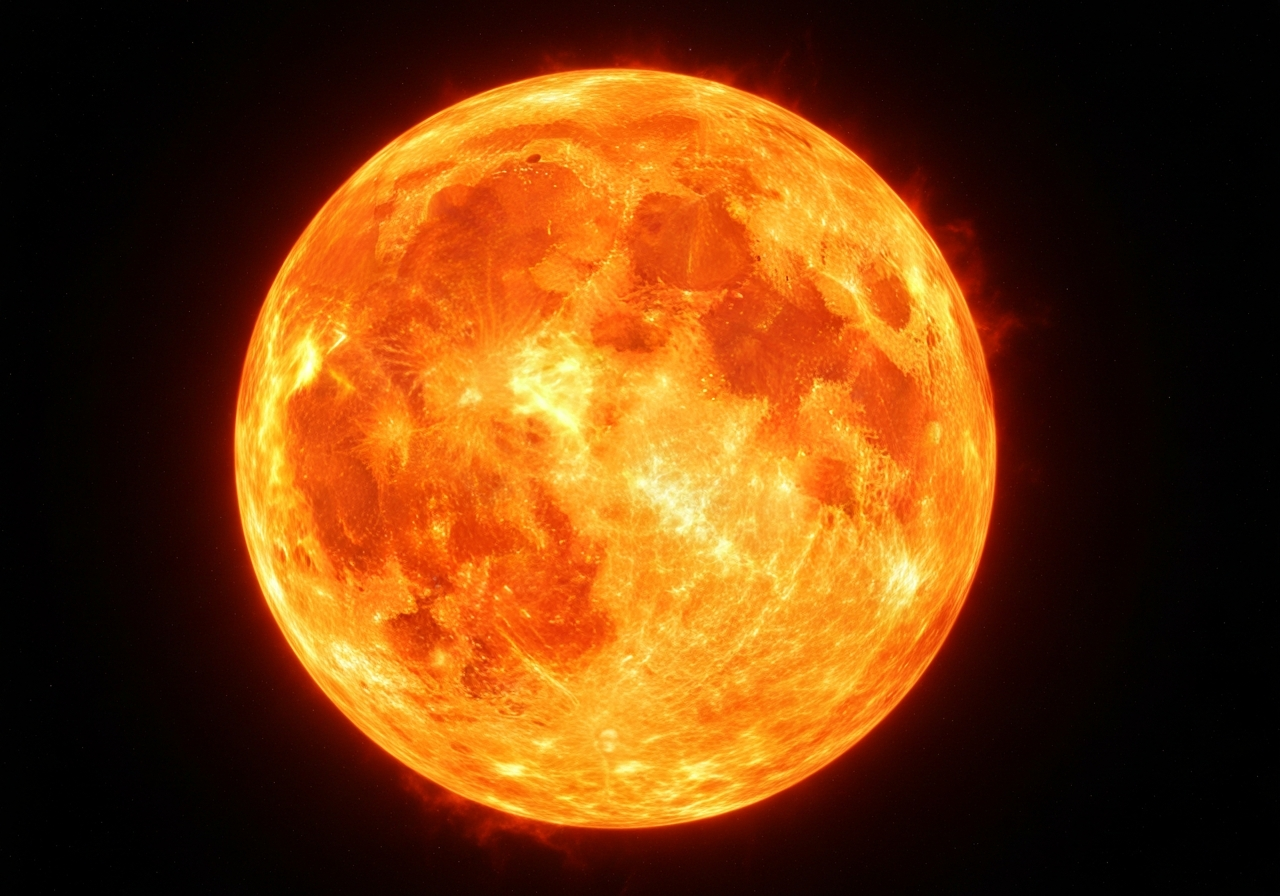
- Surface temperatures are estimated around 1,900°C (3,500°F), hot enough to sustain a global magma ocean extending thousands of kilometres beneath the surface.
- Advanced simulations show tidal forces from neighbouring planets could drive large waves across the magma ocean and help retain volatiles in the molten layer.
- The system’s age is about 5 billion years, raising the question of how a sulphur atmosphere could persist without a deep internal reservoir such as a magma ocean.
- Authors conclude molten or partially molten planets may be more common than previously thought, affecting habitable‑zone classifications.
Background
Exoplanet science has traditionally sorted small planets into broad categories — rocky, like Earth, or water‑rich, like theoretical ocean worlds — based on mass, radius and equilibrium temperature. For many decades these classifications relied on transit light curves and bulk density estimates, often leaving atmospheric composition and interior state uncertain. The James Webb Space Telescope (JWST) changed that by measuring starlight that passes through an exoplanet’s atmosphere during transit, revealing molecular fingerprints that point to composition. L98-59d was first catalogued through transit surveys and radar‑calibrated follow‑up, placing it in a size regime where either a thin rocky mantle or a voluminous water layer had been considered likely.
Planetary heating mechanisms such as tidal dissipation and residual formation heat can profoundly alter a world’s surface and atmospheric evolution. In tightly packed systems, gravitational interactions pump energy into interior reservoirs and can sustain surface volcanism or global melting over long timescales. Solar‑system analogues such as Jupiter’s moon Io show how tidal heating produces intense volcanism and sulphur chemistry, but L98-59d appears to be an extreme step beyond Io: a body where magma, not rock, dominates the outer layers. Understanding how such a state forms and endures requires combining atmospheric spectroscopy, orbital dynamics and thermal evolution models.
Main Event
Researchers applied JWST transmission spectroscopy to L98-59d and detected spectral signatures consistent with a sulphur‑rich atmosphere, notably strong absorptions attributable to hydrogen sulphide and other sulphur species. The atmospheric mix conflicted with expectations for a small rocky planet with a thin atmosphere or a water world, both of which would struggle to maintain such a composition over the system’s roughly 5‑billion‑year history. To reconcile the observations, the team ran high‑resolution thermal and chemical models that track volatile exchange between atmosphere, surface and interior.
Those models indicate a global magma ocean can act as a long‑term reservoir for sulphur and other volatiles, trapping gases in the molten layer and releasing them episodically to the atmosphere. Simulations show the magma ocean could extend thousands of kilometres beneath the surface and feasibly connect to a molten core, which would help explain the persistence of a sulphur‑dominated envelope. The researchers also modelled tidal interactions with neighboring planets in the L98‑59 system and found the forces strong enough to drive enormous magma waves and vigorous internal heating.
Surface conditions implied by the models are extreme: average or local temperatures near 1,900°C would keep silicate mantles molten and support convective motion in the magma sea. A dense, hydrogen sulphide‑rich atmosphere would give the world a foul chemical environment, with free sulphur compounds dominating the gas phase. Given these factors, the research team argues L98-59d fits neither the conventional rocky nor the ocean‑world category and instead represents a molten, partially liquid planetary class.
Analysis & Implications
The identification of a magma‑ocean planet has several immediate consequences for exoplanet classification and habitability assessments. First, it demonstrates that planets in a similar size range (around 1.5–2 Earth radii) cannot be assumed to be either volatile‑rich water worlds or merely scaled‑up rocky planets; interior state and tidal history matter. Second, the presence of abundant sulphur species in the atmosphere shows that atmospheric composition can reflect deep interior reservoirs rather than surface chemistry or photochemistry alone. This complicates simplistic metrics that equate temperate orbital distance with habitability.
For the search for life, the case is cautionary: some planets found within a star’s nominal habitable zone may be molten or chemically hostile despite receiving moderate stellar flux. L98-59d underlines the need for atmosphere‑sensitive observations to complement bulk measurements before declaring worlds potentially habitable. It also highlights that tidal heating can sustain internal energy budgets long after formation, producing environments radically different from solar‑system templates.
On population statistics, if molten planets are a frequent outcome in tightly packed systems around small stars, exoplanet demographic studies will need to revise occurrence rates for true rocky and water worlds. Future surveys should therefore incorporate spectral diagnostics for sulphur and other magma‑derived gases as criteria when categorizing planets. Finally, the discovery opens a new laboratory for planetary physics: studying magma oceans and their coupling to atmospheres offers insight into core formation, magnetic field generation, and volatile cycling under extreme conditions.
Comparison & Data
| Planet | Radius (Earth) | Surface temp | Age (Gyr) | Atmosphere (dominant) |
|---|---|---|---|---|
| L98-59d | ~1.6 | ~1,900°C (3,500°F) | ~5.0 | Hydrogen sulphide / sulphur species |
| Earth | 1.0 | ~15°C (avg.) | 4.54 | Nitrogen‑oxygen |
| Io (Jupiter moon) | 0.29 | ~−130 to 1,200°C (localized) | 4.53 | SO2 (volcanic) |
The table contrasts L98-59d with familiar bodies: Earth as a temperate, rocky reference; Io as a small, tidally heated world with active volcanism. L98-59d’s larger size, sustained high surface temperature and persistent sulphur chemistry place it in a qualitatively different regime from both. The comparison underscores that size alone is an insufficient predictor of surface state or atmospheric composition without spectroscopic data and thermal history modelling.
Reactions & Quotes
The study’s lead communicators framed the finding as both surprising and revealing about exoplanet diversity.
“The whole thing really is in a mushy, molten state — it’s like molasses,”
Dr Harrison Nicholls, University of Oxford
Dr Nicholls emphasised that a deep magma ocean explains how sulphurous gases could be stored and released over billions of years, and that tidal forcing likely keeps the outer layers dynamic. A co‑investigator who handled JWST observations highlighted the telescope’s role.
“JWST’s transmission spectra let us see atmospheric chemistry that bulk measures alone could not explain,”
Dr Jo Barstow, The Open University
Barstow noted that previous analogies to Io — a volcanically active moon — may underestimate the scale of L98-59d’s molten state. The JWST project has framed such observations as central to moving exoplanet science beyond simple size‑based categories.
“These measurements showcase JWST’s capability to probe the atmospheres of small, temperate exoplanets,”
NASA / James Webb Space Telescope (mission statement)
Unconfirmed
- The precise depth and global extent of L98-59d’s magma ocean remain model‑dependent and are not directly observed.
- Whether the planet’s core is fully molten or only partially molten cannot yet be confirmed from current data.
- The long‑term stability of the hydrogen sulphide atmosphere over geological time relies on retention mechanisms that need further observational support.
Bottom Line
L98-59d offers the most compelling evidence yet that planets can exist in a sustained molten state, with atmospheres dominated by magma‑sourced volatiles rather than by processes familiar from Earth. The combination of JWST spectral data and sophisticated thermal‑dynamical models points to a global magma ocean that traps and recycles sulphur species, producing an environment incompatible with life as we know it.
Beyond the specific case, the discovery urges caution in labeling exoplanets as potentially habitable based solely on size and stellar distance. It also opens a new category for planetary science — molten or magma‑ocean planets — that will require targeted spectral searches and follow‑up studies to quantify how common such worlds are and how they evolve.
Sources
- The Guardian — media report summarising the study (news).
- Nature Astronomy — peer‑reviewed journal publishing the study (academic).
- James Webb Space Telescope (JWST) — mission and instrument overview (official/agency).
- University of Oxford — institutional affiliation for lead researcher (academic/institution).
- The Open University — institutional affiliation for co‑investigator (academic/institution).