
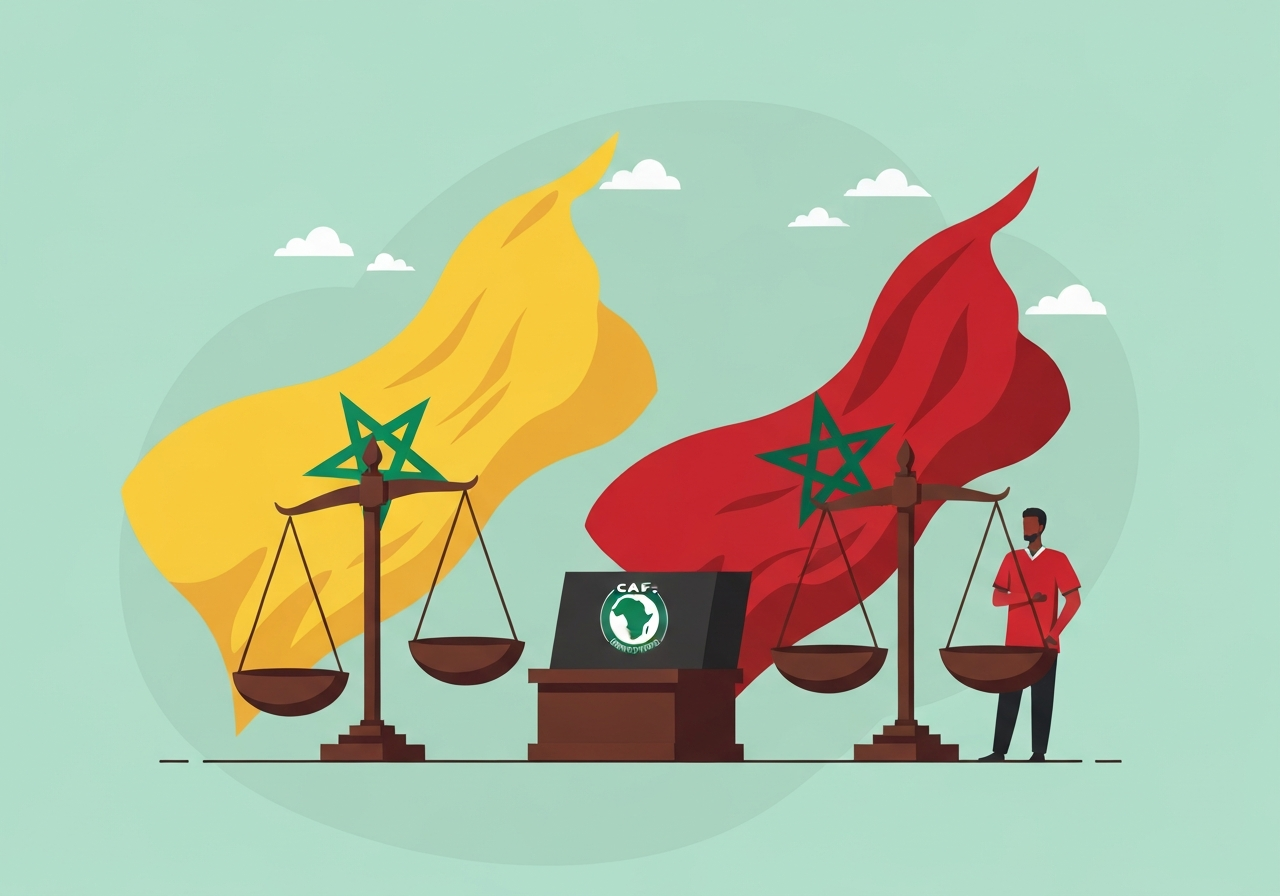
Lead: On Tuesday in Geneva, the Confederation of African Football (CAF) appeals panel annulled Senegal’s 1-0 victory in the Jan. 18 final in Rabat and ruled that Senegal forfeited the match, awarding host nation Morocco a 3-0 default win and the Africa Cup of Nations title. Senegal announced it will appeal the decision, without specifying the forum. The ruling reverses the result from the field after a stoppage-time walk-off by Senegalese players amid a penalty controversy. The decision has immediate sporting and legal implications for both nations ahead of the 2026 World Cup.
Key Takeaways
- CAF’s appeals board declared Senegal to have forfeited the final held on Jan. 18 in Rabat, converting the on-field 1-0 extra-time result to a 3-0 default for Morocco.
- Morocco is officially credited with its first AFCON title since 1976 under the ruling; Senegal is denied a second AFCON crown that would have been its first since 2021.
- CAF cited Article 82 of its tournament regulations to justify the decision, which addresses teams that leave the field without referee authorization.
- Senegal has publicly said it will lodge an appeal; one likely venue is the Court of Arbitration for Sport (CAS) in Lausanne, which typically takes many months to issue a ruling.
- At the match, a late penalty awarded to Morocco sparked a 15-minute walk-off by Senegal players and a stadium disturbance; the spot kick by Brahim Díaz was saved by Édouard Mendy and Senegal later scored in extra time on the pitch.
- CAF had already imposed more than $1 million in fines and personnel bans after an initial disciplinary hearing but left the match result unchanged at that time.
- The ruling raises questions about the scope of appeals panels to overturn on-field outcomes and could affect how referees’ authority and match incidents are treated in future CAF cases.
Background
The Jan. 18 final in Rabat between Morocco and Senegal ended in confusion after a stoppage-time penalty was awarded to Morocco, prompting a strong protest by Senegal’s players and staff. According to match reports, Senegal left the pitch for roughly 15 minutes while some spectators attempted to enter the field, and play resumed before extra time produced a Senegalese goal on the field. The match’s immediate aftermath included an initial CAF disciplinary hearing that fined both associations more than $1 million combined and issued bans to several players and officials but left the final score intact.
CAF’s disciplinary and appeals procedures allow for post-match review in defined circumstances; the appeals board invoked Article 82 — a regulation that treats an unauthorized departure from the field as a forfeiture. Historically, continental governing bodies have seldom changed match results after the referee’s report, making this reversal notable. The ruling also occurs in the lead-up to the 2026 FIFA World Cup, when both national teams are scheduled to compete, meaning any protracted legal appeal would likely outlast the tournament selection process and preparations.
Main Event
The match situation that led to CAF’s ruling began in stoppage time when television replays and on-field decisions diverged: an apparent Senegal goal was disallowed for a foul on a Moroccan defender, and shortly after a penalty was awarded to Morocco. Senegal’s players, led on the field by coach Pape Thiaw and senior figures, left the pitch in protest; reports describe a 15-minute stoppage and attempts by fans to reach the field. When play resumed, Morocco’s Brahim Díaz took the penalty with a Panenka-style chip that goalkeeper Édouard Mendy saved; Senegal then scored during extra time, which was recorded on the official match sheet as a 1-0 victory.
CAF’s initial disciplinary process imposed substantial fines and bans but did not alter the result. The appeals board’s later judgment found that the walk-off met the threshold for forfeiture under the cited rule, converting Senegal’s on-field win into a 3-0 default loss. Senegalese federation officials immediately condemned the verdict and said they would seek redress through higher sports tribunals. At least two Senegal players posted images and messages online indicating their belief that the trophy remained theirs, reflecting the deep division over the decision.
Analysis & Implications
The appeals ruling raises jurisprudential questions about the interplay between referee authority during a match and the jurisdiction of an appeals body after the fact. Referees make real-time, field-of-play determinations, yet disciplinary or appeals panels can examine the circumstances under written regulations; this case highlights tension when an appeals decision appears to override or second-guess on-field outcomes. National federations and players may now reassess match conduct strategies, knowing an off-field panel can potentially reverse results for procedural breaches.
Sporting consequences are immediate: Morocco is now recorded as AFCON champion and will enter preparations for the 2026 World Cup with that status, while Senegal faces reputational and competitive ramifications. A CAS appeal by Senegal would likely take many months, meaning the World Cup line-up and seeding will proceed with the CAF-declared champion unless an expedited process is sought and granted. The extended timeline could also affect sponsorship, player selection and morale ahead of major fixtures.
Politically and regionally, the decision has provoked sharp commentary from Senegalese officials, who called the ruling unjust and damaging to African football’s integrity. CAF’s reliance on Article 82 will probably prompt debates over whether the regulation’s language is sufficiently precise and whether appeals panels should have clearer limits when overturning match results. International observers may press for standardized, transparent criteria to govern post-match forfeiture rulings across confederations.
Comparison & Data
| Item | On-field record | Appeals ruling |
|---|---|---|
| Final score | Senegal 1–0 Morocco (extra time) | Morocco 3–0 Senegal (forfeit) |
| Morocco AFCON titles | 1 (1976) | 2 (1976, awarded title) |
| Senegal AFCON titles | 1 (2021) | 1 (2021) — 2024 title revoked |
The table contrasts what occurred during the match with the appeals outcome. CAF’s 3-0 default is a standard administrative scoreline for a forfeiture under many competition rules. Practically, the change affects historical records, trophy attribution and related statistical archives; it does not retroactively alter on-field events such as goal scorers or match incidents, but it does change official championship credit and associated honors.
Reactions & Quotes
CAF released its appeals ruling in Geneva, citing internal regulatory text as the basis for the decision. Officials framed the verdict as an application of tournament rules concerning unauthorized departures from the field.
“We will not back down. The law is on our side.”
Abdoulaye Seydou Sow, Secretary General, Senegalese Football Federation (public broadcaster statement)
Sow described the ruling as a travesty and signaled an immediate appeal, calling the decision harmful to African football’s reputation. His remarks reflect Senegal’s formal stance that legal avenues remain available and necessary to overturn the appeals board’s finding.
“Come and get it! They’re crazy!”
Moussa Niakhaté, Senegal defender (social media post)
Player social-media posts from several Senegalese squad members underscored the team’s public rejection of the administrative outcome and emphasized a belief that the on-field result should stand. CAF’s earlier fines and bans were noted but did not prevent the escalation to an appeals reversal.
Unconfirmed
- Exact forum and timetable for Senegal’s promised appeal have not been publicly specified; it is unclear whether they will file at CAS or pursue another administrative route.
- Whether CAF’s appeals panel reviewed internal referee reports or match footage in full has not been disclosed in detail by CAF in its public summary.
- Any expedited process to resolve an appeal before the 2026 World Cup has not been requested or confirmed by either federation or CAS public records.
Bottom Line
The CAF appeals ruling that converts Senegal’s on-field 1-0 victory into a 3-0 forfeit in favor of Morocco is a consequential administrative intervention that alters official records and awards Morocco an AFCON title for the first time since 1976. It underscores the power of post-match regulatory review and raises fundamental questions about the boundary between in-play referee authority and retrospective disciplinary judgment.
Senegal’s announced intent to appeal means the legal dispute is likely to continue and could take many months to resolve, leaving both teams to prepare for upcoming competitions under legal and reputational uncertainty. For African football governance, the episode will likely prompt calls for clearer rules and greater transparency in the application of forfeiture regulations to avoid similar controversy in the future.
Sources
- AP News (news report on CAF appeals ruling and match events)
- Confederation of African Football (CAF) (official governing body homepage and regulatory authority)
- Court of Arbitration for Sport (CAS) (official arbitration institution)