
Lead
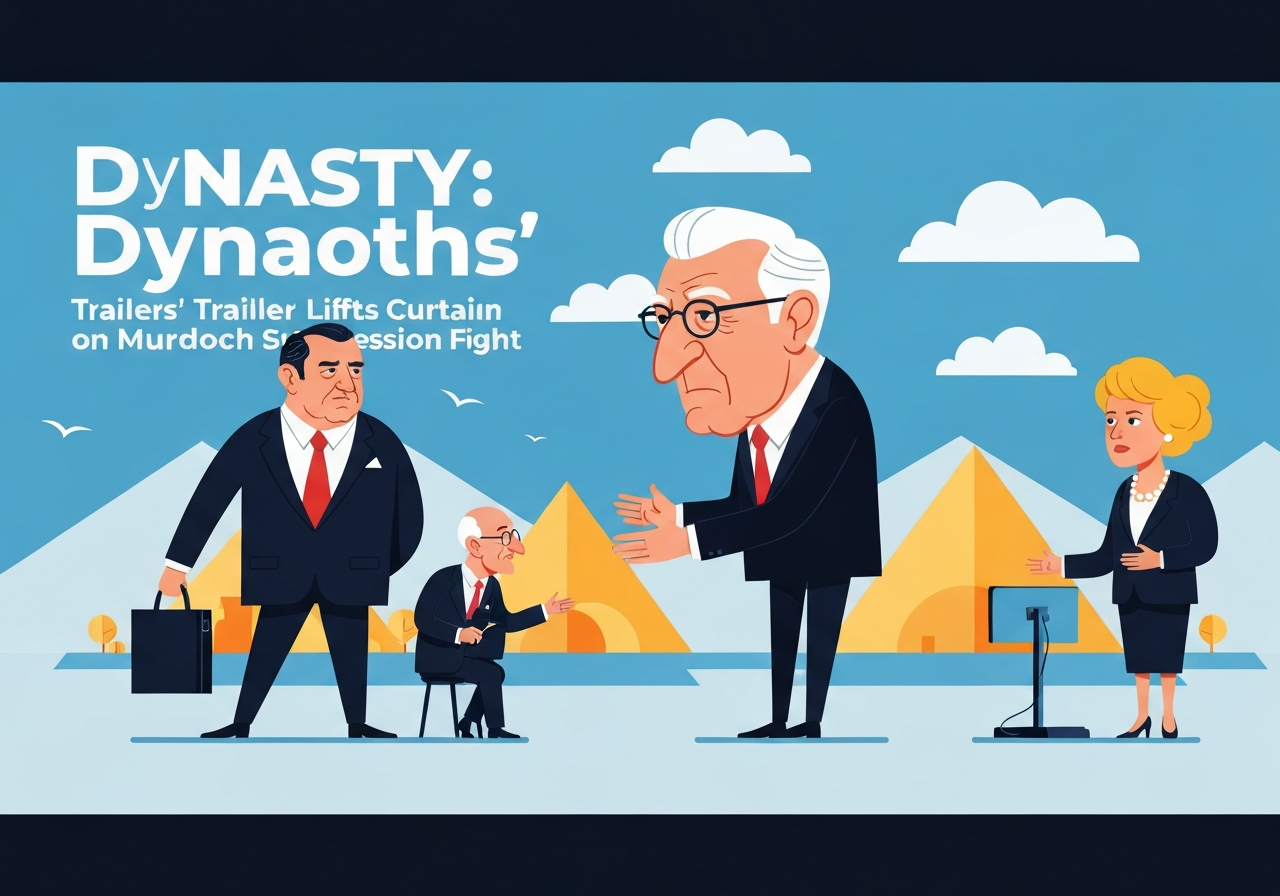
Netflix has released the first trailer for Dynasty: The Murdochs, a four-part documentary that examines the internal struggle to control Rupert Murdoch’s media empire. The series, directed by Liz Garbus, draws on thousands of pages of documents, emails and text messages and foregrounds tensions among Rupert Murdoch and his children—Lachlan, James, Elisabeth and Prudence MacLeod. The trailer explicitly invites comparison to HBO’s Succession, framing a family dispute with broad political consequences. Dynasty: The Murdochs is scheduled to premiere on Netflix on March 13.
Key Takeaways
- Dynasty: The Murdochs is a four-part Netflix documentary directed by Liz Garbus, premiering March 13.
- The series is reported to be based on thousands of pages of internal documents, emails and text messages collected by the filmmakers.
- It centers on Rupert Murdoch and four adult children: Lachlan, James, Elisabeth and Prudence MacLeod, and the contest over succession at Fox News and related holdings.
- The trailer includes interviews with New York Times reporters Jim Rutenberg and Jonathan Mahler and former Fox News staffers who covered the family’s legal disputes.
- The filmmakers pose the question of whether a dynasty functions primarily as a family or as a business, highlighting Murdoch’s eight-decade career building a global media network.
- Observers in the trailer liken the material to the fictional drama Succession, underlining how private family dynamics can influence public politics.
Background
Rupert Murdoch has spent more than 80 years assembling a media empire whose outlets include Fox News, and his family’s internal succession debates have long drawn attention from journalists and regulators. Over recent decades, Murdoch’s acquisitions and editorial choices at Fox and other outlets have intersected with political developments in multiple countries, amplifying scrutiny of who controls editorial direction. The Murdoch children occupy differing roles and public profiles: Lachlan has been positioned as a central heir in recent years, James has at times clashed with family strategy, Elisabeth has pursued independent media ventures, and Prudence MacLeod remains less publicly prominent.
Media portrayals and fictional works have repeatedly returned to the Murdoch saga as shorthand for concentrated media power and familial conflict; HBO’s Succession invoked similar themes while remaining a dramatized narrative. Legal fights and reporting over the past decade produced court filings, internal memos and testimony that journalists have used to map internal disputes. Documentary filmmakers now frequently use those primary materials to reconstruct timelines and motivations, creating narratives that sit between investigative reporting and long-form storytelling.
Main Event
The newly released trailer for Dynasty: The Murdochs unspools scenes and archival material that trace fault lines inside the family while connecting those private struggles to public outcomes. Snippets of internal messages and contemporaneous footage are intercut with interviews from reporters who followed the family’s legal and business battles, offering both context and contemporaneous observation. The production team says the series is grounded in thousands of pages of documents, emails and text messages that chart decisions and disputes across years.
Director Liz Garbus, known for investigative documentaries, frames the series as an exhaustive history of Rupert Murdoch’s ascent while homing in on intergenerational tensions. The trailer foregrounds questions about succession, portraying the competition among siblings as driven partly by power and partly by an appetite for their father’s approval. Several former Fox employees appear onscreen to describe newsroom dynamics and the organizational consequences of disputed leadership.
Early critical commentary included direct comparisons to Succession, with on-screen observers describing the material as resembling an episode of that dramatized series. The trailer underscores the producers’ thesis that a high-stakes family fight over an influential media conglomerate can have ripple effects on politics and public life. Netflix’s decision to present the story in four parts signals a willingness to explore both archival detail and contemporary ramifications.
Analysis & Implications
Documenting a powerful family’s succession fight matters because control of large media outlets shapes which stories are prioritized and how events are framed for broad audiences. If the docuseries persuades viewers that personal rivalries influenced editorial posture, it could deepen public skepticism about institutional independence at outlets within Murdoch’s portfolio. That perception may not map directly to operational decisions, but documentaries often influence reputation and can trigger renewed scrutiny by advertisers, partners and regulators.
For media governance, the series could revive questions about ownership structures and safeguards that separate corporate control from newsroom decision-making. Regulators in different jurisdictions have sometimes responded to concentrated media ownership with investigations or calls for oversight; renewed public attention could create political pressure for further inquiry. At the same time, a documentary cannot by itself adjudicate legal claims, so any regulatory follow-up would rely on independent facts and filings beyond what is summarized on screen.
Economically, publicity from a high-profile documentary can affect valuations, boardroom calculations and succession planning at family-owned conglomerates. Stakeholders—shareholders, board members, and executives—may view narrative-driven exposure as a risk to brand value and advertiser relationships. Internationally, the series may shape perceptions of media influence in countries where Murdoch assets operate, affecting reputational dynamics beyond the United States.
Comparison & Data
| Title | Format | Basis | Episodes | Premiere |
|---|---|---|---|---|
| Dynasty: The Murdochs | Documentary series | Archival documents, interviews | 4 | March 13 (Netflix) |
| Succession | Fictional drama | Creator imagination inspired by real families | 4 seasons | 2018 (HBO) |
The table highlights the structural difference: Dynasty is a fact-based four-part documentary built from primary records and reporting, while Succession is a multi-season fictionalization that drew inspiration from multiple real-world sources. Readers should note that documentary evidence supports assertions differently than dramatic storytelling does; documentaries rely on traceable documents and interviews, whereas drama synthesizes traits and events to serve narrative arcs.
Reactions & Quotes
Journalists and commentators appearing in or responding to the trailer frame the series as both a family saga and a matter of public consequence. Their remarks in the trailer use terse metaphors and comparative language to convey how private succession disputes can have outsized societal impact.
it reads like an episode of Succession
Trailer observer
This line in the trailer signals the producers’ awareness of audience familiarity with Succession and invites viewers to judge the real-world material against the fictional series. The comparison is stylistic rather than evidentiary: it highlights tonal similarity while documentary evidence remains the basis for factual claims.
he wasn’t raising children, he was raising possible successors
Trailer commentator
The remark frames a key interpretive lens of the series: that parenting and corporate succession overlapped within the Murdoch household. The trailer places such commentary alongside documents and reporting to let viewers weigh personal testimony against documentary records.
it’s like a family squabble on steroids that has a huge effect on our politics and our lives
Trailer commentator
This more sweeping formulation connects family dynamics to civic outcomes and encapsulates the documentary’s central claim about private power producing public consequences. The filmmakers pair this rhetoric with archival material to make the case that the stakes extend beyond personality conflicts.
Unconfirmed
- Whether all internal communications cited in promotional materials will be published in full remains unclear; Netflix has not released a complete evidence list.
- The trailer implies certain private motivations among family members; the documentary may not fully resolve the intentions behind specific decisions.
- Claims about direct editorial orders tied to succession disputes are asserted by some commentators but are not legally adjudicated in the material Netflix has previewed.
Bottom Line
Dynasty: The Murdochs aims to translate years of reporting and archival material into a focused narrative about power, family and media influence. Its four-part format and sourcing promise detailed chronology, but viewers should evaluate the evidence presented and distinguish documented facts from interpretive claims. The series is likely to renew public debate about concentrated media ownership and succession planning at major outlets.
Watch for post-premiere reporting that traces documentary claims back to primary documents and independent sources, and for any institutional responses from outlets within Murdoch’s portfolio. Regardless of what the series proves or suggests, its release underscores the enduring public interest in who controls influential news organizations and how private succession choices can ripple into the public sphere.