
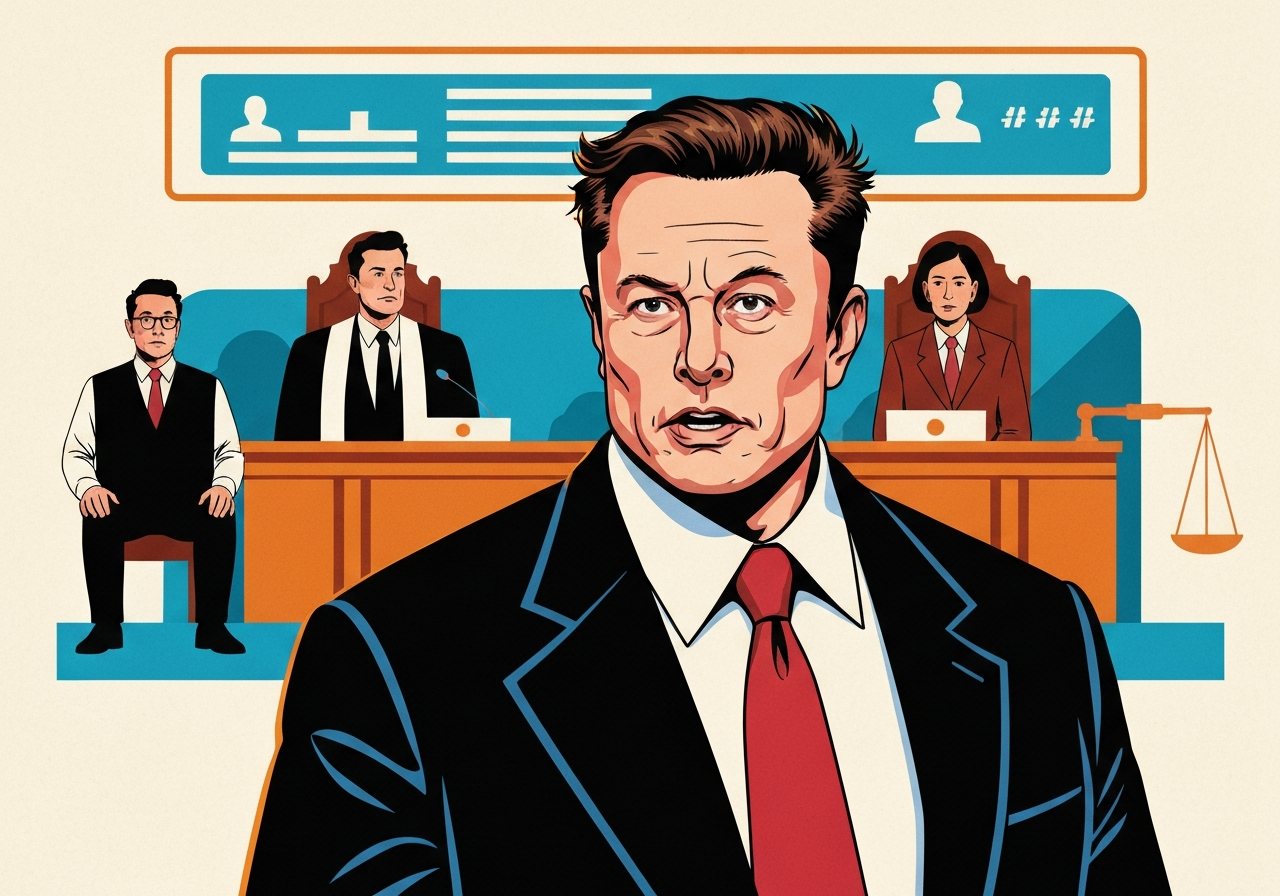
Elon Musk appeared in court this week to answer a lawsuit alleging market manipulation tied to actions around Twitter, according to reporting by the Financial Times. The hearing marked a high-profile moment in an ongoing legal fight that accuses Musk of conduct that affected the trading and valuation of Twitter-related securities. Musk’s legal team disputed the allegations while plaintiffs’ counsel urged the court to let their claims proceed. The session ended with the judge setting a timetable for next steps, leaving the broader legal and market consequences unresolved.
Key Takeaways
- Elon Musk made a court appearance this week in a case described by the Financial Times as alleging market manipulation linked to Twitter-related conduct.
- Plaintiffs claim specific actions by Musk had measurable effects on market prices; the complaint seeks remedies including damages and injunctions.
- Musk’s lawyers have argued the claims lack merit and framed the conduct as protected speech and ordinary business decisions.
- The judge set deadlines for further briefing and potential discovery, extending the litigation timetable into the coming months.
- The case follows past enforcement and litigation involving Musk and public market statements, adding context to regulators’ and investors’ scrutiny.
- Legal analysts say the outcome could shape how courts treat executive statements about social platforms and their market effects.
Background
The current lawsuit centers on allegations that Elon Musk’s public comments and related actions produced distortions in market pricing tied to Twitter and related securities. Suits that allege market manipulation typically focus on whether a defendant engaged in deceptive or manipulative conduct that had a predictable and material effect on market prices. Plaintiffs in this case argue a pattern of behavior surrounding Musk and Twitter meets that threshold; Musk’s team counters that the statements and actions were non-fraudulent and, where opinion-based, protected.
This dispute arrives after a series of high-profile episodes in which Musk’s public statements prompted regulatory and investor responses, most notably the 2018 SEC settlement concerning tweets about taking Tesla private. That precedent, while factually distinct, has kept questions about executive social-media statements and securities liability in the legal spotlight. Multiple stakeholders have an interest in the litigation’s direction: plaintiffs seeking compensation, defense counsel aiming to protect a high-profile client and technology investors monitoring potential market precedents.
Main Event
The court appearance was procedural in form but politically and financially charged in substance. Lawyers for both sides presented competing characterizations of the pleadings and asked the judge to rule on whether the case should advance to discovery. Plaintiffs highlighted specific incidents and timing they say link Musk’s public conduct to market responses; defense counsel argued those links are speculative and fail to establish legal elements required for a manipulation claim.
During the hearing, the judge questioned both sides on the sufficiency of the allegations and the evidentiary basis for claims of market impact. Counsel discussed possible discovery parameters, including whether testimony and internal documents related to Musk’s decision-making about Twitter would be subject to subpoena. While no dispositive rulings were issued at the appearance, the judge set a schedule for briefs and potential dispositive motions.
Outside the courtroom, observers from markets and media closely followed the hearing, anticipating that court rulings on discovery scope could determine whether the case proceeds to trial. The plaintiff’s stance is that a broader factual record will support claims of orchestrated conduct; Musk’s team maintains that narrowing the case at the pleading stage is appropriate because the complaint, they say, fails to allege actionable manipulation.
Analysis & Implications
If the court allows broad discovery, plaintiffs could obtain communications and documents that illuminate intent and timing, increasing the chances of proving market-effect theories. That outcome would be significant because manipulation claims often hinge on demonstrating both a deceptive act and a causal market impact. Conversely, a decision limiting discovery or dismissing key claims would signal judicial caution about expanding market-manipulation doctrines to cover high-profile public commentary and business decisions.
The case also carries reputational and regulatory implications. A finding for plaintiffs or a settlement could invite renewed attention from regulators and prompt companies to revise controls over executive communications. For market participants, the litigation highlights legal risk associated with influential figures whose statements can move markets rapidly, raising questions about corporate governance, disclosure practices, and compliance policies across technology and public-company sectors.
International investors and exchanges may watch for precedents that affect how statements on social platforms are treated in other jurisdictions. Courts in different countries use varying tests for market manipulation and free expression, so a landmark U.S. decision—if it emerges—could ripple outward through cross-border litigation strategy and regulatory guidance.
Comparison & Data
| Event | Year | Legal Outcome |
|---|---|---|
| Musk “funding secured” Tesla tweets | 2018 | SEC settlement; monetary penalty and oversight |
| Current Twitter-related manipulation suit | 2026 (court appearance) | Pending—motion/briefing schedule set |
The table contrasts the 2018 SEC matter, which resulted in a settlement and specific obligations, with the present case, which remains at an early litigation stage following the court appearance. Historical outcomes show the range of remedies available—regulatory penalties, injunctive terms, private damages—and underline that future remedies here will depend on factual development and legal rulings.
Reactions & Quotes
The plaintiffs argue the record will show coordinated conduct that had a tangible effect on trading and investor decisions.
Plaintiffs’ counsel (as reported by Financial Times)
Musk’s lawyers say the complaint relies on conjecture and that protected speech and lawful business choices do not constitute market manipulation.
Defense counsel for Elon Musk (as reported by Financial Times)
Legal experts note that whether courts expand manipulation doctrines to cover high-profile public statements could reshape both litigation risk and corporate communication strategies.
Independent legal analyst (commenting to media)
Unconfirmed
- Exact internal communications or documents that plaintiffs hope to obtain through discovery have not been made public and remain unverified.
- The extent to which any individual tweet or message directly moved specific security prices is asserted by parties but will require expert market analysis to confirm.
- Any potential settlement negotiations or offers are not publicly confirmed at this time.
Bottom Line
The recent court appearance advanced procedural steps in a case that could test how courts treat high-profile public conduct in market-manipulation claims. While no final rulings were issued, the judge’s scheduling decisions mean the dispute will proceed through additional briefing and possibly discovery, where factual records may prove decisive.
Beyond the immediate parties, the litigation could influence corporate practices and regulatory scrutiny around executive communications on public platforms. Observers should watch forthcoming court filings and any discovery orders, which will better reveal whether the case will settle, be narrowed, or proceed toward trial.
Sources
- Financial Times — media (paywalled) reporting on the court appearance and allegations
- U.S. Securities and Exchange Commission — official (2018 enforcement action involving Elon Musk and Tesla)