
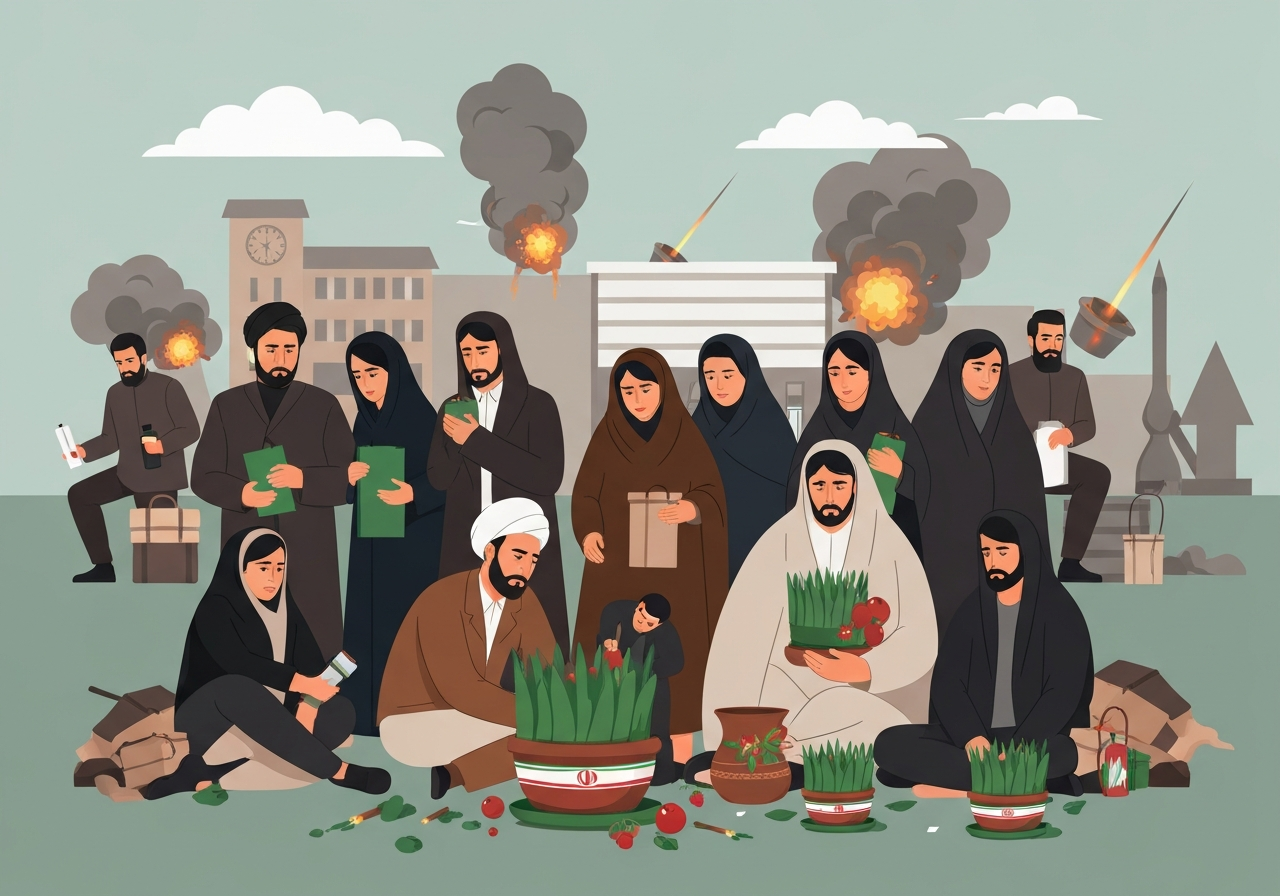
As Nowruz arrived on March 20, 2026, many Iranians marked the spring new year in a subdued atmosphere across Tehran and other cities. Markets such as Tajrish Bazaar saw smaller crowds than usual as families balanced traditional customs with grief after a deadly January crackdown and three weeks of U.S.-Israeli bombardment. Economic hardship — rising costs and widespread shortages — added to the restraint, leaving a holiday of renewal shorn of its usual public exuberance. Still, households across the country continued private observances, underscoring the festival’s deep cultural roots.
Key Takeaways
- Nowruz fell on March 20, 2026, and traditionally signals renewal; this year public celebrations were markedly muted in Tehran’s Tajrish Bazaar and elsewhere.
- Thousands of families remain in mourning for relatives killed during mass protests in January; communities reported a restrained observance of holiday rituals.
- Three weeks of U.S. and Israeli bombardment have been reported to cause civilian deaths and property damage, increasing public anxiety nationwide.
- Economic misery — including higher prices and constrained household budgets — limited Nowruz spending on clothing, food and customary items.
- Despite public restraint, many Iranians maintained private customs such as haft-seen displays and family visits, keeping the festival’s symbolic role alive.
- Public gatherings were smaller and more localized, with traders at major bazaars reporting lower foot traffic compared with past years.
Background
Nowruz, observed since at least the fifth century B.C., marks the first day of spring and is widely celebrated across Iran as a time of renewal, family visits and symbolic house preparations. Typical preparations include buying flowers, painted eggs and setting the haft-seen table with items symbolic of health and prosperity; in ordinary years bazaars and public squares swell with shoppers and festive activity. This year’s observances occur after a January period of mass protests that, according to domestic and international reporting, ended with a harsh government response and many civilian deaths.
In the weeks preceding Nowruz, Iran also experienced three weeks of strikes and bombardment by U.S. and Israeli forces that local reporting says resulted in civilian casualties and damaged housing in several areas. The combination of repression, conflict-related disruption and deepening economic strain has constrained public life and commerce, especially in urban centers such as Tehran. Merchants, cultural leaders and families faced a difficult choice: maintain long-held rituals that anchor social life, or scale back public displays in recognition of national trauma and insecurity.
Main Event
Tajrish Bazaar in northern Tehran, typically a focal point for Nowruz shopping, was noticeably quieter this year, with vendors reporting reduced sales of flowers, colored eggs and tableware. Observers at the market described slower foot traffic and fewer large family purchases, even as stallholders continued to stock customary items for those able to celebrate privately. Many households prioritized essential spending while still assembling haft-seen displays at home, a pattern reflected across neighborhoods.
Across the country, families mourning relatives killed in January’s protests limited travel and public gatherings, opting instead for small home-centered observances. Local accounts, relayed by reporters on the ground, described a layered atmosphere: the persistence of ritual habits alongside palpable grief and fear of further violence. In cities with recent bombardment-related damage, displaced families reported difficulty accessing both cash and supplies, amplifying the holiday’s austerity.
Authorities maintained a visible security presence in several urban districts during the holiday period, citing public safety concerns amid heightened tensions. At the same time, community leaders and religious figures called for restraint in public festivities to honor lives lost and to avoid provoking fresh unrest. The result was a patchwork of observance: some communities kept to quiet family rites, while others postponed or scaled down customary visits and celebrations.
Analysis & Implications
The muted Nowruz of 2026 highlights how protracted political and military crises reshape even the most entrenched cultural rhythms. Nowruz functions as a social barometer: in years of stability it is a visible, public festival; in times of stress it contracts into private practice. The current contraction suggests sustained social trauma that could erode civic rituals if insecurity and economic distress persist.
Economically, reduced holiday spending has immediate and downstream effects on small traders and seasonal vendors who rely on Nowruz revenues. Lower sales at bazaars translate into thinner margins for merchants and reduced income for informal workers, which can deepen local pockets of poverty and slow post-holiday recovery. If the security situation remains unsettled, consumer confidence is likely to stay depressed, affecting retail, transportation and hospitality sectors linked to holiday demand.
Politically, the widespread restraint signals a population negotiating between cultural continuity and political caution. Public avoidance of large celebrations may reduce opportunities for collective expression, but it also reflects a societal choice to avoid circumstances that could trigger further repression. Over time, repeated suppression of public ritual could reconfigure how Iranians mark national and cultural milestones, with implications for social cohesion and the visibility of dissent.
Internationally, scenes of a muted Nowruz may influence diplomatic narratives: foreign governments and observers may read scaled-back celebrations as evidence of domestic instability requiring humanitarian or political responses. Conversely, the persistence of private customs underscores the resilience of cultural identity, complicating binary portrayals of societal collapse. The coming months will be critical in determining whether traditions rebound as conditions stabilize or atrophy under sustained pressure.
Comparison & Data
Although granular, nationwide attendance and spending figures for Nowruz 2026 are not yet available, on-the-ground reporting from major Tehran markets like Tajrish indicates noticeably lower foot traffic than in pre-crisis years. Seasonal vendors and market managers reported declines in typical Nowruz item sales; these qualitative indicators align with broader accounts of tightened household budgets. Analysts monitoring economic activity will watch retail receipts, transportation usage and short-term employment in the informal sector to gauge the holiday’s economic impact.
Reactions & Quotes
The holiday felt muted across Tehran, with smaller crowds at bazaars and quieter homes than in previous years.
The New York Times (international news reporting)
Many families marked the day privately, balancing the need to honor tradition with the reality of mourning and insecurity.
The New York Times (international news reporting)
Unconfirmed
- Precise nationwide casualty counts linked to the January crackdown remain contested and vary by source; independent verification is incomplete.
- Attribution of all recent civilian deaths specifically to U.S. or Israeli strikes is subject to ongoing investigation and reporting; full details and official confirmations are still pending.
Bottom Line
Nowruz 2026 in Iran was a holiday of contrasts: private adherence to deep-rooted traditions alongside public reticence shaped by grief, insecurity and economic strain. The subdued atmosphere at major bazaars and the prevalence of home-centered observance reflect a society managing collective loss while preserving cultural continuity.
The trajectory ahead depends on whether security conditions and economic pressures ease. If tensions and shortages persist, public rituals may remain constrained, with tangible costs for small traders and intangible effects on social cohesion. Observers inside and outside Iran will be watching whether the spring festival can again serve its historical role as an outward celebration of renewal or whether it becomes primarily a quieter, private remnant of cultural resilience.
Sources
- The New York Times — international news reporting (on-the-ground coverage of Nowruz in Tehran, March 20, 2026)