
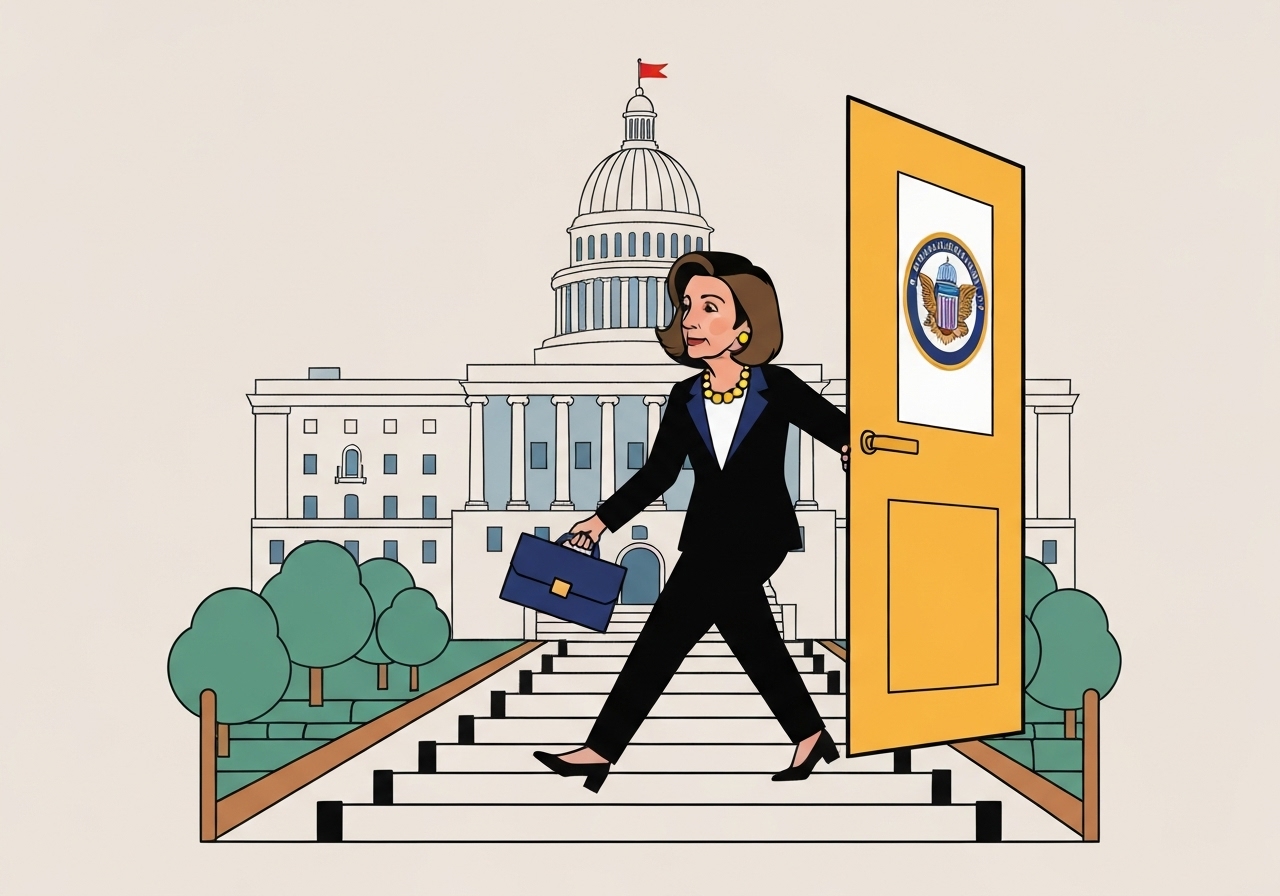
Nancy Pelosi announced on 6 November 2025 that she will retire from the U.S. House of Representatives, ending a 20-term career that began in 1987. The 85-year-old, the first woman to serve as House speaker, made the announcement in a video and said she remained proud to represent San Francisco. Her decision follows her 2022 step back from House leadership and comes days after Californians approved Proposition 50. The vacancy opens a high-profile Democratic primary in a safe San Francisco seat and marks the closing chapter of a consequential Washington career.
Key takeaways
- Pelosi announced retirement on 6 November 2025 after serving 20 terms in Congress since 1987.
- At 85, she leaves as the first female House speaker and twice-holder of the gavel, known for major roles in the 2009 financial response and the 2010 Affordable Care Act.
- She stepped back from House leadership in 2022 and retained the informal title of ‘speaker emerita’ while remaining an influential party adviser.
- Days before her announcement Californians approved Proposition 50, a redistricting measure Pelosi supported to influence future House maps.
- Her retirement immediately transforms the San Francisco Democratic primary; Saikat Chakrabarti and state senator Scott Wiener have already declared runs.
- Pelosi played a reported role in encouraging President Biden to withdraw from the 2024 presidential race after a poor debate showing against Donald Trump.
- Her tenure included repeated clashes with Republican leaders and two impeachments of President Trump, plus leadership during the Jan. 6, 2021, Capitol attack and its aftermath.
Background
Born into a Baltimore political family, Pelosi absorbed precinct-level politics early, later relocating to San Francisco with her husband Paul. She entered Congress via a 1987 special election and quickly built a reputation as an effective organizer, fund-raiser and vote manager, skills she frequently credited to raising five children. Pelosi rose through House ranks to become Democratic leader and then the first woman elected speaker in 2007, a post she first held from 2007 to 2011 and again from 2019 to 2023.
Her speakerships spanned deeply consequential moments: the financial crisis response in 2008, passage of the Affordable Care Act in 2010, and major infrastructure and climate legislation under President Biden. Pelosi’s style—strategic, disciplined and often assertive—made her both a central architect of Democratic governance and a focal point for conservative attacks. Security concerns also marked her later years in office; a politically motivated home invasion targeting her husband preceded the 2022 midterms and underscored rising threats against senior lawmakers.
Main event
Pelosi released a video statement on 6 November 2025 announcing she would not seek reelection, framing the decision as a personal choice after decades of public service. In the video she said she had been honored to ‘represent our city and our country around the world with patriotism and pride’ and stressed that speaking for San Francisco had been one of her greatest honors. She waited to announce until after California voters approved Proposition 50, a redistricting initiative she had publicly backed.
The retirement was expected by many inside and outside the party but still reverberates because Pelosi remained an informal adviser even after yielding House leadership in 2022. Colleagues and operatives say she continued to counsel younger lawmakers and help shape strategy, including high-stakes decisions during the 2024 cycle. Her exit therefore removes a veteran power broker who had been both an institutional anchor and a lightning rod for opponents.
Immediately, two Democrats declared bids for the open seat. Saikat Chakrabarti, a former AOC chief of staff and tech executive, aims to run an anti-establishment campaign focused on corruption and populist themes in Silicon Valley. State senator Scott Wiener has also entered the race, reversing earlier statements that he would wait for Pelosi. More candidates are widely expected to join what will be an unusually contested primary in a district she held since 1987.
Analysis & implications
Pelosi’s retirement accelerates an intra-party generational realignment that gained steam after her 2022 decision to step down from leadership. Democrats have faced mounting calls from some members and outside groups for younger, more diverse faces; Pelosi’s departure will test whether the party can transition without fracturing its institutional knowledge. The San Francisco seat will be a laboratory for that transition, pitting establishment-aligned figures and long-time staffers against insurgent activists.
At the national level, Pelosi’s absence reduces the pool of experienced vote managers who understand the procedural levers of the House. That loss matters most in narrowly divided chambers where skillful coalition-building can determine outcomes on spending, oversight and judicial confirmations. Her role in shaping major health, climate and infrastructure bills suggests future leaders will be measured against a high bar for legislative craftsmanship.
Redistricting adds a strategic layer. Proposition 50, approved days before the announcement, aims to redraw California maps in ways Democrats argue will blunt Republican gains elsewhere. Pelosi’s backing of the measure and her timing indicate a calculation that controlling districts and pipeline politics matters as much as individual retirements. Still, how those maps play in 2026 and beyond depends on legal challenges and implementation details.
Comparison & data
| Metric | Pelosi (to 2025) | Benchmarks |
|---|---|---|
| Congressional service | 1987–2025 (20 terms) | Typical long-serving House members: 10–15 terms |
| Age at retirement | 85 | Average retiring House member age: mid-60s to 70s |
| Times as Speaker | Twice (2007–2011, 2019–2023) | Multiple-term speakers are uncommon in modern era |
| Notable legislation led | Affordable Care Act (2010), major climate and infrastructure packages | Signature legislative achievements define speaker legacies |
The table places Pelosi’s longevity and leadership in comparative perspective: she served far longer than most and led the House through several major policy moments. That combination of tenure and legislative success helps explain both her influence inside the Democratic caucus and the intensity of Republican opposition she attracted.
Reactions & quotes
‘I was able to represent our city and our country around the world with patriotism and pride,’ Pelosi said in her announcement video, adding that speaking for San Francisco was her greatest honor.
Nancy Pelosi, announcement video, 6 November 2025
‘The hour has come for a new generation to lead the Democratic caucus that I so deeply respect,’ she said when relinquishing House leadership in 2022, framing her earlier step back.
Nancy Pelosi, 2022 statement
‘I have no doubt that if I decided to run, I would win,’ Pelosi told CNN in an interview aired earlier this week, underscoring her continued political confidence even as she chose to retire.
Nancy Pelosi, CNN interview (quoted)
Unconfirmed
- Exact extent of Pelosi’s role in President Biden’s 2024 withdrawal: reporting indicates she influenced the decision, but internal deliberations and weight of other actors are not fully documented.
- How many high-profile candidates will ultimately enter the San Francisco primary remains uncertain; current declarations are early indicators, not a final field.
- Longer-term effects of Proposition 50 on national House competitiveness will depend on implementation and potential legal challenges.
Bottom line
Nancy Pelosi’s retirement on 6 November 2025 closes a 38-year congressional career that reshaped House politics and expanded the reach of women in national leadership. Her departure removes an institutional operator whose experience aided complex legislation and caucus management, and it creates an immediate contest for a seat she held since 1987. That primary will test intra-party dynamics between establishment figures and insurgent organizers in a district that has been a Democratic bulwark.
For Democrats nationally, the loss of Pelosi’s procedural know-how and fundraising network will be felt in close margins, while locally the San Francisco race will signal how the party navigates generational turnover. Observers should watch the cadence of candidate filings, fundraising patterns and how new maps from Proposition 50 are implemented; together they will shape whether Pelosi’s political legacy endures through policy continuity or gives way to a new chapter for Bay Area politics.
Sources
- The Guardian — news report and original announcement coverage.
- California Secretary of State — official election and ballot measure results (state office).
- Congressional directory / Biographical Directory of the United States Congress — official congressional service record.