
Lead
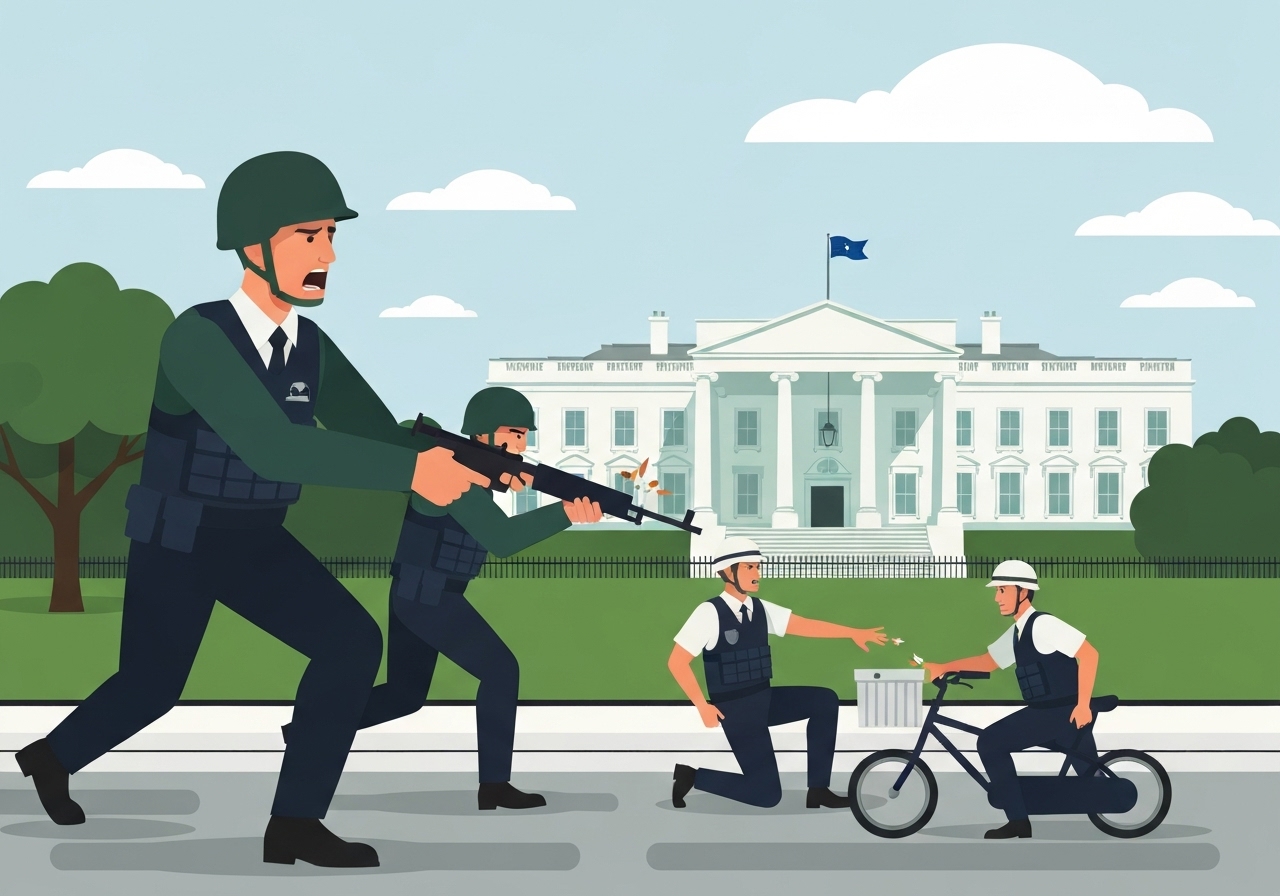
On 26 November 2025, two National Guard members were shot near Farragut Square in Washington, D.C., leaving both in critical condition and transforming a weekday downtown area into an active crime scene. The incident, outside Farragut North metro station on a Wednesday afternoon, triggered a rapid response from fellow guards, Metropolitan Police, and heavily armed Secret Service units that cordoned streets and restricted building access. City residents, office workers and political figures gathered in shock, while federal officials pledged a full investigation and additional troop deployments were ordered. The shooting sharpened debate about the presence of federal forces in the capital and raised concerns about public safety and civil-military boundaries.
Key Takeaways
- Two National Guard members were shot on 26 November 2025 near Farragut North metro station; both are reported in critical condition by local authorities.
- Responding units included fellow National Guard troops, D.C. police and heavily armed Secret Service personnel; streets around Farragut Square were cordoned off and a helicopter monitored the scene.
- Workers in nearby offices were temporarily barred from exiting to the square and directed to use rear entrances while the area was searched.
- Defense Secretary Pete Hegseth ordered 500 additional National Guard troops to Washington, D.C., at the request of the president, intensifying the federal presence.
- Local political figures and residents expressed shock and dismay, with some linking the deployment of federal forces to heightened tensions in the city.
Background
Farragut Square, a commercial and commuter hub near the White House, is ordinarily populated by office workers, coffee shops and lunchtime crowds; its name commemorates Civil War naval commander David Farragut. The square sits near key federal buildings and has been a focal point for both routine security operations and occasional protests, making any violent incident there particularly visible. Earlier in 2025 the federal government increased deployments of uniformed personnel to parts of Washington, citing a crime emergency; those deployments have been politically contentious and a subject of public debate. The city’s residents and activists have alternately described the presence of federal forces as necessary for security or as an intimidating occupation that risks escalating incidents rather than calming them.
The National Guard, when activated for domestic operations, typically operates alongside local law enforcement under state or federal orders; such deployments vary in size and span depending on perceived threats and political decisions. In this instance, officials say the guards were present as part of a broader federal response authorized earlier in the year. Historically, high-profile deployments to the capital have prompted legal and political scrutiny over command authority, rules of engagement and the potential for miscommunication between agencies. Those debates have framed public reaction to the shooting and the subsequent spike in troop numbers ordered by the Department of Defense.
Main Event
According to eyewitness accounts and reporting from the scene, the shooting occurred outside the entrance to Farragut North metro station on the afternoon of Wednesday, 26 November 2025. Within minutes the normally calm thoroughfare filled with flashing police and emergency lights as fellow guard members and law enforcement cordoned off adjacent streets. Office workers were told to remain inside or use alternative exits while officers and rescue teams canvassed the area and a law-enforcement helicopter hovered overhead. Video footage circulated on social media showing a heavy tactical presence and first responders assisting the wounded personnel.
Authorities have described the episode as a “targeted” incident in initial briefings, though officials did not publicly release a confirmed motive at the scene. FBI leadership vowed a comprehensive investigation, and agents were seen conducting forensic sweeps and collecting evidence from multiple locations around the square. Local leaders and residents gathered nearby, many speaking with reporters about a mix of anger, fear and bewilderment at violence in a central part of the city. The immediate focus for emergency services remained the condition of the two injured guards and securing perimeter evidence to identify the shooter or shooters responsible.
Within hours the Department of Defense, acting on a presidential request, announced the deployment of an additional 500 National Guard troops to the capital, a move that organizers and critics said would amplify existing tensions. Law-enforcement spokespeople emphasized that investigators were following all leads and that public safety remained the top priority. The scene gradually cleared as investigators completed on-site work, but the event left lasting disruption to commuter patterns and office operations across the downtown corridor.
Analysis & Implications
The shooting has immediate public-safety implications and broader political ramifications given the visible presence of federal troops in Washington. For residents and local officials, the incident crystallizes long-standing anxieties about militarized responses to urban policing challenges; critics argue that the deployment of uniformed federal personnel can provoke rather than deter violence. The decision to add 500 National Guard members will likely deepen those debates and may affect policing tactics, protest management and civilian trust in public institutions across the capital.
From a security perspective, the attack on uniformed personnel complicates operational planning and intelligence priorities—investigators must determine whether the shooting was opportunistic, targeted at the Guard because of their role, or linked to broader political motives. Each possibility would prompt different tactical and policy responses: a targeted political attack could trigger elevated protective measures, while a random criminal act would steer attention toward local crime prevention and community policing strategies. The investigation’s findings will therefore shape both immediate law-enforcement posture and longer-term discussions about force posture in the city.
Politically, the incident places elected officials in a difficult position: responding to public demand for safety without escalating federal militarization of public spaces. Municipal leaders have argued that the National Guard’s visible presence undermines civil liberties and local control, while federal officials maintain that the extra manpower is necessary to protect personnel and deter threats. How the city balances these competing claims in the coming weeks may influence national debates about the role of military forces in domestic law enforcement during periods of perceived civic unrest.
Comparison & Data
| Item | Detail |
|---|---|
| Date | 26 November 2025 (Wednesday) |
| Location | Farragut Square / Farragut North metro station, Washington, D.C. |
| Casualties | 2 National Guard members shot; reported in critical condition |
| Additional troops ordered | 500 National Guard personnel (ordered by Defense Secretary Pete Hegseth) |
The table summarizes confirmed facts reported by officials and eyewitnesses. While the number of additional troops—500—is an explicit figure cited by the Defense Department, other metrics such as total deployed force size before this order and long-term operational plans remain subject to official updates. This snapshot is intended to provide context for how the event altered security posture in a defined timeframe.
Reactions & Quotes
Local political figures and residents expressed a mix of sorrow and frustration at the scene, often linking the shooting to the broader controversy over federal deployments.
“If I’m completely honest, we’ve been expecting this. It hurts me to the core.”
Gary Goodweather, mayoral candidate and former National Guard captain
Federal law-enforcement officials focused public remarks on the investigative response and the status of the injured guards.
“We will run down every single lead, every piece of evidence.”
Kash Patel, FBI director
Residents who rushed to the square described confusion and anger at what some called an occupying presence of federal agents in everyday civic spaces.
“This is just awful,”
Jesse Lovell, local resident and editor
Unconfirmed
- No official motive has been publicly verified; investigators have not released conclusive evidence tying the shooting to any political or ideological group.
- The identity and number of suspects have not been confirmed; officials have not named an arrest or published suspect descriptions at the time of reporting.
- Claims that the presence of federal troops directly provoked the shooting remain unproven and are under investigation.
Bottom Line
The shooting of two National Guard members near the White House on 26 November 2025 is a serious and evolving incident that has both immediate operational consequences and broader political implications. In the short term, law enforcement and federal agencies are focused on identifying suspects, securing evidence and stabilizing public safety around a sensitive federal district. The decision to augment the capital with 500 additional guards will reverberate in local politics and public discourse, likely intensifying debates over the militarization of civic space and the limits of federal intervention in urban policing.
For residents and city leaders, the priority will be ensuring transparent, accountable investigations while managing public concern about safety and civil liberties. Observers should watch for official investigative findings, any changes in troop posture, and municipal-federal negotiations over the presence and rules governing uniformed forces in the capital. Those developments will determine whether this incident becomes a catalyst for policy change or a flashpoint in an ongoing national debate over security and governance.
Sources
- The Guardian (news report)