
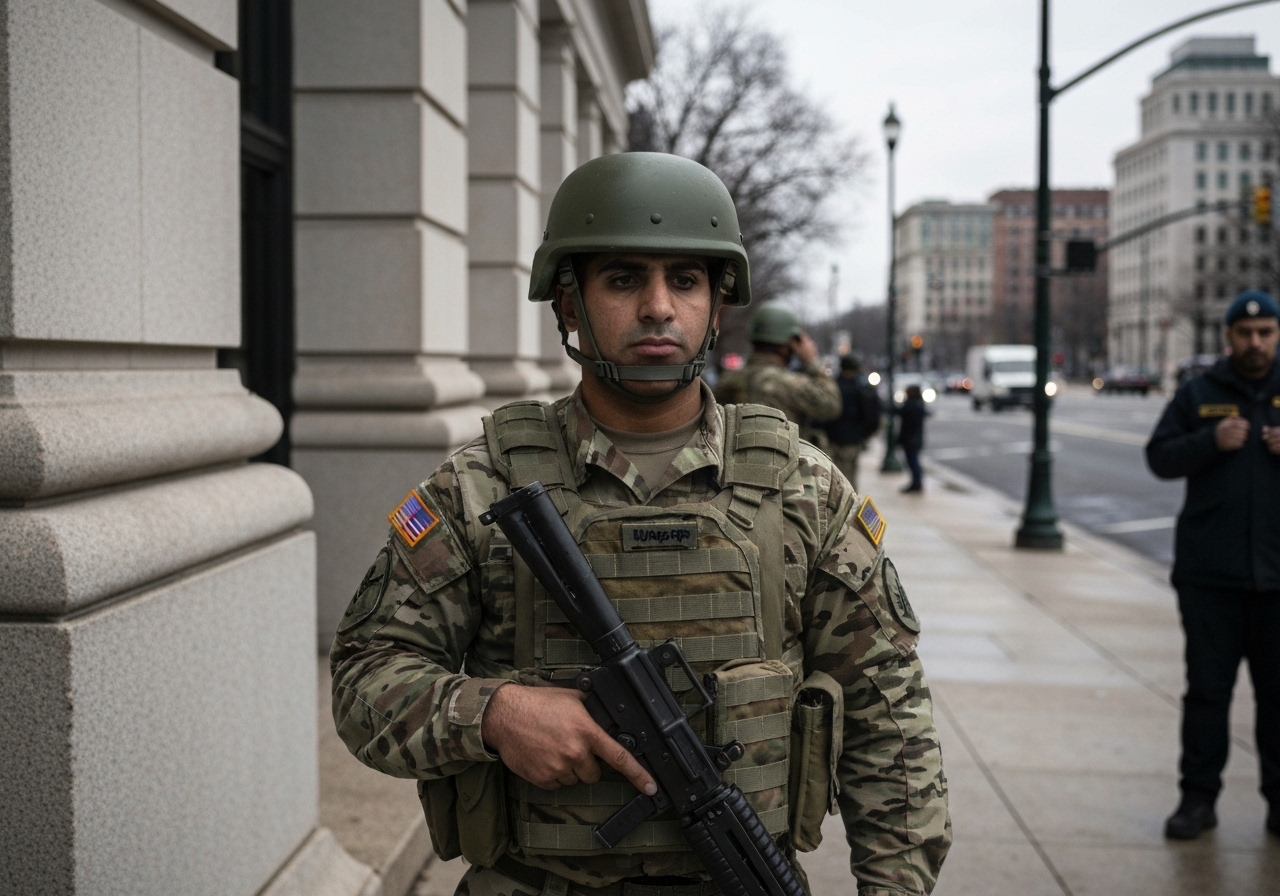
Lead: Staff Sgt. Andrew Wolfe, a 24-year-old National Guard member wounded in the Nov. 26 shooting near the White House that killed Spc. Sarah Beckstrom, is “slowly healing,” West Virginia Gov. Patrick Morrisey said Friday. Wolfe suffered a head wound and was initially reported in critical condition; his family says he is beginning to look more like himself. The two Guards members had been deployed to Washington, D.C., under an order to assist with crime-fighting in the capital. Authorities say the suspect, Afghan national Rahmanullah Lakanwal, was also shot and faces multiple felony charges.
Key Takeaways
- Victim status: Staff Sgt. Andrew Wolfe, 24, remains under medical care; doctors expect two to three more weeks of acute treatment, per his family and Gov. Morrisey.
- Fatality: Spc. Sarah Beckstrom, 20, was killed in the Nov. 26 shooting near the White House.
- Suspect: Rahmanullah Lakanwal, an Afghan national shot during the incident, has been charged with first-degree murder and multiple firearms and violent-crime counts.
- Court status: Lakanwal pleaded not guilty and made a virtual court appearance from a hospital bed on Tuesday.
- Deployment context: The Guards members were deployed to D.C. under a Trump administration order to bolster public safety operations in the capital.
- Community response: A vigil for Wolfe was expected at Musselman High School in Inwood, West Virginia, his alma mater.
Background
The shooting occurred on Nov. 26 on a public street in Washington, D.C., resulting in one death and multiple injuries. The two National Guard members had been part of a deployment ordered earlier by the Trump administration to assist local authorities with rising concerns over crime in the capital. Deployments of National Guard personnel to U.S. cities for public-safety support have been politically contentious in recent years, drawing scrutiny over roles, rules of engagement and supervision.
Staff Sgt. Andrew Wolfe and Spc. Sarah Beckstrom were among several Guard members sent to the city; Beckstrom, 20, was killed at the scene and Wolfe sustained a head injury. The incident prompted rapid law-enforcement response and hospital transport for those wounded, and it triggered both local and national attention because of the location and the involvement of uniformed Guard personnel. Officials have emphasized an ongoing investigation while criminal charges proceed against the suspect.
Main Event
On Nov. 26, a person identified by authorities as Rahmanullah Lakanwal opened fire on a Washington street, striking multiple people including the two National Guard members. Beckstrom was killed in the attack; Wolfe was found with a head wound and taken to medical care in critical condition. Law enforcement shot and injured the suspect during the confrontation, and he was hospitalized.
Prosecutors later charged Lakanwal with first-degree murder, assault with intent to kill while armed, possession of a firearm and possession of a firearm during a crime of violence. During a virtual court session on Tuesday, he entered not guilty pleas to all counts while appearing from a hospital bed. Authorities have not disclosed a public motive in charging documents made available to media.
Gov. Patrick Morrisey provided a brief status update on Wolfe on Friday, saying the soldier’s parents reported their son is recovering and may need weeks of acute care before further rehabilitation. A vigil for Wolfe at Musselman High School in Inwood, West Virginia was expected the same day, according to the governor. Local and federal agencies continue to coordinate the investigation and court procedures while the injured and bereaved families receive support.
Analysis & Implications
The event underscores the risks faced by National Guard personnel when deployed in law-enforcement support roles, particularly in densely populated urban environments. Deployments ordered for crime-fighting place uniformed service members in proximity to potential violent confrontations, complicating rules of engagement and medical-response planning. Policymakers and military leaders may face renewed pressure to clarify mission scope, protective equipment, and command relationships when Guard troops operate alongside civilian police.
Legally, the charges against the suspect are severe and include first-degree murder and multiple firearms offenses, opening a pathway to protracted pretrial litigation and possible federal review depending on jurisdictional decisions. The defendant’s hospitalization and not-guilty pleas mean courts must balance the defendant’s medical status with speedy-trial considerations. That process will shape victims’ families’ access to closure and public understanding of accountability.
Politically, the presence of National Guard members in Washington under a prior presidential order has been politicized, and the incident may become part of debates about domestic deployment of military personnel. Local communities in West Virginia, including Wolfe’s hometown and Musselman High School, are mobilizing memorials and support, which may influence how state officials communicate about care and compensation for wounded Guardsmen and families of the deceased.
Comparison & Data
| Subject | Age | Status | Legal action |
|---|---|---|---|
| Andrew Wolfe | 24 | Wounded; recovering | Victim |
| Sarah Beckstrom | 20 | Killed | Victim |
| Rahmanullah Lakanwal | Not reported | Wounded; hospitalized | Charged; pleaded not guilty |
The table summarizes the key people, ages and legal status known publicly as of the latest update. Data come from statements by West Virginia’s governor and court records reported by news outlets. Differences in reported ages and medical status underscore the importance of relying on official family statements and court filings for final verification.
Reactions & Quotes
“His head wound is slowly healing,”
Gov. Patrick Morrisey (statement citing Wolfe’s parents)
Gov. Morrisey relayed the family’s assessment during a public update Friday, noting the parents’ optimism about their son’s physical recovery and the expectation of weeks of acute care ahead.
“He’s beginning to look more like himself,”
Wolfe’s parents (quoted by Gov. Morrisey)
The family comment was provided to the governor and shared publicly to convey the soldier’s gradual improvement after initial reports that his condition had been critical.
“[Wolfe] was in very bad shape,”
Former President Donald Trump (earlier public remark)
That earlier remark reflected the initial, urgent reports about Wolfe’s condition in the hours after the shooting; subsequent updates from family and state officials have described slow but observable recovery.
Unconfirmed
- No publicly released motive has been confirmed for the suspect’s actions; prosecutors have not provided a definitive motive in court filings available to the press.
- Reports on the exact timeline of medical transfers and specific hospital treating Wolfe have not been independently verified beyond family and governor statements.
Bottom Line
The shooting on Nov. 26 left one National Guard member dead and another gravely wounded; Staff Sgt. Andrew Wolfe is now described by his family as slowly recovering but likely to need additional weeks of acute care. The suspect faces serious criminal charges and has pleaded not guilty, while legal and medical developments will determine the pace of prosecution and recovery.
Beyond the immediate human tragedy, the case raises practical and policy questions about the deployment of National Guard personnel for domestic public-safety missions, the protections they receive, and how communities support service members and families in the aftermath. Observers should watch for court schedules, medical-status updates from family or official channels, and any formal statements clarifying operational lessons from the incident.
Sources
- NBC News (news report summarizing governor and family statements)