
Lead
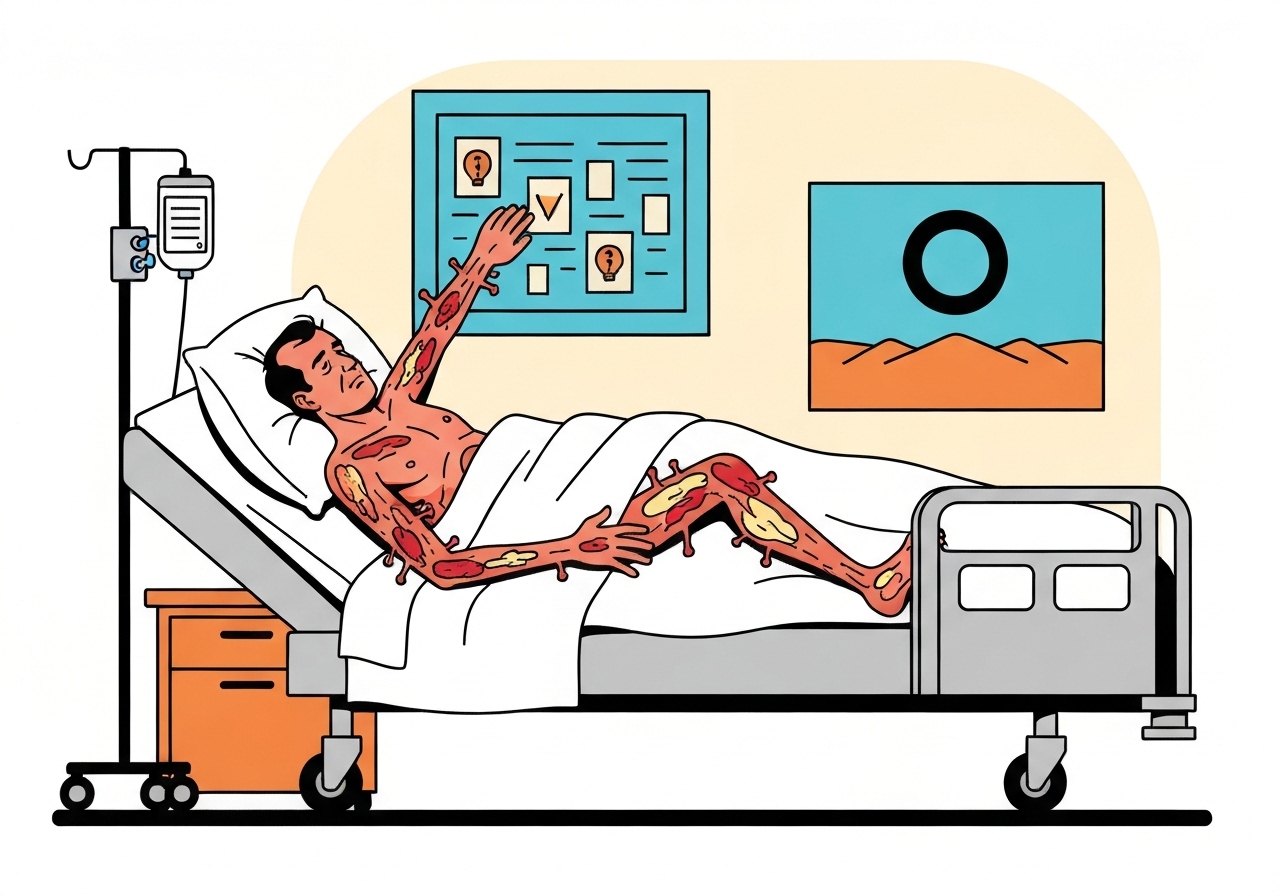
Peter Atkinson, 49, a towing-company owner from North Wales, Pennsylvania, has been hospitalized at Doylestown Hospital since Dec. 19 after physicians diagnosed him with necrotizing fasciitis. The infection progressed to sepsis and acute kidney failure; he is currently on dialysis and remains in inpatient care. Family members and treating clinicians say rapid intervention and emergency surgery were critical to stabilizing him. A community fundraiser has raised roughly $13,000 to help cover the family’s immediate needs while he recovers.
Key Takeaways
- Admission date: Atkinson was admitted to Doylestown Hospital on Dec. 19 after symptoms began earlier that week.
- Diagnosis: Doctors identified necrotizing fasciitis, a rapidly progressing soft-tissue infection, which required emergency surgery and intubation.
- Acute complications: The infection advanced to sepsis and led to kidney failure; he is currently receiving dialysis.
- Clinical turn: Family members report Atkinson showed signs of improvement around Dec. 25 following surgery and intensive care.
- Economic impact: Atkinson owns a towing business and is unable to work for the foreseeable future; a fundraising page has collected about $13,000 so far.
- Family context: The case has heightened family trauma — the Atkinsons lost a sister to sepsis in 2016, a parallel that relatives say has intensified concern.
Background
Necrotizing fasciitis is an uncommon but severe bacterial infection that destroys soft tissue and fascia. Though rare in the general population, it progresses quickly and often requires immediate surgical debridement, broad-spectrum antibiotics, and critical-care support. Rapid identification and operative management substantially influence survival and limb-sparing outcomes, which puts pressure on emergency departments and surgical teams to act decisively when the diagnosis is suspected. In community settings, business owners and working-age adults are not immune; delays in seeking care because symptoms mimic less serious illnesses — such as influenza — can permit the infection to advance.
Sepsis, a systemic inflammatory response to infection, remains a leading cause of in-hospital mortality and can precipitate multi-organ dysfunction, including acute kidney injury requiring dialysis. Families often face simultaneous medical and financial strain when a sole earner is critically ill, prompting local fundraising and community aid. Earlier local cases and national guidance emphasize that outcomes vary widely and depend on comorbidities, time to treatment, and the infecting organism.
Main Event
According to family accounts, Atkinson initially experienced flu-like symptoms and developed a high fever peaking near 104 degrees Fahrenheit before seeking care. He reported noticing a palpable mass in his chest area; clinicians at Doylestown Hospital rapidly evaluated him and determined the infection was severe. Within minutes of assessment, caregivers advised emergency surgery and proceeded with intubation to protect his airway and permit operative intervention.
Postoperatively, Atkinson developed sepsis, which compromised his kidneys and necessitated dialysis. Family members say clinicians attributed his survival to the hospital’s swift response and aggressive care. Around Dec. 25 relatives observed early clinical improvement, though he has required ongoing critical-care therapies and close monitoring since admission.
The illness has left Atkinson unable to work; his towing company operations are on hold while he remains hospitalized and undergoing additional procedures. To offset mounting expenses and lost income, friends and neighbors organized a fundraiser that has raised approximately $13,000. The family expects Atkinson to have further interventions and to be transferred to a rehabilitation facility for continued recovery when medically appropriate.
Analysis & Implications
Clinically, this case underscores how quickly necrotizing soft-tissue infections can escalate from nonspecific symptoms to life-threatening systemic disease. Early recognition by emergency staff and timely surgical debridement are repeatedly associated with better survival; conversely, diagnostic delay increases the risk of extensive tissue loss, prolonged critical care, and organ failure. The reported timeline here—presentation with high fever followed by immediate surgical action—aligns with best-practice responses that prioritize rapid source control.
From a public-health and community perspective, a working-age small-business owner losing income during prolonged hospitalization highlights the secondary social costs of severe infections. Families often depend on emergency fundraising and short-term community support, which fills gaps left by insurance limitations or lost wages but is an imperfect safety net for extended recovery. Local economic ripple effects can include temporary business closures, reduced household earnings, and increased reliance on social supports.
Health systems must balance acute surgical capacity, intensive-care staffing, and post-acute rehabilitation resources to manage severe infection surges, even when cases are sporadic. For the patient, the trajectory will depend on organ recovery (notably renal function), infection control, and physical rehabilitation; many survivors require weeks to months of follow-up care. Policymakers and hospital leaders may use such cases to review pathways for rapid identification of necrotizing infections and to strengthen community education about seeking prompt medical evaluation for rapidly worsening symptoms.
Comparison & Data
| Date | Event |
|---|---|
| Mid-December | Initial flu-like symptoms and fever; chest-area mass noticed |
| Dec. 19 | Admitted to Doylestown Hospital; diagnosed with necrotizing fasciitis; emergency surgery performed |
| Dec. 25 | Family reports early signs of clinical improvement |
| Late December – ongoing | Developed sepsis and kidney failure; on dialysis; additional procedure planned; expected transfer to rehab |
The table above distills the reported clinical timeline and immediate outcomes. It does not substitute for a full medical record review but provides a concise sequence for readers tracking the case and its implications for care and community support.
Reactions & Quotes
“Without the hospital’s rapid care, I likely would not have survived,” Atkinson said, crediting clinical staff for the immediate intervention that followed his admission.
Peter Atkinson, patient (paraphrased)
Atkinson’s sister characterized the episode as deeply traumatic, noting the family’s prior loss in 2016 to sepsis and how that history has magnified concern and grief.
Marietta Atkinson, sister (paraphrased)
His wife described him as a resilient, hands-on provider and said watching him critically ill has been emotionally devastating for the family while they focus on his recovery.
Sherri Paulson-Atkinson, spouse (paraphrased)
Unconfirmed
- The precise source or entry point of the infection has not been publicly confirmed by clinicians.
- Long-term renal prognosis and whether Atkinson will need permanent dialysis remain uncertain at this stage.
- The final total of funds raised and the family’s out-of-pocket medical expenses were reported as approximate and may change.
Bottom Line
This case illustrates how a rare but severe infection can rapidly incapacitate an otherwise active adult and create simultaneous medical and economic crises for a family. Rapid hospital action appears to have been decisive in stabilizing the patient, but he faces continued treatment, dialysis, and rehabilitation before returning to work. Community fundraising has provided immediate relief, highlighting the role of local networks when prolonged recovery and lost earnings intersect.
Clinicians, public-health officials, and community leaders should view the episode as a reminder: prompt evaluation of high fevers and unusual localized pain can be lifesaving. Observers should watch for updates on Atkinson’s renal recovery, the planned additional procedure, and his transfer to a rehabilitation facility as indicators of medium-term prognosis.
Sources
- WPVI-TV report (local television news)
- CDC: Necrotizing Fasciitis overview (U.S. public health agency)