
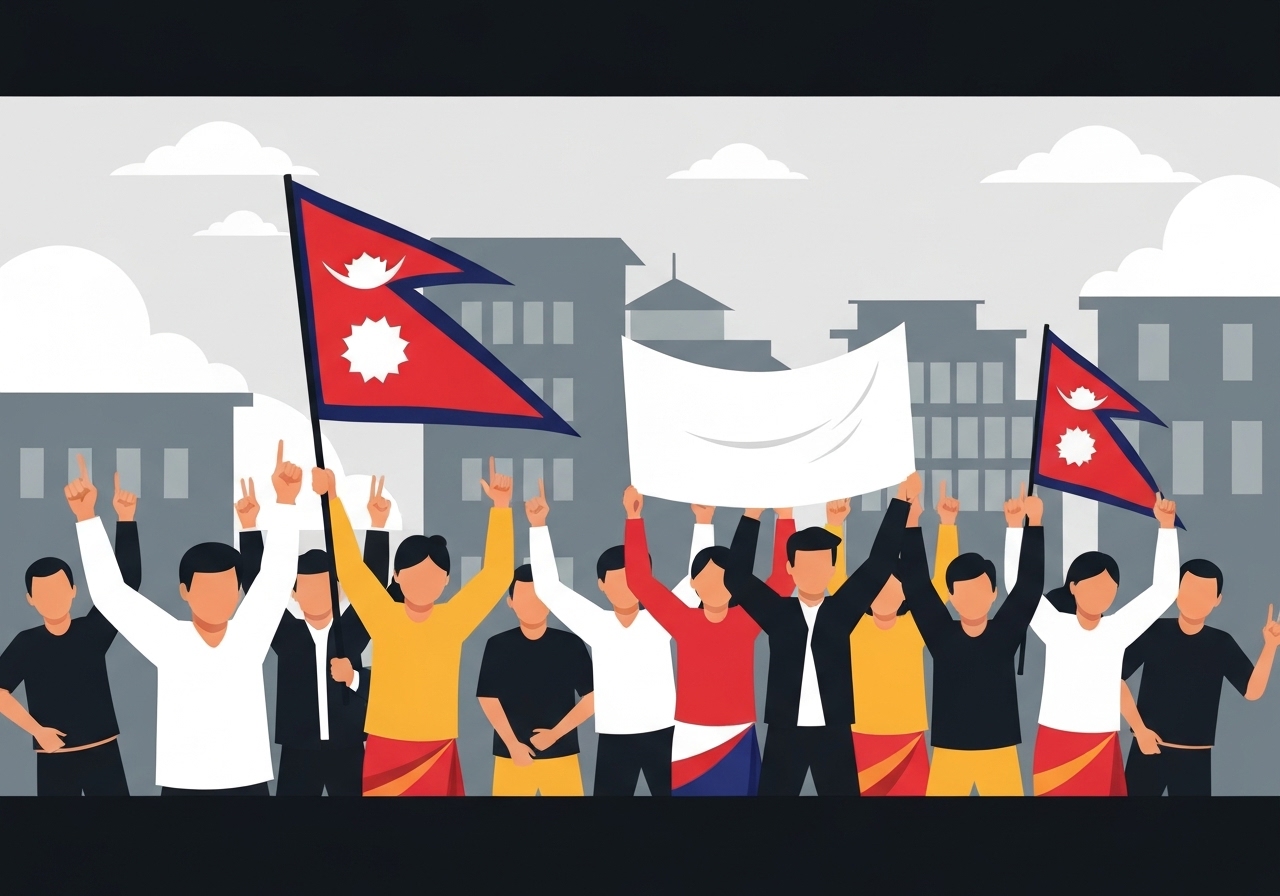
Lead: Anti-corruption demonstrators in Nepal defied an imposed curfew on 9 September 2025 as authorities announced the lifting of a temporary social media ban. The protests, reported by Reuters on 2025-09-09, centered on calls for accountability from public officials. Security measures including a curfew were introduced earlier in the day; the government subsequently said it would end the internet restrictions. The immediate result was a tense but largely non‑escalatory stand-off between demonstrators and security personnel.
Key Takeaways
- On 9 September 2025 protesters continued anti‑corruption rallies in Nepal despite an official curfew, Reuters reported.
- The government imposed restrictions on social media earlier in the day and announced those restrictions were lifted the same day.
- Authorities deployed security forces to enforce the curfew; public reports on arrests and injuries remain limited and partially unverified.
- Demonstrators demanded greater accountability from political leaders and transparency in governance, according to on‑the‑ground reporting.
- The episode prompted both domestic criticism about restrictions on speech and international attention to Nepal’s handling of civic protest.
Background
Nepal has a recent history of civic mobilization over governance and corruption, with citizens periodically organizing street protests and digital campaigns to press demands on public officials. Governments in Kathmandu have at times used temporary restrictions, including curfews and communication limits, to manage large demonstrations or perceived threats to public order. Social media has been a prominent space for organizing and public debate in Nepal, raising tensions when access is restricted during political events.
International human rights and press‑freedom groups routinely monitor such measures because of their effect on information flow and assembly rights. Political fault lines in Nepal often overlap with regional, party, and institutional rivalries, making mass protests both a barometer of public discontent and a catalyst for short‑term instability. The balance between maintaining public order and protecting civil liberties remains a central policy challenge for Nepalese authorities.
Main Event
On 9 September 2025 authorities announced a curfew aimed at limiting public gatherings during an anti‑corruption demonstration. Despite the order, sizable groups of protesters gathered, signaling a willingness to defy restrictions to press their demands. The government concurrently enacted temporary limits on social media access; officials framed the move as necessary to prevent misinformation and maintain public order.
By later that day the government announced it had lifted the social media restrictions. The decision to rescind the ban was presented by officials as a measure to reduce tensions and restore normal communications. Observers on the ground described a standoff atmosphere: large crowds vocal but largely non‑violent, and visible security deployments intended to deter escalation.
Independent reporting on the number of participants, arrests, or injuries was limited at the time of publication. Local journalists and human rights groups called for restraint from both demonstrators and security forces and urged transparent reporting on any detentions or use of force. The government’s rapid reversal of the social media ban drew attention from civil society as a partial concession to public pressure.
Analysis & Implications
Politically, the protests underscore continuing popular frustration with perceived corruption and a demand for stronger accountability mechanisms. For the government, the event poses a governance dilemma: heavy‑handed controls can suppress immediate unrest but risk domestic and international criticism if perceived as disproportionate. Conversely, swift rollbacks of restrictions may calm tensions but leave underlying grievances unresolved.
Economically, repeated episodes of unrest and ad hoc communication restrictions can damage investor confidence and disrupt daily commerce, particularly for sectors reliant on digital platforms. Even short social media outages have measurable costs for small businesses and service providers that depend on online platforms for transactions and customer outreach.
On the rights front, the incident will likely renew scrutiny from rights organizations over the legal thresholds for imposing curfews and internet restrictions. If similar measures become recurrent, they could prompt legal challenges and calls for clearer, court‑reviewable standards. Regionally, Nepal’s response will be watched by neighboring governments balancing order and rights in a politically active environment.
Comparison & Data
| Action | Date | Immediate outcome |
|---|---|---|
| Curfew imposed | 9 September 2025 | Protesters continued to gather despite restriction |
| Social media ban lifted | 9 September 2025 | Communication channels restored same day |
The table summarizes the sequence of official measures and immediate outcomes reported on 9 September 2025. While the timeline shows a rapid imposition and reversal of communication restrictions, comprehensive data on participant counts, detentions, or subsequent legal actions were not available at the time of reporting.
Reactions & Quotes
Below are representative statements recorded or reported around the events, with context for each.
“We have lifted the temporary restrictions to ease tensions and restore access to information,”
Government spokesperson (official statement)
Government sources framed the lift of the social media ban as a step to reduce friction; officials stressed the measure was temporary and tied to public‑order concerns.
“People are demanding accountability and will continue to press for transparency,”
Anti‑corruption protester (participant)
Protesters emphasized calls for institutional reform rather than violence; organizers said continued mobilization aimed to keep pressure on political leaders.
“Restrictions on communication should meet strict legal tests and be narrowly tailored,”
Human rights monitor (civil society organization)
Rights groups urged post‑event review of the restrictions and transparent reporting on any use of force or detentions during the curfew period.
Unconfirmed
- Precise count of protest participants across Nepal remains unverified by independent sources.
- Comprehensive figures for arrests or injuries during the curfew period have not been confirmed.
- The full legal basis and internal rationale for the initial social media restrictions have not been published in detail.
Bottom Line
The 9 September 2025 protests in Nepal highlight a volatile mix of popular demand for anti‑corruption action and state efforts to maintain public order. The government’s decision to lift social media restrictions the same day tempered immediate communication concerns but did not resolve the underlying political grievances driving the demonstrations.
Going forward, transparency about any enforcement actions, clear legal justification for emergency measures, and substantive steps toward accountability will determine whether tensions ease or recur. Observers and stakeholders will be watching whether authorities pursue dialogue and institutional remedies or revert to episodic restrictions that risk broader mistrust.
Sources
- Reuters — (news agency): initial reporting on the events of 9 September 2025