
Lead
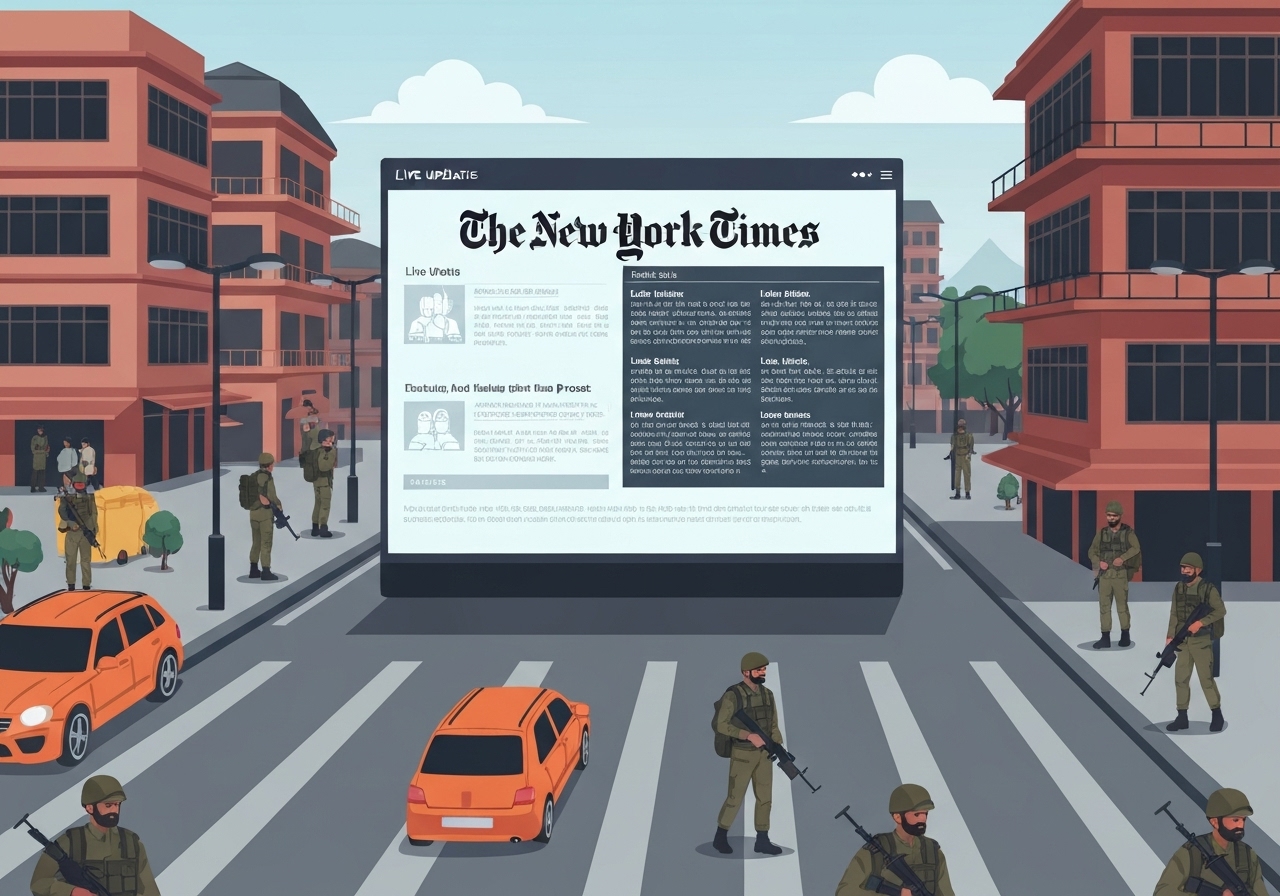
On Wednesday morning, Nepal was under a nationwide curfew and Kathmandu’s streets lay largely empty after two days of violent antigovernment clashes that left at least 22 people dead. Troops and heavily armed police were deployed across the capital after protesters set fire to the Parliament, the Supreme Court and several government offices. The government reversed a ban on 26 social media platforms and Prime Minister K.P. Sharma Oli resigned, but uncertainty remains about who controls security operations and what protest leaders now demand. International rights bodies have called for investigations into the use of lethal force.
Key Takeaways
- At least 22 people were reported killed after security forces used live ammunition, rubber bullets and water cannon during protests that began Monday; hundreds were injured.
- The government briefly blocked 26 social media platforms, then reversed the ban on Tuesday amid mass demonstrations led largely by young Nepalis.
- Prime Minister K.P. Sharma Oli and some cabinet ministers resigned on Tuesday, leaving a leadership vacuum as fires damaged Parliament and the Supreme Court.
- Tribhuvan International Airport in Kathmandu was closed indefinitely after smoke and clashes made runway operations unsafe, halting domestic and international flights.
- Major media outlets, including two digital editions run by Kantipur Media Group, suspended publication after their offices were burned and servers destroyed.
- The Nepal Army announced it would assume responsibility for law and order starting 10 p.m. Tuesday and ordered civilians to surrender any looted military equipment.
- Remittances totaled about $11 billion in 2024, more than 26 percent of GDP, underscoring economic pressures that fuelled the unrest.
Background
Nepal’s unrest this week followed a sudden government order to block access to 26 social media platforms, a move that sparked large street demonstrations among young people already angry about corruption, inequality and unemployment. Social-media posts under the hashtag #nepokids circulated widely in the weeks before the protests, circulating images—some of uncertain provenance—purporting to show the privileged lifestyles of politicians’ children and amplifying public resentment. The social media restrictions were reversed on Tuesday, but the rollback came too late to avert the escalation.
Since the end of the civil war in 2006 and the abolition of the monarchy in 2008, Nepal has struggled with fragile coalition politics and recurring corruption scandals. The country has cycled through short-lived governments and lingering doubts about institutional accountability for both civilian leaders and security forces. Those long-term governance deficits sit alongside a persistent jobs crisis: the National Statistics Office recorded a 12.6 percent unemployment rate in 2024, while more than 741,000 Nepalis left the country that year to work abroad.
Main Event
Violence peaked on Monday, when security forces confronted demonstrators with live rounds, rubber bullets and water cannon, according to multiple accounts. Protesters—many identifying themselves as Gen Z activists—responded by storming and setting fire to the Parliament complex and other government buildings on Tuesday, witnesses and photographs showed. The Parliament’s roof reportedly collapsed and large sections of the complex were charred; images also documented damage to the Supreme Court and several municipal offices.
As fires burned and smoke drifted over central Kathmandu, the Nepal Army issued a public order directing citizens to hand over any weapons or military equipment allegedly looted during protests and warned of legal consequences for civilian possession of arms. By early Wednesday, troops and police were patrolling major thoroughfares and encircling groups of remaining demonstrators under a nationwide curfew meant to restore order.
The government announced the reinstatement of access to social platforms on Tuesday, and Prime Minister K.P. Sharma Oli submitted his resignation that same day. Despite those moves, it remained unclear which institutions or leaders were exercising effective control over security forces and how protesters’ demands—some calling for early elections under an interim government—would be addressed.
Analysis & Implications
The immediate implication is domestic instability: the loss of life, physical damage to national institutions and a vacated premiership create a fragile opening for both negotiation and further confrontation. If the military or police act again with lethal force, international scrutiny and potential diplomatic consequences could intensify, especially given Nepal’s role as a major contributor to U.N. peacekeeping missions.
Economically, the unrest threatens already fragile livelihoods. Remittances—about $11 billion in 2024 and more than a quarter of GDP—are a lifeline for many families; disruptions at Tribhuvan International Airport and broader instability could impede those flows and aggravate supply-chain and service disruptions in Kathmandu. Prolonged instability would also deter investment and tourism at a time when Nepal’s economy relies heavily on cross-border labor and external earnings.
Politically, the protests expose a generational split and deepen distrust in traditional parties. The #nepokids narrative has crystallized public perceptions of elite capture, while the short tenure and rotating leadership among top parties have left citizens skeptical that routine political fixes will address structural corruption and youth unemployment. For protesters, the symbolic acts—burning Parliament and the Supreme Court—express a demand for more than personnel changes; they signal a demand for institutional accountability.
Comparison & Data
| Indicator | Recent figure |
|---|---|
| Reported deaths in unrest | 22+ |
| Unemployment rate (2024, National Statistics Office) | 12.6% |
| Remittances (2024) | $11 billion (>26% of GDP) |
| People who left Nepal in 2024 (to work abroad) | ~741,000 |
| Social media platforms briefly banned | 26 platforms |
The table above highlights structural pressures that predate the immediate protests: joblessness, heavy dependence on remittances and perceptions of elite enrichment. Those chronic conditions help explain why a digital censorship move quickly escalated into mass street action and widespread property damage.
Reactions & Quotes
International organizations and rights groups documented shock and called for prompt, independent investigations into the killings and the use of force.
“We are shocked by reports of killings and call for an immediate, impartial investigation into the deaths.”
United Nations human rights office (statement)
The Nepal Army framed its intervention as a step to restore order and protect property, while warning civilians against armed possession.
“The army will take necessary action to protect public and private property and ensure safety across the country.”
Nepal Army (official statement)
Human Rights Watch linked accountability failures to potential international consequences, including re-evaluation of security co-operation and peacekeeping roles.
“If Nepali authorities do not act, the country’s participation in international operations should be reconsidered.”
Human Rights Watch (Meenakshi Ganguly)
Unconfirmed
- Leadership structure: It remains unconfirmed which individuals or groups are speaking for the protest movement or who will negotiate on its behalf.
- Authenticity of images: Some viral #nepokids images have not been independently verified and may be doctored or misattributed.
- Chain of command: Reports differ about whether the army fully coordinated with civilian authorities before assuming responsibility for law and order; full details are not yet confirmed.
Bottom Line
Nepal’s current crisis is both immediate and structural: a short-term trigger—a sweeping social-media ban—touched off a broader reckoning over corruption, unemployment and elite privilege. The resignation of Prime Minister K.P. Sharma Oli and the reversal of the ban have not resolved deeper governance issues or restored public confidence in security institutions.
What matters next is whether Nepali authorities will permit an independent investigation into the killings, open credible talks with demonstrators, and outline a clear, enforceable plan to address corruption and youth jobs. International observers and rights groups will be watching the security forces closely; any renewed lethal action risks further domestic turmoil and diplomatic fallout.
Sources
- The New York Times (live updates; international press)
- Office of the United Nations High Commissioner for Human Rights (official press releases)
- Human Rights Watch (international NGO; rights reporting)
- Civil Aviation Authority of Nepal (official statement on flight operations)
- The Kathmandu Post / Kantipur Media Group (local media)