
Lead
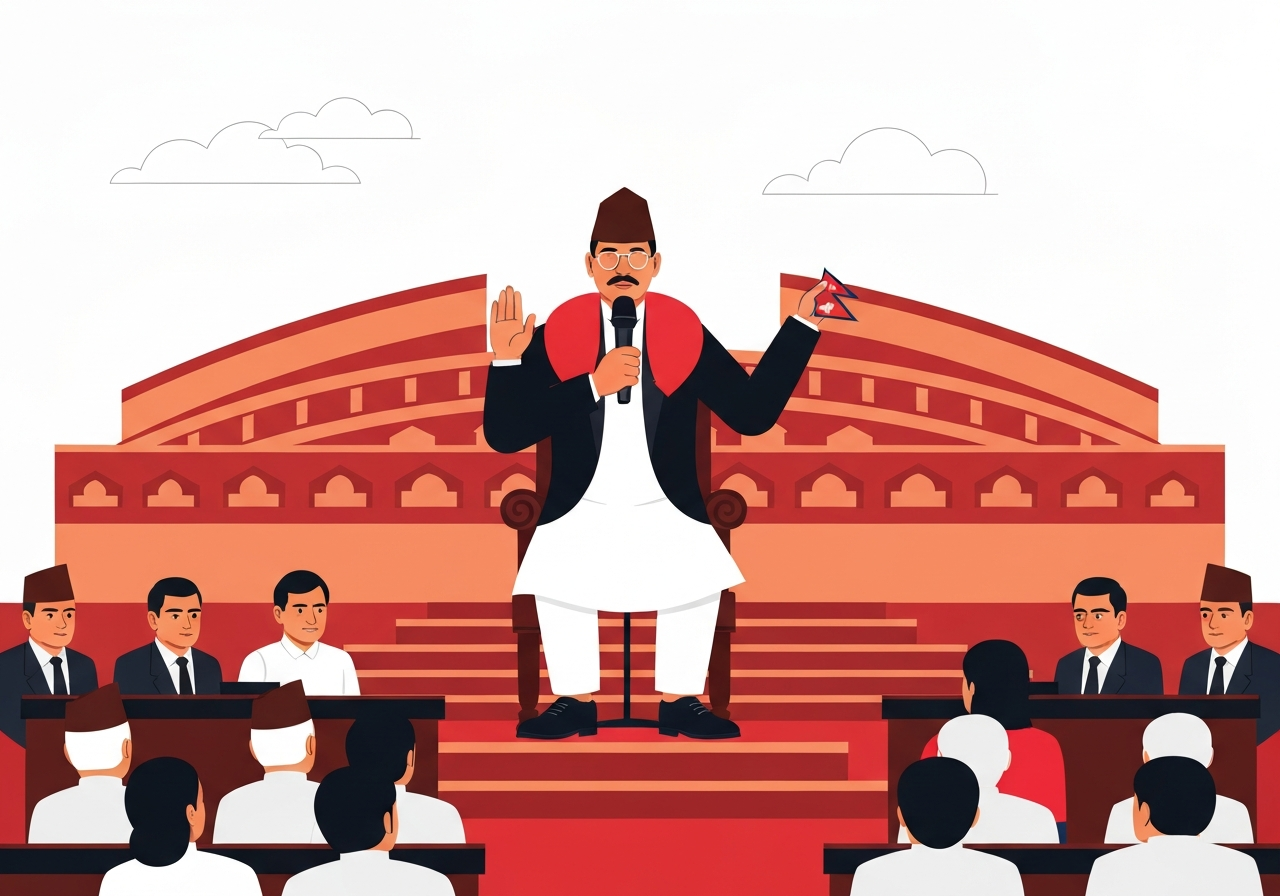
Balendra Shah, a 35-year-old former underground rapper known as Balen, was sworn in as Nepal’s prime minister after the Rastriya Swatantra Party (RSP) delivered a landslide win in the general elections held on 5 March. His ascent follows last year’s youth-led protests — in which 77 people died — and reflects widespread voter frustration with corruption, nepotism and entrenched elites. Shah campaigned on an anti-corruption platform, promising judiciary reform and 1.2 million new jobs, and has said he wants a different style of leadership. He takes office with high public expectations but faces questions about his party’s governing experience and how it will respond to domestic and international pressures.
Key Takeaways
- Balendra Shah (age 35) was sworn in as prime minister after the Rastriya Swatantra Party swept the 5 March general elections across Nepal.
- Shah rose from Kathmandu’s underground rap scene to national politics; one campaign song drew more than two million views within hours and his earlier track Balidan has 14 million YouTube views.
- He served three years as Kathmandu mayor, winning the 2022 race by a large margin as an independent and later joining the four-year-old RSP as its premier candidate.
- Shah campaigned on anti-corruption, judiciary reforms and creating 1.2 million jobs; those pledges are central to public expectations but lack detailed implementation plans.
- His mayoral tenure included a controversial drive to remove illegal buildings and to clear streets, prompting criticism from rights groups over heavy-handed policing.
- Last September’s protests, which were sparked by a social media ban and broader grievances, adopted Shah’s song Nepal Haseko as an anthem; 77 people died during that unrest.
- Shah unseated former prime minister KP Sharma Oli in the Jhapa 5 constituency, overturning a longtime political stronghold.
- The new government will inherit regional pressures including the Middle East conflict affecting Nepali migrant workers, persistent unemployment and a fragile domestic economy.
Background
Balendra Shah was born in 1990 in Naradevi, Kathmandu, the youngest child in a family where his father practiced Ayurveda and his mother managed the household. He earned engineering degrees in Kathmandu and later in Karnataka, India, before gaining national prominence in 2013 after winning a widely watched rap battle. His music focused on corruption, inequality and the frustrations of younger Nepalis, and his public persona — square black sunglasses and dark blazer — became instantly recognisable.
Shah transitioned from music to civic politics, winning Kathmandu’s mayoralty in 2022 as an independent candidate, campaigning on cleaning up the city and cracking down on illegal construction. His mayoral policies included aggressive street-clearance operations that reduced congestion but provoked pushback from street vendors and residents of informal settlements. Those actions drew criticism from rights groups yet also bolstered his image among voters seeking visible results.
The Rastriya Swatantra Party is a relatively new political force created roughly four years ago. The party and Shah tapped into a wider wave of discontent that culminated in the youth-led protests last year, when demonstrators mobilised against social-media restrictions, corruption, and stagnating opportunity. The protests left deep political scars: 77 people were recorded dead during the unrest, and subsequent public inquiries have intensified scrutiny of the former administration.
Main Event
On 5 March the RSP swept national polls, with Balendra Shah as its prime-ministerial candidate; the party’s performance disrupted Nepal’s traditional party hierarchy. Shah’s campaign was notable for its relative absence from conventional media interviews: he relied heavily on social media outreach and music to communicate his message. His online material — including a celebratory track released shortly before taking office — resonated strongly with young voters and was widely shared.
In the constituency of Jhapa 5, Shah defeated former prime minister KP Sharma Oli, overturning a seat long considered Oli’s stronghold. That victory was both symbolic and practical: it signalled a willingness among voters to replace entrenched leaders with newcomers promising accountability. Shah’s public messaging emphasized change, national unity and ending elite impunity, themes that matched the mood of the protests and the electorate at large.
As he assumed office, Shah faced immediate questions about how the RSP would convert campaign pledges into policy. Key priorities stated during the campaign include an anti-corruption drive, reforms to the judiciary and creation of 1.2 million jobs. Observers note that the party’s limited time in government raises implementation risks and leaves policy detail thin in several areas.
Human Rights Watch and other organisations have flagged concerns about Shah’s past use of police powers while mayor, particularly in the forceful removal of street vendors and unlicensed businesses. Rights groups urge the new administration to balance order with rights protections and to pursue reforms within clear legal frameworks. The incoming government also faces international and regional pressures, notably the economic fallout from conflicts in the Middle East where many Nepalis work abroad.
Analysis & Implications
Shah’s rise embodies a broader generational shift in Nepali politics: voters are rewarding personalities perceived as outsiders who promise swift change. That dynamic can accelerate reforms, but it can also produce governance gaps if institutions and policy design lag behind public expectations. The RSP’s victory offers an opening to challenge patronage networks, but systemic anti-corruption measures require sustained institutional capacity, judicial independence and transparent enforcement.
Economically, Shah inherits persistent unemployment and reliance on remittances from migrant workers in the Middle East and elsewhere. The pledge to create 1.2 million jobs is politically powerful but technically demanding; it will require fiscal space, private-sector incentives, vocational training and structural reforms to translate into real employment gains. Failure to deliver tangible jobs could erode popular support quickly.
On rights and rule of law, critics point to the mayoral-era street clearances and police deployments as warning signs. Transitioning from a results-driven, hands-on leadership style to one that respects procedural safeguards will be central to maintaining domestic legitimacy and international partnerships. Donor countries and multilateral institutions are likely to scrutinise both human-rights practices and economic policy credibility in the months ahead.
Regionally, Nepal must navigate relations with India and China while protecting migrant-worker interests in the Middle East. An outspoken social-media post by Shah last November — later deleted — that named international actors drew attention to the delicate diplomatic posture the government must adopt. Managing foreign policy pragmatically, while addressing domestic economic vulnerabilities, will be a difficult early test.
Comparison & Data
| Year / Date | Event | Outcome |
|---|---|---|
| 2013 | Rap battle victory | National recognition in music scene |
| 2022 | Kathmandu mayoral election | Won by a landslide as independent |
| 5 March (this year) | General elections | RSP swept polls; Shah sworn in as PM |
The table places Shah’s public milestones in sequence: cultural breakthrough in 2013, municipal executive experience from 2022, and national office following the 5 March elections. While popular support has been measurable through viral content (a campaign track exceeded two million views within hours and Balidan has 14 million YouTube views), concrete electoral vote totals and seat-by-seat margins will determine the RSP’s legislative room to manoeuvre.
Reactions & Quotes
“Undivided Nepali, this time history is being made.”
Balendra Shah (campaign song)
This lyric was widely circulated as a rallying call during the campaign and was used extensively during last September’s protests.
“We hope as prime minister, there would be a focus on a more rules-based order.”
Meenakshi Ganguly, Deputy Asia Director, Human Rights Watch
Human Rights Watch framed its comment around concerns from Shah’s mayoral actions and urged stronger protections for civil liberties as the new government assumes authority.
Unconfirmed
- Precise vote counts and seat margins for the RSP in the 5 March elections remain to be published in full detail by the election commission.
- How the RSP plans to implement the commission’s recommendation to prosecute ex-prime minister KP Sharma Oli has not been made public and is subject to legal and parliamentary procedures.
- Details about budgetary sources and specific programs to deliver 1.2 million jobs have not been disclosed and remain without independent verification.
Bottom Line
Balendra Shah’s elevation from rapper and city mayor to prime minister signals a significant political realignment in Nepal, driven by youth frustration and demand for accountability. His popularity and the RSP’s clean sweep provide a mandate for change, but translating popularity into effective governance will require building policy detail, administrative capacity and legal safeguards.
Early indicators to watch include the new cabinet’s composition, concrete anti-corruption measures with timelines, judicial reform steps and any legislation or funding proposals aimed at job creation. The government’s handling of human-rights concerns, the commission’s recommendations on the uprising, and diplomatic management of migrant-worker issues will shape whether this political shift yields sustainable reform or short-lived optimism.