
Lead
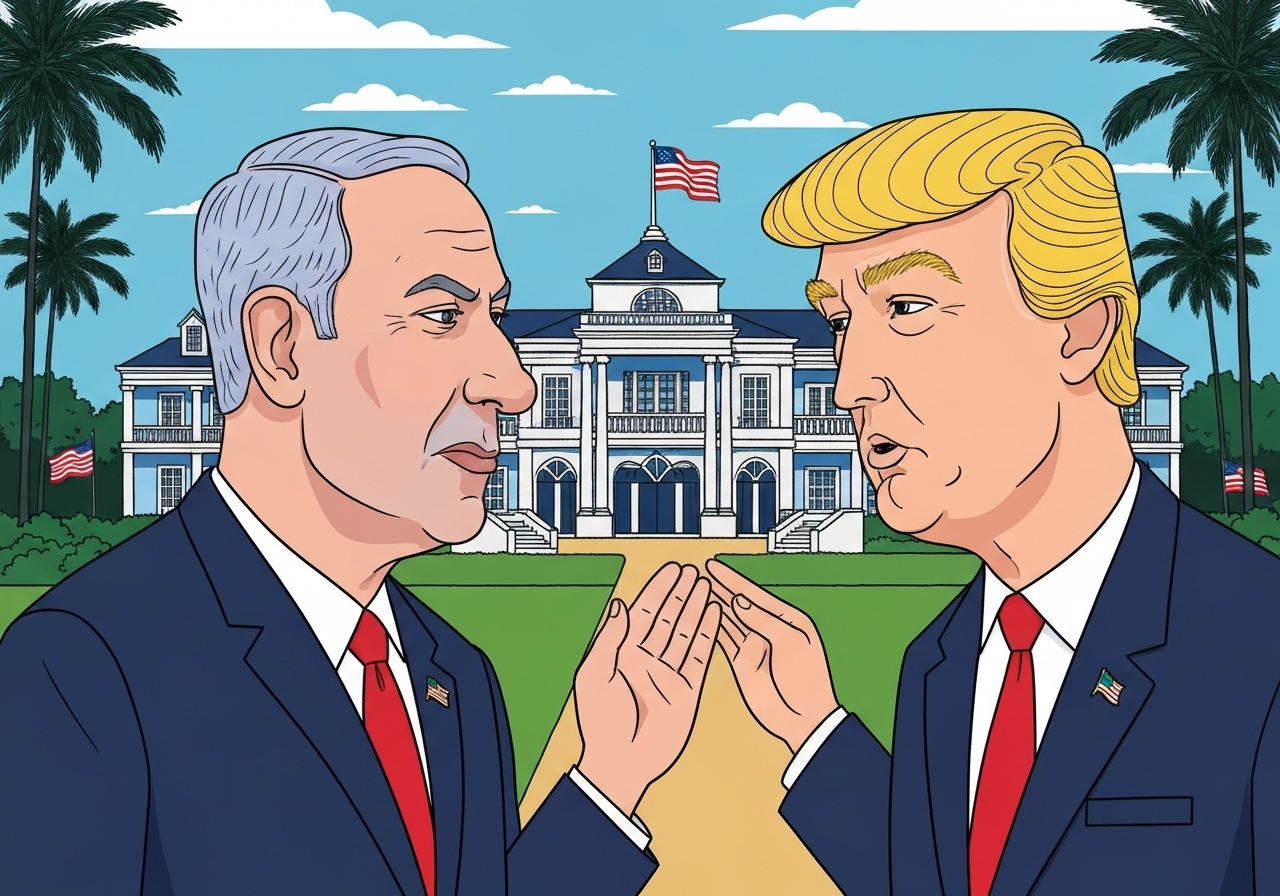
When Israeli Prime Minister Benjamin Netanyahu meets US President Donald Trump at Mar-a-Lago this week, the encounter serves as more than a diplomatic reunion: it is the opening public moment of Netanyahu’s 2026 reelection campaign. Israel is officially set to hold elections in October 2026, though political crises — including an ultra-Orthodox conscription standoff and a March 2026 budget deadline — could force an earlier vote. Netanyahu’s long-standing coalition has survived major shocks, from the 2023 judicial overhaul protests to the October 7, 2023, Hamas attack that killed over 1,200 Israelis and the war that followed. The prime minister appears to be banking on close alignment with Trump to reshape public perceptions ahead of the ballot.
Key Takeaways
- Netanyahu’s Mar-a-Lago meeting is being positioned as the launch of his 2026 reelection effort, with the US president playing a prominent, public role.
- Israel’s next general election is scheduled for October 2026, but pressure from the ultra-Orthodox conscription crisis and a March 2026 budget deadline could prompt early elections.
- Netanyahu’s current coalition has lasted through 18 years of his premierships and has outlasted every Israeli government in the last six years despite deep political turmoil.
- Polling since October 2023 places his coalition between 49 and 54 Knesset seats, short of the 61-seat majority required to govern.
- A September 2025 Gallup survey found 76% Israeli approval for US leadership versus 40% for Israel’s government leadership, highlighting the political value of a Trump endorsement.
- Past precedents include Trump’s recognition of the Golan Heights (2019), a 2020 peace plan and the Abraham Accords, all leveraged for political symbolism.
- Key policy levers Netanyahu might tout include expanded normalization deals, a revived Abraham Accords agenda, and security guarantees against Iran and Hezbollah.
- Major challenges persist: Gaza’s fragile ceasefire, reluctant Arab partners on normalization, and Iran’s continuing nuclear and missile activity.
Background
Benjamin Netanyahu has steered Israel through repeated crises and multiple terms as prime minister, accumulating 18 years at the center of Israeli politics across different premierships. His tenure has encompassed polarizing domestic reforms, most notably the 2023 judicial overhaul that provoked nationwide protests, and the October 7, 2023, Hamas attack that resulted in more than 1,200 Israeli deaths and triggered a prolonged and costly war.
Those events have left Israel politically fractured and diplomatically strained, but they have not forced Netanyahu from office. His coalition has proven durable compared with the rapid turnover of governments in the prior six years, and he has used the extra time to emphasize deterrence and regional deals as central achievements. Still, recurring opinion polls since October 2023 show his coalition short of the 61-seat Knesset majority needed to govern, leaving electoral math a constant concern.
Main Event
This week’s Mar-a-Lago meeting is staged at a moment when Netanyahu needs a visible narrative pivot. Israeli and Republican strategists view a high-profile public rapport with President Trump as a way to shift discourse from past security failures to diplomatic wins and future promises. Senior campaign advisers within Likud reportedly already plan to emphasize Trump-era symbolism in posters and events, recalling 2019-2020 tactics that featured the two leaders together.
The partnership has historical markers: Trump’s 2019 recognition of Israeli sovereignty over the Golan Heights, a 2020 peace plan, and his role in catalyzing the Abraham Accords. Most recently, Trump publicly urged Israeli leaders to pardon Netanyahu during an October address to the Knesset tied to the Gaza ceasefire, a gesture that Likud incorporated into its political messaging and that preceded Netanyahu’s formal clemency request.
Netanyahu’s team appears to be aiming for a twofold strategy: use Trump’s popularity in Israel to shift voter attention away from October 7’s security lapse, and promise large diplomatic spectacles — Saudi normalization, broader Abraham Accords expansion, and securitized guarantees against Iran — that align with Trump’s stated goals. Likud sources say discussions have already taken place about hosting President Trump in Israel during the campaign, signaling a coordinated playbook.
Domestically, Netanyahu must balance right-wing coalition constraints, particularly around Gaza and territorial concessions. Several Israeli sources indicate he may seek authorization for one more military operation inside Gaza to placate coalition partners before advancing ceasefire phases that Trump is pushing to accelerate. That bargaining reflects a frequent Netanyahu approach of trading movement on one front for concessions on another.
Analysis & Implications
Politically, the Mar-a-Lago meeting is designed to import US presidential attention into Israeli domestic politics at a time when Netanyahu’s popularity is vulnerable. The 76% approval rating for US leadership in a September 2025 Gallup poll contrasts starkly with the Israeli government’s 40% approval, suggesting that visible US support can sway public sentiment. Campaign strategists expect Trump’s visibility — tweets, speeches, visits — to dominate headlines and refocus debate onto foreign policy achievements rather than past security failures.
Strategically, Netanyahu is betting that diplomatic theater will translate into electoral advantage. He can promise sweeping regional deals while leaning on Trump’s brand as a dealmaker and peace-broker. But the substantive barriers are significant: Saudi normalization remains distant, many Arab governments remain cautious about rapid tie-ups, and the Gaza ceasefire lacks an international force or credible plan for Hamas disarmament.
Security-wise, the two leaders share objectives but diverge in tactics. Israel prioritizes clear buffers against Iran, Syria and Hezbollah, while the Trump administration emphasizes diplomatic normalization and a high-profile peace narrative. Any linkage package that ties Gaza progress to US backing on actions against Iran or Lebanon could entangle Israel in broader regional calculations and heighten risk if guarantees are not delivered.
Electoral history cautions restraint: in 2019–2021, Trump-backed visibility helped Netanyahu avoid immediate defeats but did not secure a stable governing coalition and preceded repeated elections. That pattern suggests that while presidential backing is a valuable asset, it is not a guaranteed path to a governing majority in Israel’s proportional system.
Comparison & Data
| Measure | Value |
|---|---|
| Knesset majority required | 61 seats |
| Recent coalition polling range | 49–54 seats |
| Gallup Sept 2025: US leadership approval in Israel | 76% |
| Gallup Sept 2025: Israeli government approval | 40% |
| October 7, 2023 casualties | over 1,200 Israelis killed |
The table shows the core political arithmetic Netanyahu must confront: his coalition’s polling deficit versus the parliamentary majority needed to govern. The Gallup numbers underline why a US endorsement is politically potent in Israel, while the casualty figure and ongoing war context explain why national security narrative dominates voter concerns.
Reactions & Quotes
Israeli strategists and officials offered immediate interpretations of the visit’s intent and limits.
The US president is going to be central – if not the lead – in Netanyahu’s reelection strategy.
Nadav Shtrauchler, political strategist (former Netanyahu adviser)
White House messaging framed the meeting as part of sustained US support for Israel and for a regionally oriented peace plan.
Israel has had no better friend in its history than President Trump. We continue to work closely with our ally Israel to implement the President’s 20 Point Plan for Peace.
Anna Kelly, White House Deputy Press Secretary
A former Israeli official highlighted the limits posed by external partners and coalition politics.
Jared Kushner and other figures around the president, as well as Gulf partners, are frustrated with delays on the ceasefire plan and wary of moves that could destabilize regional stability.
Former Israeli official (anonymized)
Unconfirmed
- Reports that Trump will appear on campaign posters in Israel for 2026 are based on Likud planning sources but are not officially confirmed by the prime minister’s office.
- Claims that Netanyahu has secured a formal US pledge for military action against Iran in exchange for Gaza concessions remain unverified and are not confirmed by official statements.
- Suggestions that Saudi Arabia will imminently normalize ties with Israel during the campaign are speculative and not supported by an announced bilateral agreement.
Bottom Line
Netanyahu’s Mar-a-Lago visit functions as a deliberate opening gambit in a reelection campaign that depends heavily on reframing recent history and courting international attention. Trump’s public support offers potent political capital in Israel, where US leadership retains high popular approval, but that capital must be converted into parliamentary arithmetic — a far more difficult task given current polling shortfalls and coalition constraints.
Substantive breakthroughs that Netanyahu can credibly promise — Saudi normalization, robust disarmament in Gaza, or decisive action against Iran — face significant diplomatic and operational hurdles. For now, the meeting’s immediate payoff is likely political visibility rather than guaranteed votes; whether that visibility translates into a governing majority will depend on developments at home and in the region between now and the ballot.
Sources
- CNN — International news report on the Mar-a-Lago meeting and political context (news)
- Gallup — September 2025 polling on Israeli attitudes toward US and Israeli leadership (polling institute)
- The Times of Israel — reporting on Israeli coalition dynamics and conscription debates (media)