
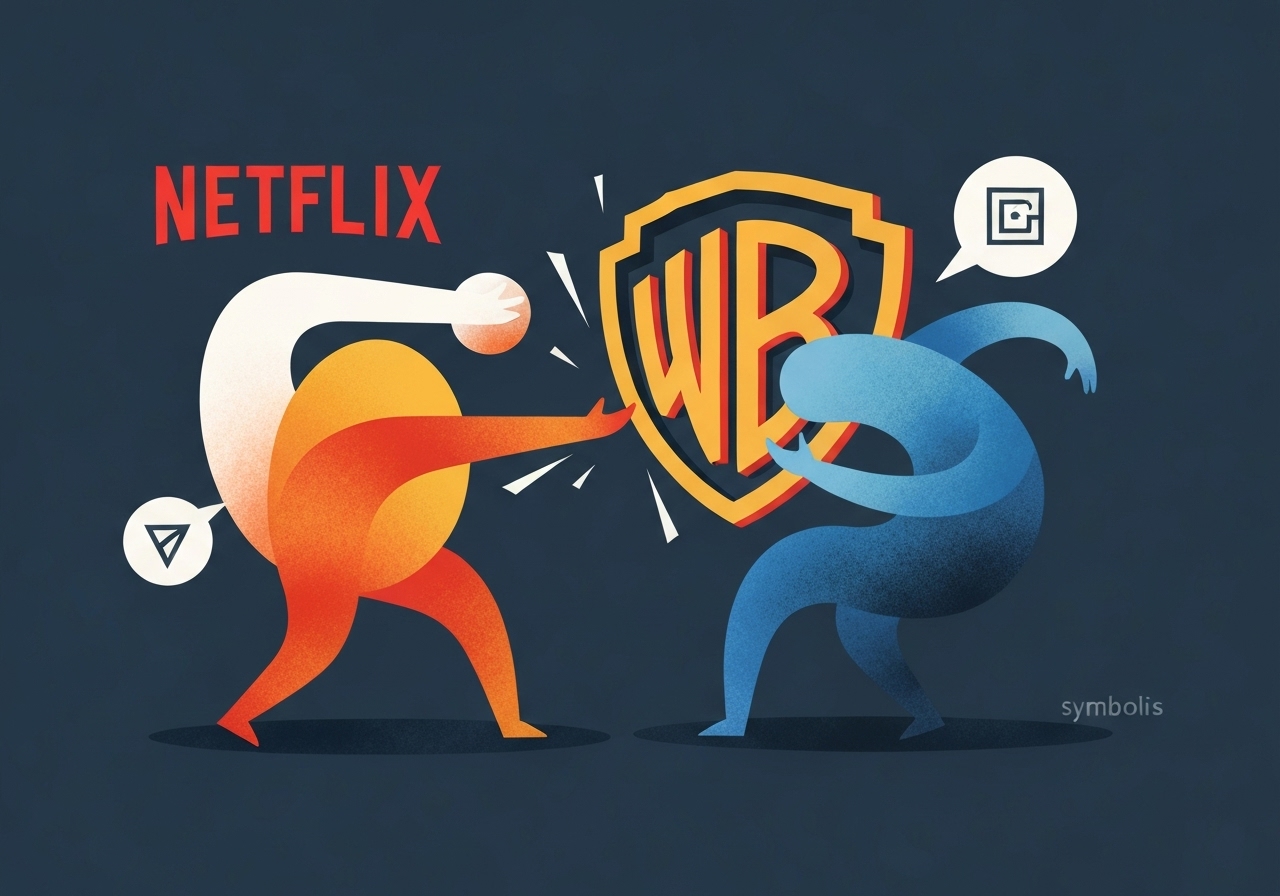
Netflix’s announced $82.6 billion bid for Warner Bros. crystallizes a tense turning point for Hollywood: a tech streaming giant seeking full control of a legacy studio. On TechCrunch’s Equity podcast on Dec. 14, 2025, hosts Kirsten Korosec and Anthony discussed what the offer means for Netflix, Warner Bros., rival suitors and the broader entertainment economy. The conversation surfaced immediate questions about regulatory approval, Paramount’s competing hostile bid and whether Warner Bros. can remain independent. Regardless of the final outcome, the deal underscores accelerating consolidation and a fresh balance-of-power between Big Tech and traditional media.
Key Takeaways
- Deal value: Netflix has proposed an $82.6 billion purchase of Warner Bros., a move that would rank among the largest media acquisitions in recent years.
- Competitive pressure: Paramount has lodged a hostile rival bid, forcing Warner Bros. to evaluate multiple acquisition proposals and making independence unlikely.
- Analyst uncertainty: Netflix executives faced questions from Wall Street analysts after the announcement about whether scale justifies the price and how integration would affect margins.
- Stakeholder concern: Unions and theater owners have publicly expressed worry about the transaction’s impact on jobs, theatrical windows and bargaining leverage.
- Strategic rationale: Netflix would gain a deep library, theatrical assets and non-streaming businesses (theme parks, licensing), expanding beyond its direct-to-consumer core.
- Regulatory risk: The size and scope of the deal make antitrust scrutiny a realistic near-term obstacle in multiple jurisdictions.
- Industry trend: The bid follows earlier consolidation such as the Warner–Discovery combination and joins a sequence of large media deals reshaping content ownership.
Background
The bid arrives after decades of transformation in how audiences consume film and television. Netflix began as a DVD-by-mail service and grew into a streaming pioneer; its evolution has been both celebrated and questioned as it moved into original programming and global markets. Legacy studios, meanwhile, faced pressure from tech platforms as subscriber-driven models and direct distribution upended traditional windows and advertising-dependent revenue streams.
Warner Bros. itself has not been immune to restructuring: the company’s assets were consolidated with Discovery to form Warner Bros. Discovery, and the industry has seen repeat waves of mergers and spin-offs. That history has left stakeholders—shareholders, unions, theater chains and regulators—sensitive to further ownership shifts that could concentrate decision-making and revenue streams under fewer corporate umbrellas.
Main Event
The discussion on Equity distilled both symbolic and concrete elements of the Netflix proposal. Kirsten noted the cultural irony that Netflix, once a small DVD service, is now bidding for a pillar of Hollywood; Anthony framed the offer as a culmination of Netflix’s long march from outsider to dominant buyer. Their exchange highlighted that even if the deal is consummated, the work of integrating studios, creative units and theatrical operations remains vast and costly.
After the announcement, Netflix hosted an analyst call where executives outlined integration intentions but met persistent skepticism about execution risk and financial justification for the $82.6 billion price tag. Analysts asked whether Netflix would meaningfully grow subscription revenue or profit margins by absorbing Warner Bros., given the studio’s exposure to theatrical and non-streaming activities.
Paramount’s hostile bid has further complicated matters. Its offer has effectively put Warner Bros. under pressure to weigh alternatives, making a prolonged sale process likely. At the same time, labor organizations and theater owners signaled concern that consolidation could erode bargaining power and accelerate content strategies that deprioritize cinemas.
Analysis & Implications
Strategically, Netflix stands to win immediate advantages: an expansive content library, deeper film-production capabilities and diversified revenue lines beyond subscriptions. Ownership of Warner Bros.’ IP could lower licensing costs, increase internal content supply and enhance franchise monetization across streaming, theatrical, and ancillary businesses. For Netflix, scale may also create leverage in negotiating with talent and distributors.
However, substantial risks accompany those potential upsides. Integrating a company with entrenched theatrical, theme-park and licensing operations requires different management expertise and capital allocation than running a pure-play streamer. Netflix would inherit liabilities and cyclical revenue tied to box office performance, and it may need to sustain legacy businesses that generate uneven returns.
Regulatory scrutiny is a material uncertainty. Antitrust authorities worldwide are attentive to deals that concentrate cultural gatekeepers and could condition or block transactions that threaten competition in content production, distribution or licensing. Even absent a prohibitive ruling, regulatory review could impose divestitures or behavioral remedies that alter the economics of the purchase.
Industry-wide, the transaction reinforces a consolidation trajectory: fewer owners control more of the content pipeline, which can squeeze independent producers and alter negotiation dynamics with creators and cinemas. This concentration could accelerate vertical integration—combining content creation with distribution platforms—and reshape how audiences access films and series around the world.
Comparison & Data
| Deal | Value | Year |
|---|---|---|
| Netflix – Warner Bros. | $82.6 billion | 2025 |
| AT&T – Time Warner | $85.4 billion | 2018 |
| Disney – 21st Century Fox (assets) | $71.3 billion | 2017 |
Placed alongside recent headline transactions, Netflix’s bid is among the largest media deals of this era but not unprecedented in scale. The table shows how major vertical integrations have reshaped ownership of studios and distribution channels over the past decade. Size alone does not determine success: integration quality, regulatory outcomes and shifts in consumer behavior after closing will determine long-term value.
Reactions & Quotes
Kirsten set the cultural frame on the podcast before the analysts’ call: her concise question captured widespread astonishment at the company’s arc.
“Is it too big of a risk?”
Kirsten Korosec, Equity podcast host
Anthony emphasized the symbolic sweep of the moment and the practical questions it raises for Hollywood’s future.
“This is where the upstart has eaten Hollywood.”
Anthony, Equity podcast host
Those short observations were echoed by industry stakeholders: labor groups warned of job and bargaining impacts, while some investors said they needed clearer earnings projections to justify the price. Theater owners stressed concerns about theatrical windows and revenue sharing if studios consolidate under streaming-first owners.
Unconfirmed
- Regulatory outcome: timing and final decisions by antitrust authorities remain unknown and could alter or block the transaction.
- Paramount’s bid fate: it is not yet confirmed whether Paramount’s hostile offer will succeed or be outbid in a prolonged process.
- Integration specifics: Netflix has outlined general intentions but has not released a detailed, binding plan for handling theatrical, theme-park or third-party licensing operations.
Bottom Line
The Netflix bid for Warner Bros. is both a symbolic milestone and a high-stakes strategic wager. If approved and well integrated, it could accelerate Netflix’s transformation into a diversified media conglomerate with deeper IP control and expanded revenue streams. If integration falters or regulators impose significant conditions, Netflix could face heavy costs with limited upside.
For the industry, the transaction signals that the line between technology platforms and legacy studios is blurring further—and that consolidation will remain a central dynamic shaping creative incentives, distribution practices and labor relations. Watch for regulatory signals, the outcome of competing bids and the first public financial forecasts that quantify the deal’s effect on subscriber growth and profitability.