
Lead
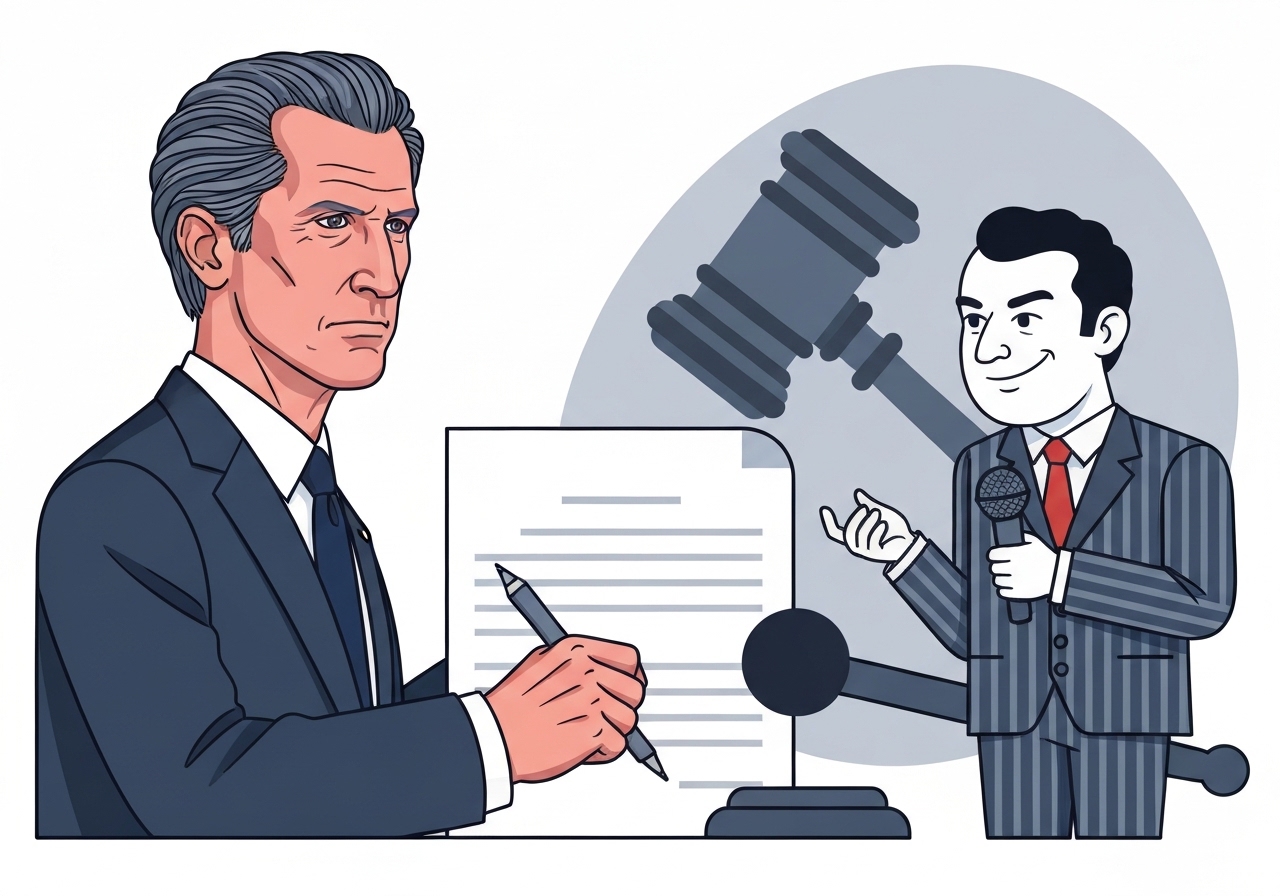
California Governor Gavin Newsom has asked federal civil‑rights authorities to investigate Centers for Medicare and Medicaid Services (CMS) Administrator Dr. Mehmet Oz after a social‑media video in Los Angeles that Newsom’s office says singled out Armenian Americans. The complaint, filed Thursday, contends Oz made racially charged, baseless allegations tying hospice and home‑care fraud—which Oz estimated at roughly $3.5 billion in the city—to an alleged “Russian Armenian mafia.” Newsom’s submission says the remarks chilled community participation in public programs and have already harmed a family bakery featured in the clip.
Key Takeaways
- Governor Gavin Newsom filed a civil‑rights complaint Thursday alleging Dr. Mehmet Oz targeted Armenians in a Los Angeles video and demanded a federal probe.
- Oz, who serves as CMS administrator, posted footage near a Van Nuys bakery and asserted about $3.5 billion in hospice/home‑care fraud in the city, linking part of it to a “Russian Armenian mafia.”
- Newsom’s office says the comments have caused concrete harm, citing reduced business at an Armenian bakery shown in the video.
- Oz pointed to a four‑block area he said contains 42 hospices and referenced a business tied to a $16 million fraud scheme; he has not publicly released supporting documentation for his broader $3.5 billion figure.
- California has taken regulatory action: Gov. Newsom signed a 2021 law freezing new hospice licenses, revoked more than 280 licenses, and has roughly 300 providers under review.
- Armenian‑American leaders, including the Armenian National Committee of America, criticized Oz’s remarks as stereotyping and scapegoating a long‑established community of more than 200,000 people in Los Angeles County.
- The episode is the latest flashpoint between Newsom and the Trump administration amid a broader federal effort to spotlight alleged fraud across U.S. social services.
Background
Dr. Mehmet Oz, appointed by the federal administration as the head of CMS, has been participating in a public campaign the White House and federal officials describe as an effort to highlight fraud in Medicare, hospice and home‑care programs nationwide. That campaign has included high‑profile publicity and targeted visits to neighborhoods where officials say irregular provider patterns appear. Critics say some federal actions in other cases—such as aggressive enforcement tied to day‑care fraud in Minneapolis—have prompted community backlash and civil‑rights concerns.
In California, state officials have been investigating hospice fraud for several years. Lawmakers passed a 2021 measure that paused issuing new hospice licenses in response to suspected abuse, and Newsom’s office says more than 280 hospice licenses have been revoked while about 300 additional providers are under review. State regulators stress efforts have focused on protecting patients and public funds while enforcing compliance.
Main Event
The immediate dispute began when Oz posted a video in Van Nuys, Los Angeles, standing in front of a bakery and other storefronts with Armenian script. In the clip he accused local operators of participating in extensive hospice and home‑care fraud, saying roughly $3.5 billion in abuse had occurred in the city and that “quite a bit of it” was run by what he called the “Russian Armenian mafia.”
Newsom’s complaint says those characterizations amounted to racially charged, baseless allegations that could deter Armenian Americans from enrolling in or providing hospice and home‑care services. The governor’s filing cites concrete economic harm, pointing to a family‑owned bakery shown in the video whose business reportedly fell after the post.
Oz responded on X by accusing Newsom of deflection and saying the problem of fraud is not isolated to California; he also stressed Medicare is a federal program. He has not published the primary evidence underpinning the $3.5 billion figure, and the video’s claims about concentrated provider clusters and criminal networks have not been independently documented in full.
Analysis & Implications
The complaint elevates the dispute from a political spat to a question of civil‑rights enforcement: public officials may have a duty to avoid statements that target protected groups and risk suppressing participation in federally funded programs. If federal civil‑rights or discrimination investigations proceed, they will need to determine whether Oz’s remarks meet the legal threshold for discriminatory conduct or a pattern of official intimidation.
Politically, the episode deepens an already fraught relationship between Newsom and the Trump administration. Newsom is widely viewed as a potential 2028 Democratic presidential contender, and this confrontation dovetails with broader tensions over federal intervention in California policy areas—from deployments of the National Guard to disputes over regulatory authority.
From a regulatory perspective, the state’s prior actions—revoking more than 280 licenses and reviewing hundreds more—show California has pursued enforcement. But the controversy highlights a tradeoff: aggressive public naming of communities or business clusters without transparent evidence can undermine enforcement legitimacy and risk civic harm, especially in communities with recent immigration histories or long‑standing minority status.
Comparison & Data
| Item | Count / Note |
|---|---|
| Alleged total local fraud cited by Oz | $3.5 billion (Oz claim; documentation not released) |
| Hospices in Oz’s cited four‑block area | 42 (as stated in video) |
| Revoked California hospice licenses | More than 280 (state figure) |
| Hospices under state review | About 300 (state figure) |
| Business tied to a specific scheme mentioned by Oz | $16 million (referenced in video) |
These numbers juxtapose state enforcement actions and claims made in the video. The $3.5 billion figure is an aggregation Oz cited publicly but has not published a supporting audit or dataset for independent verification. California’s counts of revoked licenses and providers under scrutiny come from the governor’s office and reflect formal regulatory steps taken since 2021.
Reactions & Quotes
Family businesses and community leaders in the video’s vicinity described immediate economic and reputational impacts, arguing the post imposed a collective stigma on a longstanding immigrant community.
“Mafia? There is no Armenian mafia going on here. We’re just hardworking business owners,”
Movses Bislamyan, bakery owner (as reported to KABC‑TV)
Armenian‑American advocacy groups framed the remarks as dangerous scapegoating amid fraught historical and geopolitical sensitivities.
“Dr. Oz is taking this in an entirely destructive direction by scapegoating and fear‑mongering,”
Aram Hamparian, Executive Director, Armenian National Committee of America
The governor’s office stressed enforcement and patient protection while urging federal review of possible civil‑rights violations.
“We’ve identified and cracked down on hospice fraud for years, taking real action to protect patients and taxpayers,”
Office of Governor Gavin Newsom (statement)
Unconfirmed
- Oz’s $3.5 billion estimate for hospice and home‑care fraud in Los Angeles has not been supported by publicly released audits or datasets.
- The claim that a “Russian Armenian mafia” operates hospice fraud at scale in Los Angeles remains unverified by public law‑enforcement findings cited in the governor’s complaint.
- Specific ties between the named bakery and any fraud scheme beyond being pictured in the video were not substantiated in public records reviewed for this article.
Bottom Line
The clash pivots on two concurrent realities: California has documented patterns of hospice misconduct and taken regulatory steps in recent years, while public accusations that single out an ethnic community without transparent evidence risk civil‑rights implications and real economic harm. Federal civil‑rights authorities will need to weigh whether Oz’s public remarks meet legal standards of discriminatory conduct or intimidation tied to his federal role.
For policymakers and regulators, the episode underscores the importance of coupling enforcement with careful public communication and evidentiary clarity. Community leaders and patients will watch whether federal review yields a determination on civil‑rights claims and whether state and federal agencies can coordinate investigations while protecting vulnerable beneficiaries.
Sources
- Associated Press — news report on the complaint and video (press)
- Office of the Governor of California — official statements and regulatory context (official)
- Centers for Medicare & Medicaid Services (CMS) — federal agency oversight of hospice and Medicare (official)
- Armenian National Committee of America (ANCA) — community advocacy and reaction (advocacy)