
Lead
On March 10, 2026, the second day of the NFL free-agency negotiating window produced high drama and uneven outcomes across the league. The Raiders’ collapsed Maxx Crosby trade and the Jets’ re-acquisition of Geno Smith were the clearest headlines, while premium pass rusher Trey Hendrickson remained unsigned. Teams, players and cap sheets reacted in real time; ultimate judgment on who “won” free agency will come only after games are played.
Key Takeaways
- The Raiders’ planned trade of Maxx Crosby to the Ravens collapsed on medical grounds, undoing expected roster moves and creating broad ripple effects across the market.
- The New York Jets acquired 35-year-old Geno Smith via trade; the Raiders will cover most of his $18.5 million guaranteed for 2026, easing the Jets’ short-term cap burden.
- The New England Patriots added Romeo Doubs (724 receiving yards in 2025) and signed guard Alijah Vera-Tucker (age 26), addressing wide receiver and offensive-line needs.
- Quarterbacks on low-cost, team-friendly deals proliferated: Tua Tagovailoa joined the Falcons for minimum money and similar moves are expected for Kyler Murray, expanding low-risk options for teams.
- Trey Hendrickson (age 31), despite consecutive 17.5-sack seasons in 2023 and 2024, has not yet secured a new contract after missing time in 2025 with a core muscle injury.
- The Vikings’ rookie QB J.J. McCarthy faces increased uncertainty as teams weigh veteran acquisitions such as Kyler Murray, who would be cheap due to remaining Cardinals salary obligations.
Background
Free agency in 2026 began with a mix of aggressive spending and calculated low-cost signings. Several franchises tried to reshape rosters quickly: the Raiders notably committed roughly $281 million in agreed-upon contracts earlier in the offseason while pursuing trades and reworkings intended to rebuild pass-rush and skill positions. The negotiating window that opened in March has amplified both opportunity and risk for teams balancing immediate contention with cap flexibility.
Recent seasons have shown that big free-agent coups can catalyze rapid improvement — New England’s 2025 roster turnover that produced a 10-win swing and a Super Bowl berth remains a template teams hope to emulate. At the same time, medical reports, salary apportionments and draft-position considerations make many transactions more complex than headline salaries imply. Clubs are increasingly creative: trading salary obligations, backloading deals and using veteran minimum signings to limit risk while keeping roster upside.
Main Event
The most destabilizing moment of Day 2 was the Ravens’ abrupt withdrawal from a pending Maxx Crosby trade. The pact, which would have sent Crosby to Baltimore for two first-round picks, unraveled late Wednesday when medical information about a torn meniscus repair emerged. That reversal forced teams across the league to rework contingency plans; some had already reallocated cap space or adjusted interest in other pass rushers based on the assumption Crosby was moving.
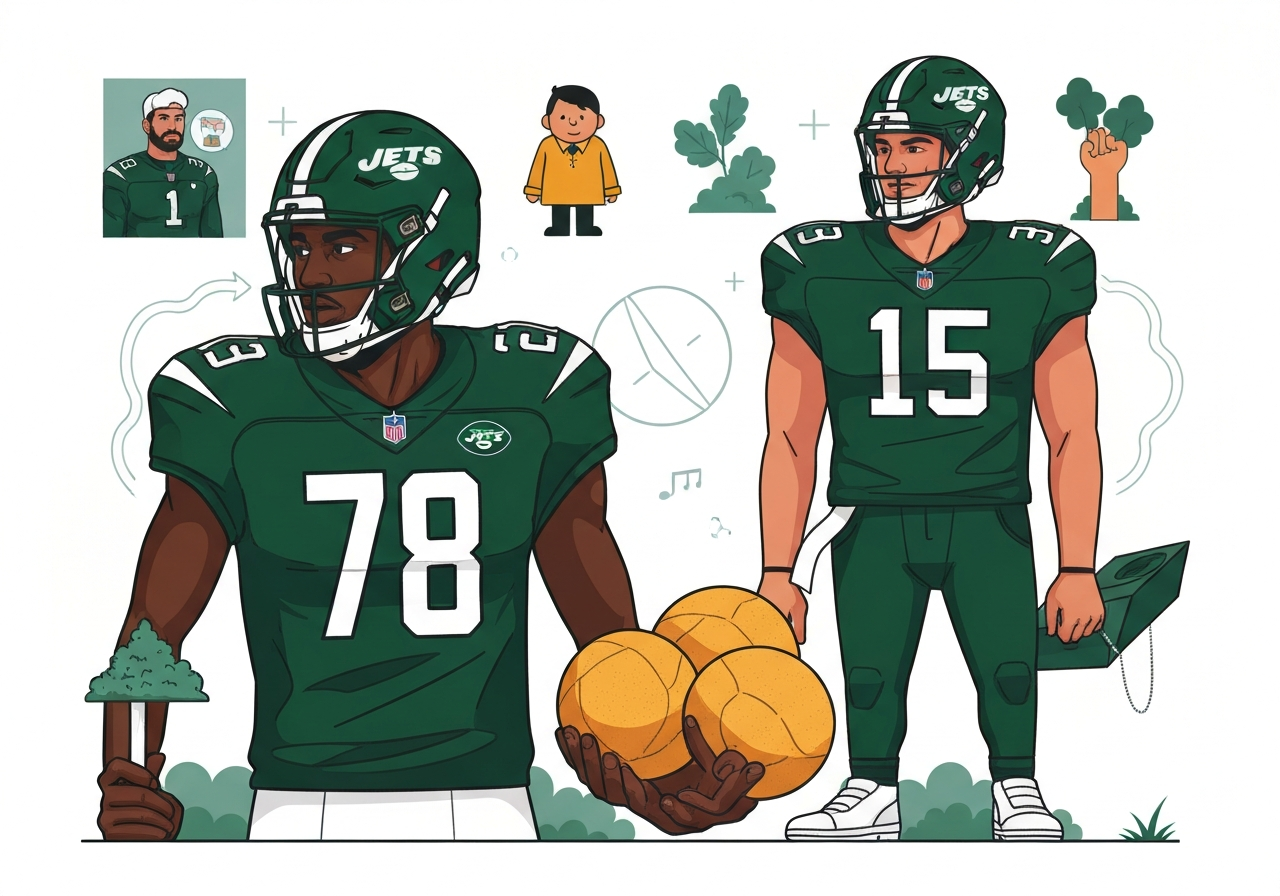
The Jets completed a significant veteran addition, reacquiring Geno Smith from the Raiders. Smith, the Jets’ 2013 draftee who rebuilt his career into a Pro Bowl-level starter in Seattle, arrives as a seasoned leader and short-term answer at quarterback. The Raiders agreed to pay the bulk of Smith’s $18.5 million guaranteed for 2026, allowing New York to carry a modest cap charge and retain multiple draft picks as options for the future.
New England addressed two of its largest offseason needs: perimeter receiving and interior line play. The Patriots signed Romeo Doubs, who posted a career-high 724 receiving yards in 2025, and reached terms with guard Alijah Vera-Tucker, a former first-rounder coming off significant triceps and Achilles injuries but regarded as an elite pass protector when healthy. Those additions aim to reduce the pressure on rookie quarterback Drake Maye, who was sacked 47 times during the regular season and 21 times across four playoff games.
Analysis & Implications
Short-term wins from free agency should be judged by how well moves convert to wins, not by contract headlines alone. The Jets’ acquisition of Geno Smith fits a common strategy: add a low-risk veteran who can stabilize the locker room while the club evaluates long-term options in the draft. With 10 selections this year and three first-round picks expected in 2027, the Jets prioritized current competence plus future flexibility.
For the Raiders, the Crosby reversal is both financial and strategic pain. They had positioned themselves to clear cap space and recoup two first-round picks; the medical setback now complicates any fresh trade or contract negotiations. With so much of the pass-rush market shifting toward younger players receiving blockbuster averages (Jaelan Phillips at roughly $30 million per year; Odafe Oweh near $25 million), the Raiders may find their leverage diminished if Crosby’s medical status remains a concern.
Trey Hendrickson’s market shows how age and recent injuries alter expectations. At 31, coming off a core-muscle injury that limited him to seven games in 2025, Hendrickson must reconcile his recent high production (17.5 sacks in each of 2023 and 2024) with teams’ preference for younger investments at premium positions. Bids that once matched top pass-rusher averages may now be reduced or structured with incentives and shorter guaranteed terms.
Comparison & Data
| Player | Age | Notable 2023–25 stat | 2026 contract signal |
|---|---|---|---|
| Geno Smith | 35 | 4,300 yards (2024) | Raiders pay bulk of $18.5M guaranteed |
| Trey Hendrickson | 31 | 17.5 sacks (2023, 2024) | Unsigned through Day 2; market cooling |
| Romeo Doubs | 25–26 | 724 receiving yards (2025) | Signed by Patriots |
| Alijah Vera-Tucker | 26 | Multiple prior seasons as top pass-blocking guard | Signed by Patriots; injury history noted |
The table above summarizes key players and how contract signals on Day 2 compare to recent output. Context: veteran minimum or partially subsidized signings allow teams to acquire experienced starters (see Geno Smith, Tua Tagovailoa) with minimal cap risk, while larger guarantees have concentrated on younger pass rushers.
Reactions & Quotes
“The deal fell through for medical reasons.”
Team source, reporting on Maxx Crosby trade status (reported by NFL.com)
That succinct line reflected leaguewide confusion late Wednesday as multiple front offices reassessed plans tied to the Crosby transaction. Teams that had expected two first-round selections in return were suddenly recalculating roster futures.
“We expect Geno to bring leadership and steadiness to a young locker room.”
Front-office official, New York Jets (comment on Smith acquisition)
Jets executives framed Smith primarily as a stabilizing veteran who can mentor younger pass-catchers and buy the team time to evaluate quarterback options in the draft and beyond.
“When healthy, Vera-Tucker is an elite interior pass blocker.”
Offensive-line analyst (assessment of Patriots signing)
Analysts emphasized that New England’s guard signing materially improves protection for Drake Maye, assuming consistent health from Vera-Tucker after previous major injuries.
Unconfirmed
- Whether the Raiders can still negotiate another trade for Maxx Crosby that returns two first-round picks — sources say medical concerns complicate, but no formal offers are confirmed.
- Exact timing of Kyler Murray’s expected release and the teams that will pursue him after the Cardinals’ cap adjustments remain unresolved.
- Aaron Rodgers’ decision on his playing future has no firm deadline from the Steelers and could still shift; reports of a June cutoff are speculative.
Bottom Line
Day 2 of 2026 free agency reiterated two enduring truths: transactions are tools, not outcomes, and medical and financial details often determine long-term value more than headline names. The Jets’ low-cost gamble on Geno Smith and New England’s targeted additions give both teams clearer near-term paths, while the Crosby reversal and Hendrickson’s holdout illustrate how quickly a market can reprice talent.
Ultimately, winners and losers will be decided on the field over the coming months. For now, front offices that combined prudent risk-taking (veteran-minimum starters) with targeted investments (line help, playmakers) appear best positioned to convert free-agency activity into on-field gains.
Sources
- NFL.com — Media report summarizing Day 2 free-agency developments (primary source).