
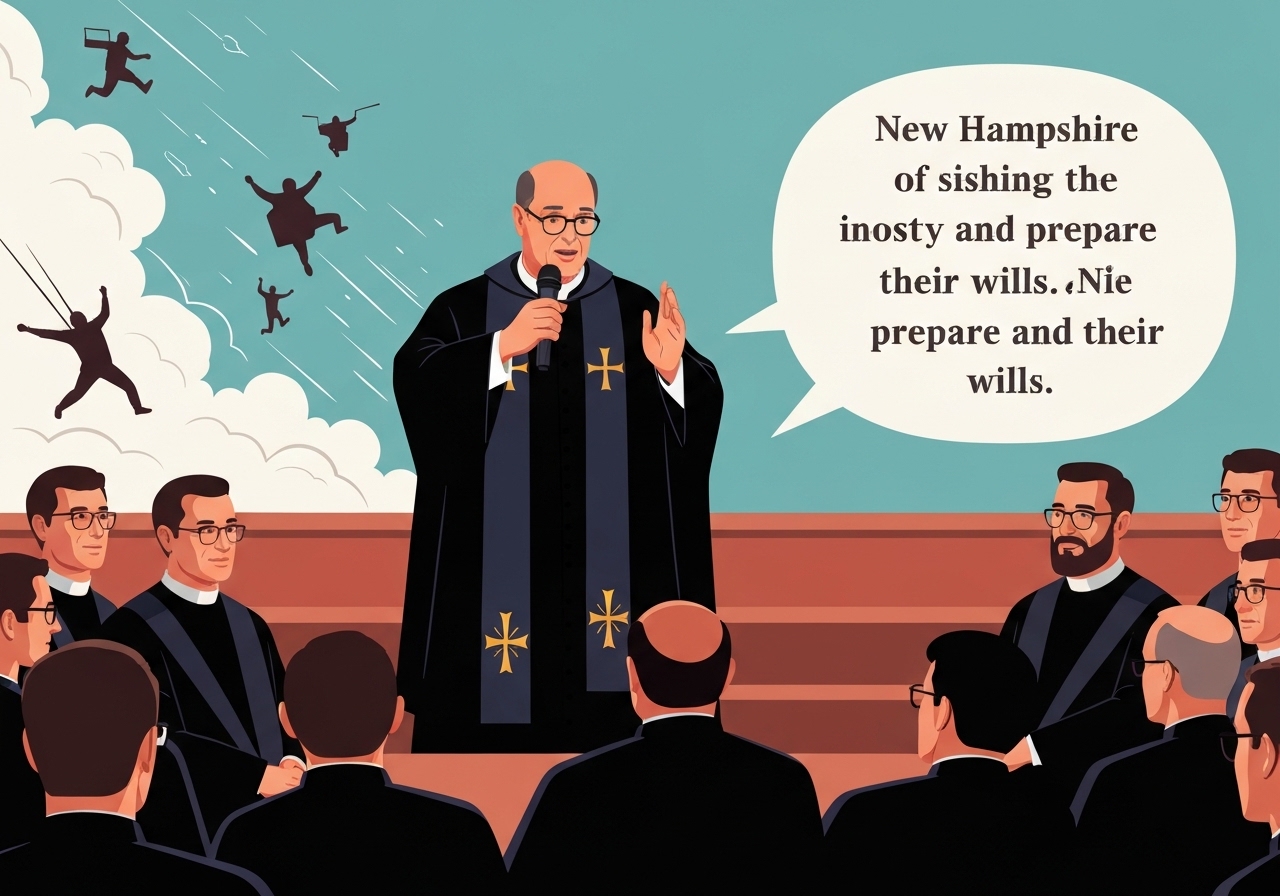
Lead: On Jan. 13, 2026, Bishop Rob Hirschfeld of the Episcopal Church in New Hampshire told clergy gathered in Concord to put their affairs in order after the fatal shooting of Renee Macklin Good by an ICE agent in Minneapolis. His warning — framed as preparation for a possible “new era of martyrdom” — spread widely on social media and sparked a sharp national debate. Some faith leaders praised the call as honest and necessary; others warned it risks inflaming tensions and placing clergy and congregations in danger. Officials in Washington characterized interference with federal law enforcement as a prosecutable crime.
Key Takeaways
- On Jan. 13, 2026, Bishop Rob Hirschfeld addressed clergy at the Episcopal Church of New Hampshire in Concord following the shooting of Renee Macklin Good in Minneapolis.
- Hirschfeld urged clergy to prepare wills and be ready to protect vulnerable people, language that went viral online within hours.
- Reactions split: clergy organizers who pray outside ICE offices welcomed the message; others called it inflammatory and at odds with Episcopal moderation.
- Several public demonstrations involving clergy have occurred in 2025, including a June 9 rally in Los Angeles and an Oct. 10 protest in Broadview, Illinois, illustrating sustained mobilization against ICE practices.
- The White House reiterated that obstructing federal agents is a crime; DHS officials publicly criticized the bishop’s remarks as inappropriate.
- Hirschfeld defended his words as pastoral counsel, not an incitement to violence, and invoked historical examples of religious activists who died protecting others.
Background
Over the last year, protests targeting Immigration and Customs Enforcement (ICE) have grown in size and intensity, with a mix of prayer vigils, civil disobedience and confrontations that sometimes turned violent. Clergy have become visible participants in those actions: some lead public prayers outside ICE facilities, others accompany migrants or sit in on deportation hearings. Law enforcement responses have included arrests, use of crowd-control measures such as pepper rounds, and occasional physical clashes that have heightened anxiety among faith communities.
The Episcopal Church has a long history of activism and occasional martyrdom narratives, most notably the case of Jonathan Daniels, a New Hampshire native who was killed in Alabama in 1965 while defending a Black teenager during voter-registration efforts. That history informs how some clergy interpret calls to place their bodies between vulnerable people and state power. At the same time, many within the church emphasize “Via Media,” the Anglican impulse toward a cautious middle way, creating institutional tension when leaders advocate high-risk public resistance.
Main Event
The bishop made his remarks at a vigil for Renee Macklin Good, who was fatally shot by an ICE agent in Minneapolis days earlier. In his chapel address, Hirschfeld described the episode in Minneapolis as “cruelty, injustice and horror,” and he told clergy to put their affairs in order in case they found themselves in harm’s way while protecting others. His phrasing — referencing a possible era of martyrdom — was picked up and widely shared across social platforms, thrusting a local diocesan message into national conversation.
Some clergy colleagues responded with relief and gratitude. Reverend Jason Wells of St. Matthew’s in Goffstown, who organizes regular demonstrations outside ICE offices, said the bishop’s words validated the fear many activists feel and affirmed the need for readiness. Reverend Betsy Hess of St. Barnabas in Berlin similarly applauded the call to move beyond purely polite protest and toward bolder action, while acknowledging personal uncertainty about how far she would go.
Other religious leaders pushed back. Reverend Tom Gartin of Faith Episcopal Church in Cameron Park said the bishop’s language sounded like a “war cry,” arguing clergy are responsible for families and congregations and should prioritize peacemaking and de-escalation. In Washington, the White House reiterated that interference with federal agents is subject to prosecution, and DHS leadership called Hirschfeld’s comments “absurd,” urging solidarity with law-enforcement personnel under threat.
Hirschfeld told NPR he did not intend to incite violence and framed his counsel as pastoral: prepare spiritually and legally, but do not seek danger. He cited historical church figures who risked and sometimes gave their lives to protect others, and said he prays for conversion of heart for everyone involved, including federal agents.
Analysis & Implications
Hirschfeld’s intervention spotlights a dilemma for faith leaders who are increasingly visible in immigration-related activism: how to balance prophetic witness with pastoral responsibility. If clergy openly accept personal risk as part of ministry, congregations could face leadership gaps, legal exposure and emotional strain. Conversely, a retreat from public presence might cede moral and material space to policies and practices many religious communities oppose.
Legally, encouraging people to place themselves between federal agents and others raises questions about liability and the line between protected protest and obstruction. Federal officials have signaled they will prosecute interference; local prosecutors will then decide whether to bring charges. That dynamic could chill participation or push tactics toward less confrontational forms of accompaniment and legal advocacy.
Theologically, invoking martyrdom reshapes the moral framing of contemporary protest. For some clergy, historical models of sacrificial protection resonate as compelling witness. For others, the martyr language appears to romanticize risk and underplay obligations to family and institutional stability. Episcopal polity — which blends individual pastoral discretion with diocesan oversight — may face renewed debate over the extent to which bishops should endorse risky public action.
Politically, the episode amplifies polarization around immigration enforcement. High-profile clerical statements can mobilize supporters, attract media attention and pressure policymakers, but they can also provoke counterstatements from officials and inflame partisan responses that diminish opportunities for dialogue or reform.
Comparison & Data
| Incident | Year | Location | Outcome |
|---|---|---|---|
| Jonathan Daniels | 1965 | Alabama | Killed protecting a Black teenager during civil rights work |
| Renee Macklin Good (ICE shooting) | 2026 | Minneapolis | Fatally shot by an ICE agent |
| Anti-ICE demonstrations (examples) | 2025 | Los Angeles; Broadview, IL | Large-scale protests, some arrests and crowd-control responses |
The brief table traces historical touchstones and recent incidents that form the context for Hirschfeld’s remarks. While Jonathan Daniels’s death is a well-documented civil-rights-era martyrdom, modern protests show a variety of outcomes — from peaceful vigils to confrontations with law enforcement. The differences in legal regime and media environment between 1965 and today shape both risk perception and institutional responses.
Reactions & Quotes
“When I saw his words I felt relief — someone was naming the anxiety many of us carry as we pray and protest at ICE offices,” said a New Hampshire rector who organizes demonstrations, reflecting gratitude among activists for open acknowledgment of risk.
Reverend Jason Wells, St. Matthew’s (organizer)
“This feels like a call that could escalate tensions rather than calm them; clergy have families and congregations who would suffer if leaders were lost,” said another priest who urged a focus on peacemaking over risking bodily harm.
Reverend Tom Gartin, Faith Episcopal Church
Hirschfeld responded that his intent was pastoral: “I am asking clergy to live without fear of death and to prepare their affairs — not to seek bullets — and to be ready to protect the vulnerable if called to do so.”
Bishop Rob Hirschfeld
Unconfirmed
- Whether calls to prepare wills will materially increase clergy participation in confrontational actions is not established and remains speculative.
- Claims that the bishop intended to incite violence lack direct evidence; Hirschfeld says his message was pastoral, not a call to arms.
- Any causal link between clergy presence at protests and increased shootings or fatalities is unproven; existing reports document tensions but not a direct, generalizable escalation caused by clerical involvement.
Bottom Line
Bishop Hirschfeld’s call for clergy to arrange their affairs after the killing of Renee Macklin Good crystallizes a wider crisis of conscience among religious activists engaged with immigration enforcement issues. The statement struck a chord with ministers who feel exposed and powerless, while prompting alarm from colleagues who prioritize de-escalation and institutional continuity. Both reactions are rooted in credible concerns: the moral imperative to protect vulnerable people, and the practical responsibilities clergy hold to their families and flocks.
Going forward, churches and dioceses will need clearer internal guidance balancing prophetic action and pastoral duty, and legal counsel about liability and civil-risk mitigation. Policymakers and law enforcement responses will shape whether public religious witness becomes more restrained or more confrontational; for now, the debate over language, strategy and responsibility within faith communities is likely to continue.