
Lead
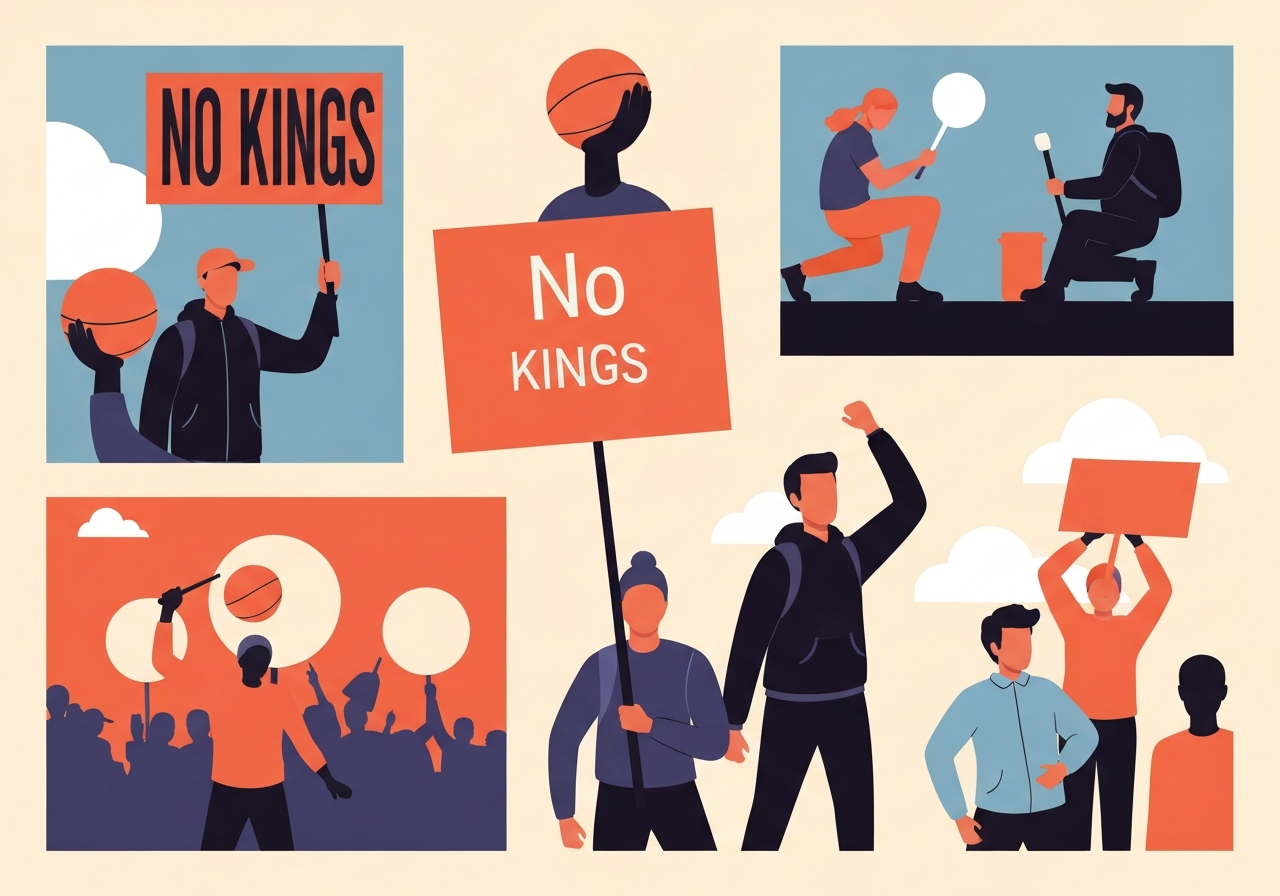
On Saturday, demonstrators took to streets in cities and towns across the United States for the first “No Kings” action since the joint US–Israeli war against Iran began one month ago. Events were planned in all 50 states, with organisers reporting more than 3,300 actions and projecting large turnouts in New York, Los Angeles and Washington, DC. The movement staged its central rally in the Minneapolis–Saint Paul area, where the gatherings also served to commemorate two local deaths tied to Operation Metro Surge. Marches combined protest speeches, performances and voter-mobilisation efforts ahead of the November midterm elections.
Key Takeaways
- More than 3,300 “No Kings” events were listed on organisers’ schedules across all 50 US states.
- The main rally took place in the Twin Cities (Minneapolis–Saint Paul), the site of federal Operation Metro Surge earlier this winter.
- Operation Metro Surge involved over 3,000 federal immigration agents and has prompted multiple lawsuits after two US citizens were shot and killed in January.
- Organisers said roughly two-thirds of participants were expected outside major city centers, targeting suburban and rural voters in conservative-leaning areas.
- High-profile appearances in Minnesota included Senator Bernie Sanders and scheduled performances by Bruce Springsteen and Joan Baez, plus a prerecorded message from actor Robert De Niro.
- Parallel “No Kings” events took place internationally in cities such as Rome, Paris and Berlin.
- The demonstrations follow previous nationwide “No Kings” actions in June and October that organisers say drew millions of participants.
Background
The “No Kings” movement began as a progressive organising project after the 2024 US elections and has staged several nationwide demonstrations since. Indivisible, a progressive nonprofit co-founded by Leah Greenberg, is a principal organiser and has focused on combining protest with voter registration and turnout drives ahead of the 2026 midterms. The group emphasises mobilising outside major urban centers to contest seats in suburbs and rural districts where turnout can sway tight races.
In December, the federal government launched Operation Metro Surge, deploying more than 3,000 immigration agents to the Minneapolis–Saint Paul area as part of a hardline enforcement strategy. The operation became politically charged after two US citizens—Alex Pretti and Renee Nicole Good—were shot and killed by agents in January, sparking national outrage and legal action. Authorities scaled back the operation in February as lawsuits accumulated and public scrutiny intensified.
Main Event
Saturday’s Twin Cities gathering drew a broad mix of activists, labour leaders, elected officials and cultural figures. The program combined speeches commemorating the January deaths, musical performances, and calls for policy change on immigration enforcement. Crowd size varied by site, with organisers forecasting dense turnout in urban centers and a more distributed presence across suburbs and smaller towns.
Speakers framed the day as both a memorial and a political mobilisation. Progressive Senator Bernie Sanders addressed attendees to praise nonviolent civic engagement and to urge voting in November. Performers scheduled to appear—such as Bruce Springsteen and Joan Baez—were billed as amplifying the event’s cultural and grassroots message.
In Washington, DC, demonstrators gathered at monuments including the Lincoln Memorial and the Washington Monument, carrying signs and papier-mâché effigies that referenced the Trump administration. Across other US cities, local organisers tailored rallies to regional concerns while aligning with the national “No Kings” platform opposing perceived abuses of executive authority.
Analysis & Implications
The organisers’ strategy to emphasise protests outside large metropolitan hubs reflects a tactical shift: by bringing events to suburban and rural precincts, the movement aims to influence swing voters and local political dynamics ahead of the November midterms. If turnouts mirror organisers’ projections, these dispersed actions could have outsized effects on down-ballot races where margins are small and turnout patterns matter most.
Politically, the Twin Cities focus highlights how federal enforcement actions can recalibrate local politics. Operation Metro Surge and the subsequent deaths in January have already generated litigation and intensified scrutiny of federal agencies; sustained public attention could spur legislative or oversight responses at state and federal levels. For candidates, the rallies foreground immigration enforcement and civil‑liberties themes that may reshape campaign messaging.
On the international front, parallel events in Rome, Paris and Berlin demonstrate how US domestic politics and foreign policy decisions—here framed as a joint US–Israeli war against Iran in the previous month—can trigger solidarity actions abroad. Global demonstrations can amplify pressure on policymakers but their direct effect on US electoral outcomes is likely limited to symbolic and media-amplification channels.
Comparison & Data
| Event | Date | Reported Scope |
|---|---|---|
| “No Kings” — October wave | October 2025 | Organisers reported millions of participants nationwide |
| “No Kings” — June wave | June 2025 | Large nationwide turnout; urban centric |
| “No Kings” — March wave | March 28, 2026 | 3,300+ planned events across all 50 states; Twin Cities focal point |
Past waves (June and October 2025) were concentrated in urban cores and organisers say those mobilisations reached millions. This March mobilisation differs in emphasising decentralized, suburban and small‑town actions. The table above summarises public organiser claims and the scheduling emphasis; independent turnout verification will vary by locality and official counts.
Reactions & Quotes
Organisers framed Saturday’s mobilisation as strategically targeted and historically significant. Leah Greenberg, cofounder of Indivisible, highlighted the geographic spread as central to the day’s impact, saying it mattered where people were gathered as much as how many participated.
“The defining story is not just numbers but where people are protesting.”
Leah Greenberg, Indivisible (progressive nonprofit)
Notable public figures offered moral support. Actor Robert De Niro delivered a prerecorded message praising protesters’ commitment to nonviolent action, and Senator Bernie Sanders used his platform to link the demonstrations to civic participation and electoral stakes.
“You have shown the power of nonviolent protest.”
Robert De Niro (actor)
“This is the kind of civic courage that can change policy and elections.”
Bernie Sanders (US Senator)
Unconfirmed
- The precise national attendance number for the March 28 events remains unverified; organiser figures and local counts may differ.
- The claim that roughly two-thirds of participants would be outside major city centers is based on organiser projections and has not been independently confirmed.
- Longer-term policy outcomes tied directly to these protests—such as specific legislation or agency reforms—are possible but not yet evidenced.
Bottom Line
Saturday’s “No Kings” actions combined commemorative events in Minnesota with a nationwide push to broaden the movement’s geographic reach. By targeting suburban and small-town precincts as well as cities, organisers aim to convert protest energy into electoral influence ahead of the November midterms.
Key uncertainties remain about actual turnout patterns and whether the protests will produce concrete policy or legislative changes. Observers should watch local vote‑by‑mail and registration data in affected districts, as well as legal developments stemming from Operation Metro Surge, for clearer measures of the demonstrations’ long-term impact.
Sources
- Al Jazeera — international news organisation (report on March 28 protests)
- Indivisible — progressive nonprofit (organiser statements and event listings)
- Department of Homeland Security — official US federal agency (context on federal enforcement operations)