
Lead
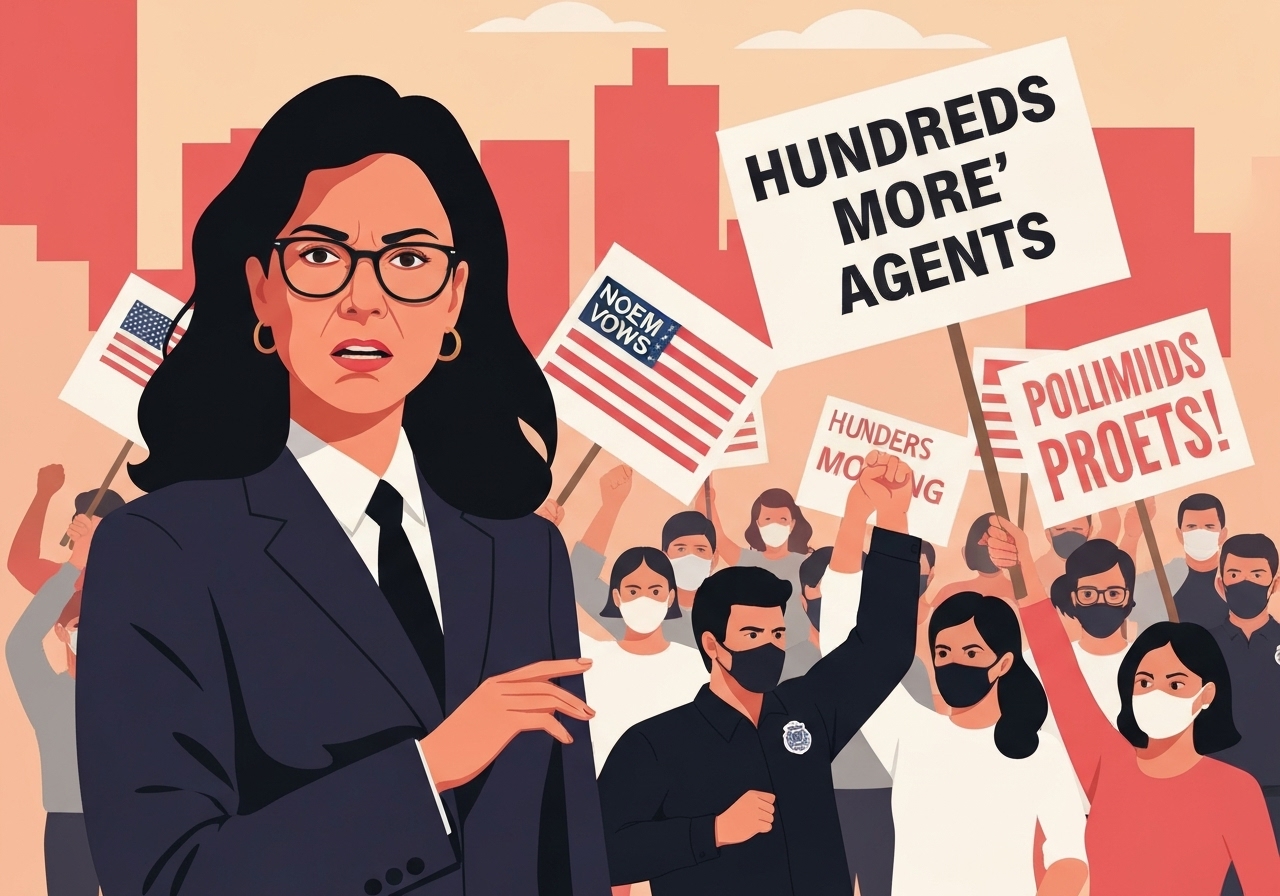
Thousands marched across the United States over the weekend of 10–11 January 2026 to protest the fatal shooting of 37-year-old Renee Good, a Minneapolis mother of three, by an Immigration and Customs Enforcement (ICE) officer. The demonstrations centered on Minneapolis but spread to cities including Los Angeles, Salt Lake City and San Francisco. On Sunday, Homeland Security head Kristi Noem pledged to send “hundreds more” federal agents to Minneapolis to support ICE and border patrol personnel. Local officials and protesters said most demonstrations were peaceful, even as authorities reported arrests and at least one officer injured.
Key Takeaways
- Renee Good, 37, an American citizen and mother of three, was shot and killed by an ICE officer while driving away from a Minneapolis scene; the shooting was recorded from multiple angles.
- Thousands protested nationwide on 10–11 January 2026, including large gatherings in Minneapolis, Los Angeles and the Bay Area; Salt Lake City saw about 1,000 demonstrators.
- Federal deployments to the Minneapolis–St Paul region previously included roughly 2,000 agents, described by DHS as its largest operation to date.
- During Saturday’s Minneapolis demonstrations authorities said 30 people were arrested and one police officer was injured after a chunk of ice was thrown.
- Kristi Noem, identified as head of Homeland Security in public statements, told Fox News she would send “hundreds more” federal agents to Minneapolis “today and tomorrow.”
- Mayor Jacob Frey said most participants were peaceful and criticized the federal government’s handling of investigative access and public narratives about the shooting.
- Separate recent federal immigration-enforcement shootings, including an incident in Portland that injured three people this week, have intensified public anger.
Background
The shooting that ignited the weekend’s unrest occurred after federal immigration officers were operating in Minneapolis amid a larger federal deployment to the Twin Cities. Department of Homeland Security officials have characterized the regional presence as their biggest operation there to date, sending about 2,000 agents to the Minneapolis–St Paul area. The deployment followed earlier spikes in federal activity around immigration enforcement in several metropolitan areas, stirring local debate over jurisdiction and use of force.
The broader context includes heightened tensions between local officials and federal authorities over public-safety roles. Minneapolis leadership has repeatedly clashed with federal agencies on cooperation, investigative access and crowd-management tactics. Those tensions were already strained by prior clashes between protesters and federal agents in other cities, including Portland, where a recent encounter involving border patrol agents left three people injured.
Main Event
Protesters in Minneapolis moved toward the residential street associated with Renee Good’s death, laying flowers and candles at makeshift memorials and chanting outside a home connected to the victim. Video from multiple vantage points has circulated widely online, driving the rapid escalation of demonstrations. Officials said at least 30 arrests were made on Saturday, and police reported one officer hurt when a chunk of ice struck them during an altercation.
Mayor Jacob Frey described the majority of demonstrators as peaceful and publicly urged calm, even as he challenged aspects of the federal response. Frey told NBC’s Meet the Press that he objected to the federal refusal to allow Minneapolis state investigators to assist the FBI probe, saying the city was concerned the administration prioritized a rapid narrative over full fact-finding.
On Sunday, Kristi Noem reiterated federal resolve on Fox News, promising additional personnel to protect ICE and border-patrol staff working in Minneapolis. In Los Angeles, hundreds gathered outside downtown federal buildings, carrying banners and inverted flags; the LAPD issued a dispersal order for a stretch of Alameda Street. Bay Area demonstrations were reported across Oakland, Berkeley, Alameda, San Jose and San Francisco, where protesters staged a human banner reading “IT WAS MURDER – ICE OUT” at Ocean Beach.
Salt Lake City saw roughly 1,000 people circle Washington Square Park and later assemble near the federal courthouse on State Street. Organizers emphasized patience for investigations while urging accountability. A Salt Lake Tribune account quoted an organizer noting protest safety concerns and the need for proper investigative procedures.
Analysis & Implications
The decision to deploy additional federal agents amid ongoing public protests raises immediate questions about federal-local coordination and the optics of reinforcing a controversial enforcement presence. Sending “hundreds more” agents may be intended to protect federal personnel and facilities, but it risks further inflaming communities already skeptical of federal immigration tactics. Political leaders will likely frame the move through partisan lenses: some will cite law-and-order rationales while others will see it as escalation that undermines local trust.
Operationally, adding personnel does not resolve underlying issues about investigative transparency and jurisdiction. Minneapolis officials’ public frustration over limited access for state investigators to assist the FBI suggests a governance gap that could prolong legal and political disputes. If public investigators are excluded from key evidence streams, legal reviews and criminal proceedings may face credibility challenges in the eyes of residents and advocacy groups.
At the national level, the shooting and the federal response could reshape debates over the use of ICE and border patrol agents in domestic law-enforcement roles. Lawmakers and advocacy organizations are likely to press for policy reviews, potential oversight hearings, and clearer protocols governing when and how federal immigration personnel operate in domestic policing contexts. Internationally, images of heavy federal presence confronting largely peaceful crowds could affect U.S. human-rights messaging and relationships with civil-society observers.
Comparison & Data
| Location | Estimated Crowd | Arrests | Reported Injuries |
|---|---|---|---|
| Minneapolis | Thousands | 30 | 1 officer injured |
| Salt Lake City | About 1,000 | Not reported | Not reported |
| San Francisco / Bay Area | Hundreds in SF; large turnouts across Bay Area | Not reported | Not reported |
| Los Angeles | Large evening assembly | Not reported | Not reported |
The table summarizes published counts and official statements available as of 11 January 2026. Reported arrests and injuries are primarily from Minneapolis law-enforcement briefings; other cities’ crowd-size figures are drawn from media accounts and organizer statements and may be approximate. The comparison underscores that, while Minneapolis reported formal enforcement actions, most other cities recorded large but largely nonviolent assemblies.
Reactions & Quotes
“We’re sending more officers today and tomorrow. There will be hundreds more in order to allow our ICE and our border patrol individuals that are working in Minneapolis to do so safely.”
Kristi Noem, Secretary of Homeland Security (statement to Fox News)
Noem framed the reinforcements as a safety measure for federal staff in Minneapolis.
“They are so quick to jump on a narrative as opposed to the truth.”
Jacob Frey, Mayor of Minneapolis (interview on NBC’s Meet the Press)
Mayor Frey expressed frustration with federal handling of investigative cooperation and media narratives following the shooting.
“Law enforcement do not wear masks. We do need to have patience and see if an investigation takes place the way it should.”
Sarah Buck, protest organizer (Salt Lake Tribune)
An organizer in Salt Lake City emphasized the need for a thorough investigation while urging peaceful action.
Unconfirmed
- Characterizations labeling Renee Good a “domestic terrorist” by some officials remain unverified in public records and lack publicly cited evidence.
- Claims that the ICE agent was “run over” have been contradicted by widely circulated video; the precise sequence of events remains under formal investigation.
- Mayor Frey’s assertion that federal officials blocked Minneapolis state investigators from assisting the FBI reflects the mayor’s account; the federal side’s detailed rationale for investigative boundaries has not been publicly released in full.
Bottom Line
The killing of Renee Good and the federal response have catalyzed national protests and sharpened debate over the role and tactics of immigration enforcement inside U.S. cities. The pledge to send “hundreds more” agents aims to secure federal personnel, but risks deepening mistrust between communities and the agencies operating there. Transparent, coordinated investigations and clear communication between federal and local authorities will be critical to managing legal accountability and public confidence.
In the coming days and weeks, expect increased scrutiny from lawmakers, civil-rights groups and local governments. Oversight inquiries, additional video analyses and formal investigative findings will determine whether policy or operational changes follow—and whether protests evolve or subside as new information becomes available.